Homemade Brioche Bread
User Reviews
5
Homemade Brioche Bread
Description
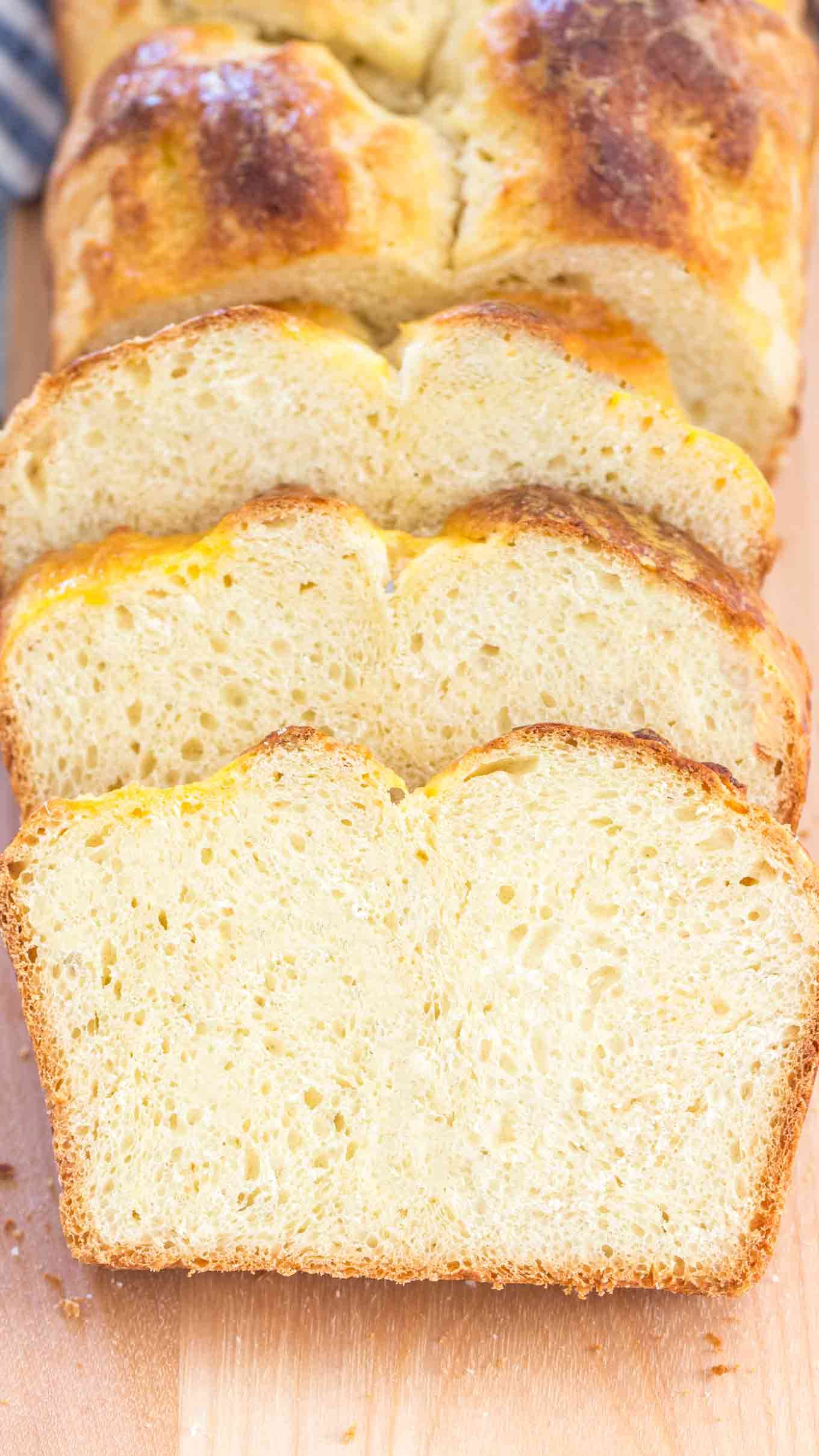
Homemade Brioche Bread is crafted with a yeast starter made from warm milk, eggs, flour, and yeast, which begins the proofing process. The final dough is enriched with sugar, salt, eggs, additional flour, and softened butter added slowly after initial mixing to maintain proper gluten development. The dough requires extended kneading to achieve the right elasticity. After mixing, it undergoes a long rise, often overnight in the refrigerator, to develop its buttery flavor and light texture. The dough should be handled gently during shaping to preserve its air pockets, resulting in a loaf with a tender crumb and rich flavor.
The bread benefits from measuring flour carefully to avoid dryness and from baking to an internal temperature of 190°F to prevent overcooking. The result is a loaf that is both soft and flavorful, highlighting the balance of butter and eggs in the dough. This brioche can be used in a variety of ways, from toast to sandwiches or as a base for bread pudding.
To ease handling, butter is softened but not melted before being incorporated, and chilling the dough before shaping makes it less sticky and easier to work with. These steps contribute to a loaf with excellent texture and a balanced crumb.
Ingredients
Starter:
- 1/3 cup milk warm, whole
- 2 1/4 teaspoons active dry yeast or a 17 grams packet
- 1 egg room temperature, large
- 2 cups all-purpose flour unbleached
Brioche Dough:
- 1/2 cup granulated sugar
- 1 teaspoon salt
- 4 egg lightly beaten and at room temperature, large
- 1 1/2 cups all-purpose flour unbleached
- 4 ounces butter room temperature, unsalted
Egg Wash:
- 1 egg
- 2 tablespoons milk
Instructions
Starter:
- Add milk, one egg, one cup of flour, and yeast to a large mixing bowl or the bowl of a stand mixer. Stir to combine with a wooden spoon, then sprinkle the remaining cup of flour on top.
- Cover and let the mixture sit in a warm place for about 30 minutes. The dough should rise and create cracks in the flour coating.
Brioche Dough:
- Attach the bowl to a stand mixer equipped with the hook attachment. Add the sugar, salt, eggs, and 1 cup of flour. Mix on low speed for about 5 minutes, then add the remaining 1/2 cup of flour. Since this dough takes longer than most to develop, increase the mixer speed to medium and knead the dough for an additional 15 to 20 minutes.
- Work the butter with your hands until it is smooth and soft, but not melted. With the mixer on medium speed, add the butter gradually and mix until well combined.
- Next, place the dough in an oiled bowl and cover it with a towel or plastic wrap. Allow it to rest and rise for about 1 to 2 hours. After this, gently poke the dough to deflate it. Then, refrigerate the dough for four hours or better overnight. This will slow down the fermentation and chill the butter, making the dough easier to work with.
- Divide the chilled dough into three equal pieces resembling buns. These buns will be braided together to form the brioche. Alternatively, when ready to bake, slice the dough into two equal parts like I did (see the next step).
- Divide each ball into six smaller pieces. Place the pieces side by side in a greased 9x5 loaf pan, arranging them into three short rows, each containing two pieces of dough.
- Cover the dough with a towel and let it rise for 2.5 to 3 hours until it becomes very puffy.
- Place the pan in a preheated oven at 400°F. After 10 minutes, reduce the heat to 350°F. Brush the bread with an egg wash or melted butter and bake for an additional 30 to 35 minutes.
- When done baking, the brioche bread should be deep brown with an internal temperature of 190°F, as measured by an instant-read thermometer.
- Once done, remove it from the oven, and let it rest for about 10 minutes.
- For cinnamon lovers, I recommend topping the brioche bread with some cinnamon sugar before baking.
Notes
- Letting the dough rise overnight in the fridge develops a light, airy texture and richer flavor while making it easier to handle.
- Work the butter with your hands until soft and smooth, not melted, before adding to the dough.
- Adding butter after initial mixing helps maintain yeast activity and proper gluten formation.
- Chill the dough before shaping to reduce stickiness and avoid adding extra flour.
- Measure flour using the spoon and level method to prevent a dry, hard loaf.
- Bake the bread to an internal temperature of 190°F and avoid overbaking to keep it moist.
Nutrition Information
Show DetailsNutrition Facts
Serving: 2loaves
Amount Per Serving
Calories 1594 kcal
% Daily Value*
| Calories | 1594kcal | 80% |
| Carbohydrates | 211g | 70% |
| Protein | 42g | 84% |
| Fat | 69g | 106% |
| Saturated Fat | 35g | 175% |
| Cholesterol | 618mg | 206% |
| Sodium | 1796mg | 75% |
| Potassium | 909mg | 19% |
| Fiber | 16g | 64% |
| Sugar | 53g | 106% |
| Vitamin A | 2625IU | 53% |
| Calcium | 422mg | 42% |
| Iron | 17.6mg | 98% |
* Percent Daily Values are based on a 2,000 calorie diet.
User Reviews
Overall Rating
5
You'll Also Love