Homemade Dinner Rolls Recipe
User Reviews
4.8
Homemade Dinner Rolls Recipe
Description
The Homemade Dinner Rolls recipe starts by activating yeast in lukewarm water with sugar to ensure foam formation. Warm milk, sugar, salt, shortening or butter, and part of the flour are mixed into the yeast mixture, then rested briefly before continuing to add flour gradually. The dough should be soft, sticky but manageable, as this yields tender rolls after baking.
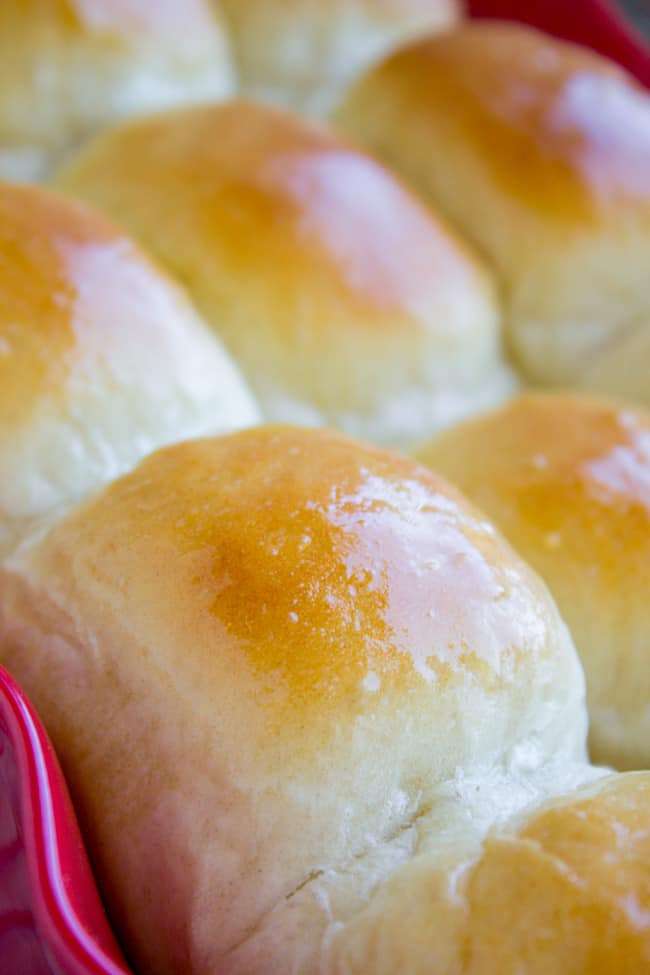
This dough is kneaded until smooth and elastic but not stiff, preventing dry or dense rolls. Baking produces rolls with a soft crumb and a golden top, with a mild buttery flavor depending on the fat used. The rolls work well for everyday dinners or sandwiches.
Flour amount varies with conditions and should be adjusted carefully. The recipe recommends using the least flour needed to maintain a workable dough to preserve softness.
Ingredients
- 1/2 cup water
- 2 tablespoons active dry yeast
- 2 teaspoons white sugar
- 2 cups milk
- 1/3 cup white sugar
- 2 & 1/2 teaspoons kosher salt
- 1/4 cup shortening OR real butter, butter-flavored
- 1 egg
- 5-6 cups all-purpose flour spooned and leveled
- 4 tablespoons butter for brushing, melted
Instructions
- In a small bowl or coffee mug, microwave the 1/2 cup water for 20-30 seconds, until it is lukewarm but not hot.
- Add the yeast and 2 teaspoons sugar and stir. Let this mixture sit for 5 minutes. Watch it so it doesn't overflow!*
- In a glass measuring cup, microwave 2 cups milk for 1-2 minutes until it is warm but not hot.
- In a large bowl or stand mixer, add 1/3 cup sugar, kosher salt, and shortening, and 2 cups of the flour. Stir together with a wooden spoon.
- Add the warm milk, yeast mixture, and 1 egg. Mix well and let rest 5 minutes. At this point I started using the dough hook on my mixer.
- Add 4 cups of flour, one cup at a time, mixing in between. Use your best judgment to continue adding flour until the dough is smooth and pulling away from the sides of the bowl, up to 5 or even 6 cups. Don't add so much that the dough becomes stiff. It should be soft and rather sticky, but still workable. The less flour you use, the more tender your rolls will turn out. See notes.
- Once all the flour has been incorporated, knead for 5-6 minutes, using your hands or the dough hook.
- Grease a large bowl well with oil or butter. Scrape all the dough into the bowl, shape it together, then turn it over so that the top is greased.
- Cover loosely with a tea towel or plastic wrap. Let rise until doubled, about 1 hour.
- Punch down the dough. Divide the dough into 24 equal pieces. Shape each piece into a ball (pinch one end with your fingers).
- Place the rolls in 2 well-greased pans. I used one 9x13 pan and one 2 quart casserole dish.
- Cover the pans with tea towels and let them rise in a warm spot for another 30-45 minutes, until doubled in size. When they are almost done rising, preheat your oven to 375 degrees F.
- Bake at 375 for 12-15 minutes or until golden brown all across the top.
- Remove from the oven and brush with melted butter.
- Eat hot!
Notes
- Ensure your yeast mixture foams to confirm active yeast and avoid flat rolls.
- Flour amounts vary; add gradually and aim for a soft but workable dough for tender rolls.
- Using minimal flour prevents tough rolls, adjust to your environment and ingredients.
Nutrition Information
Show DetailsNutrition Facts
Serving: 24Servings
Amount Per Serving
Calories 159 kcal
% Daily Value*
| Serving | 1roll | |
| Calories | 159kcal | 8% |
| Carbohydrates | 24g | 8% |
| Protein | 4g | 8% |
| Fat | 5g | 8% |
| Saturated Fat | 2g | 10% |
| Polyunsaturated Fat | 1g | 6% |
| Monounsaturated Fat | 2g | 10% |
| Trans Fat | 1g | 50% |
| Cholesterol | 14mg | 5% |
| Potassium | 61mg | 1% |
| Fiber | 1g | 4% |
| Sugar | 4g | 8% |
| Vitamin A | 101IU | 2% |
| Vitamin C | 1mg | 1% |
| Calcium | 29mg | 3% |
| Iron | 1mg | 6% |
* Percent Daily Values are based on a 2,000 calorie diet.
User Reviews
Overall Rating
4.8
You'll Also Love