Homemade Eggnog
User Reviews
5
Homemade Eggnog
Description
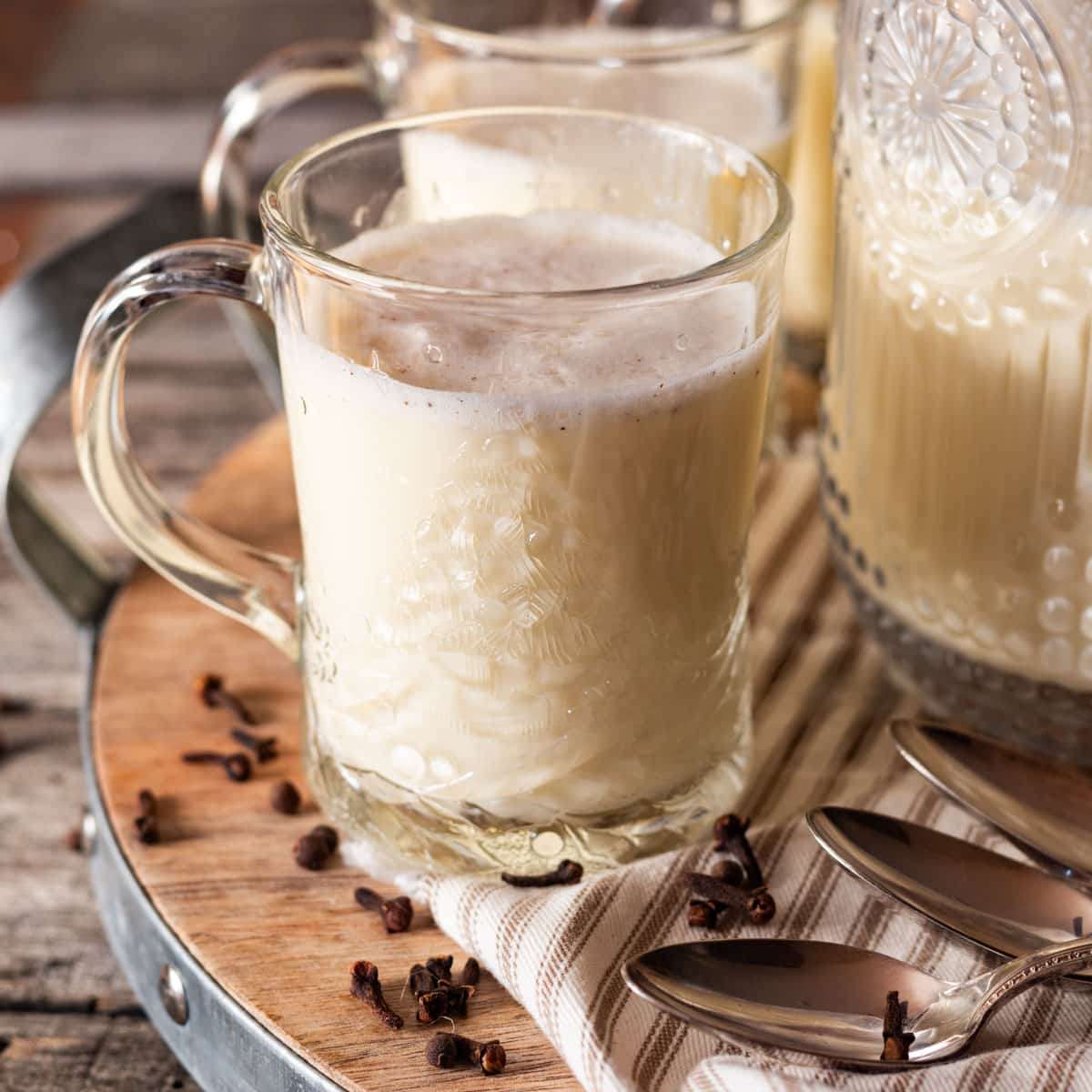
The Homemade Eggnog recipe provides two approaches. The pasteurized method beats together eggs with sugar, nutmeg, lemon juice, and salt, then mixes in milk and cream before whisking until frothy. This version is served cold with ice in six glasses.
The cooked method involves heating milk and cream to a warm temperature before slowly tempering in blended eggs to avoid curdling, then combining all ingredients and heating gently while whisking to create a smooth custard-like consistency. This technique yields a thicker, creamier eggnog free of raw egg concerns.
Flavor adjustments can be made by altering sugar and nutmeg amounts, and cream can be increased for a richer result. The eggnog can be strained if there are small cooked egg bits to ensure smoothness. Serving chilled with ice enhances its refreshing quality.
Ingredients
- 4 large egg pasteurized
- 1/3 cup granulated sugar
- 1/8 teaspoon ground nutmeg
- 2 tablespoons lemon juice
- 1/8 teaspoon salt
- 4 cups milk 2%
- 1/2 cup heavy cream
Instructions
Pasteurized Egg Easy Eggnog:
- In a large bowl, beat the eggs until they are thick and lemon colored. 4 large pasteurized eggs
- Whisk in the sugar, nutmeg, lemon juice and salt. Add the milk and cream. 1/3 cup granulated sugar, 1/8 teaspoon ground nutmeg, 2 tablespoons lemon juice, 1/8 teaspoon salt, 4 cups 2% milk, 1/2 cup heavy cream
- Beat with a hand mixer for 1-2 minutes or until the eggnog is frothy.
- Serve with ice. Makes 6 large glasses.
Cooked Eggnog (Do not add the lemon juice):
- Heat the milk and cream in a saucepan over medium heat until it is about 115-120ºF.
- In another bowl, use a hand mixer to blend together the eggs for 1-2 minutes or until they are lemon in color.
- Scoop 3/4 cup of the heated milk and pour it slowly into the eggs, whisking constantly. This is called "tempering" the eggs.
- Now slowly pour the egg mixture slowly into the heated milk, whisking constantly. Stir in the sugar, nutmeg and salt. Heat over medium-low heat, whisking constantly, until the temperature reaches 165º F. This is a safe temperature for the eggs.
- The last step is chilling the eggnog in a pitcher in the fridge. The cooked version will thicken as it cools, so I recommend drinking the eggnog sooner rather than later. If the cooked eggnog thickens too much, you can add milk (plus a bit more sugar and nutmeg) to get it to the consistency you like.
Notes
- The nutrition information is approximate, as ingredient brands vary; consult a nutritionist for precise details.
- Adjust sugar and spices like nutmeg or cinnamon to taste for desired sweetness and warmth.
- Increase the cream and reduce milk for a creamier texture.
- If cooked egg bits appear in the cooked version, strain through a fine mesh for smoothness.
Nutrition Information
Show DetailsNutrition Facts
Serving: 6servings
Amount Per Serving
Calories 238 kcal
% Daily Value*
| Calories | 238kcal | 12% |
| Carbohydrates | 20g | 7% |
| Protein | 10g | 20% |
| Fat | 14g | 22% |
| Saturated Fat | 8g | 40% |
| Polyunsaturated Fat | 1g | 6% |
| Monounsaturated Fat | 4g | 20% |
| Trans Fat | 0.1g | 5% |
| Cholesterol | 159mg | 53% |
| Sodium | 175mg | 7% |
| Potassium | 291mg | 6% |
| Fiber | 0.02g | 0% |
| Sugar | 20g | 40% |
| Vitamin A | 632IU | 13% |
| Vitamin C | 2mg | 2% |
| Calcium | 221mg | 22% |
| Iron | 1mg | 6% |
* Percent Daily Values are based on a 2,000 calorie diet.
User Reviews
Overall Rating
5
You'll Also Love