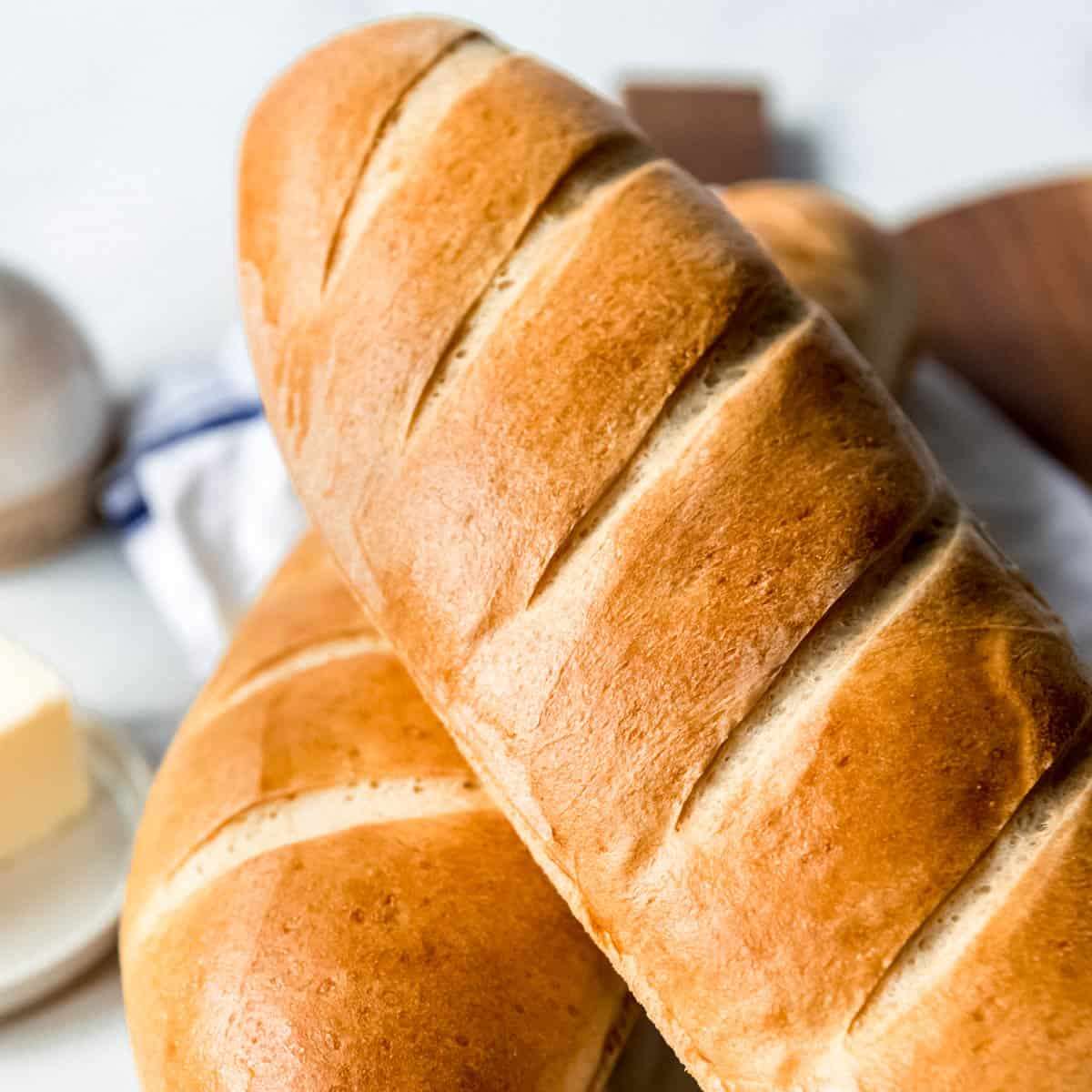
Homemade French Bread
User Reviews
4.9
Homemade French Bread
Description
This recipe for Homemade French Bread uses warm water and sugar to activate yeast, combined with salt, oil, and flour to create a pliable dough. The dough is kneaded until smooth and tacky, then left to rise in a warm place until doubled in size. The process encourages gluten development, resulting in bread with a balanced texture — tender inside with a slightly crisp crust once baked.
The bread offers a subtle flavor from the basic ingredients, allowing it to pair well with many dishes, from simple buttered toast to complex sandwiches, soups, or salads. The use of beaten egg and optional butter helps achieve a golden loaf and a tender crust.
Storing bread wrapped at room temperature keeps it fresh for 2-3 days; refrigeration extends this to about a week though it may affect texture. The dough and baked loaves freeze well, allowing advance preparation. Flour choice adjusts texture slightly, with bread flour producing a chewier crumb than all-purpose flour.
Rising benefits from warm environments—recommended spots include near a stove or sunny window. Oven warming can also aid if the room is cold. These practical tips support consistent results and maintain the characteristic texture of French bread.
Ingredients
- 2 1/4 cups water around 110°F, warm
- 1 1/2 Tablespoons granulated sugar
- 1 Tablespoon instant yeast or active dry yeast
- 2 teaspoons table salt
- 2 Tablespoons vegetable oil (olive oil or canola oil also work)
- 5 1/2-6 cups all-purpose flour scooped & leveled (776 to 846g, or bread flour
- 1 egg beaten with 1 teaspoon cold water, large
- butter for brushing on top of the baked loaves (optional, melted, salted
Instructions
- In the bowl of a stand mixer, combine the warm water, sugar, and yeast and let the yeast proof for 5 minutes until foamy (unless using instant yeast, in which case just skip this step and add it with everything in the next step).
- Add the salt, oil, and 3 cups of the flour to the yeast mixture. Mix for 1-2 minutes, just until it starts to combine. Add in the remaining flour about half a cup at a time while the mixer is running on low speed, just until the dough forms into a ball that starts to come away from the sides of the bowl and is tacky to the touch. Continue to knead the dough for 2-3 minutes until smooth, adding a little more flour if the dough starts to stick to the sides of the bowl again. Let the dough rest for 5 minutes, then knead again for another 1-2 minutes.
- Transfer the dough to a large, lightly greased bowl and cover it with a kitchen towel or a piece of plastic wrap sprayed lightly with cooking spray. Let the dough rise in a warm place until doubled in size, about an hour.
- When the dough has risen, turn it out onto a clean counter that has been lightly sprayed with cooking spray and divide the dough into two equal sections. Working with one half of the dough at a time, pat it into a large rectangle, roughly 9x13-inches.
- Roll the dough up starting from the long edges into a tight cylinder, turning the ends under and pinching the edges together to seal. Place seam side down on a perforated French bread pan or baking sheet lined with parchment paper. Repeat with the remaining dough to form the second loaf.
- Cover the loaves with a kitchen towel or a piece of plastic wrap sprayed lightly with cooking spray and let them rise for another 30 minutes, until nearly doubled again in size.
- Preheat the oven to 375°F while the loaves are rising. Just before putting the loaves in the oven, brush with egg wash, if using, and cut several gashes on an angle about 2-inches apart along the top of each loaf using a very sharp knife or baker's lame.
- Transfer the loaves to the oven and toss 3-4 ice cubes onto the bottom of the oven floor and immediately close the oven door.
- Bake for 25-30 minutes until golden brown. Brush loaves with melted butter after removing from the oven for a softer crust, if desired.
Notes
- Store baked bread wrapped at room temperature for up to 3 days or in the fridge for up to a week to maintain freshness.
- Freeze baked loaves tightly wrapped in plastic and foil for up to 3 months; thaw at room temperature before serving.
- You can substitute table salt with coarse kosher salt, adjusting quantity as needed for flavor.
- Use either all-purpose or bread flour; bread flour offers a chewier texture while all-purpose creates lighter bread.
- For optimal dough rising, keep the dough in a warm place like on top of the stove, a sunny window, or inside a turned-off warmed oven.
- This recipe is adapted from House of Nash Eats Everyday cookbook, p. 120.
Nutrition Information
Show DetailsNutrition Facts
Serving: 20slices
Amount Per Serving
Calories 131 kcal
% Daily Value*
| Calories | 131kcal | 7% |
| Carbohydrates | 26g | 9% |
| Protein | 4g | 8% |
| Fat | 1g | 2% |
| Saturated Fat | 1g | 5% |
| Polyunsaturated Fat | 1g | 6% |
| Monounsaturated Fat | 1g | 5% |
| Trans Fat | 1g | 50% |
| Cholesterol | 8mg | 3% |
| Sodium | 238mg | 10% |
| Potassium | 39mg | 1% |
| Fiber | 1g | 4% |
| Sugar | 1g | 2% |
| Vitamin A | 13IU | 0% |
| Vitamin C | 1mg | 1% |
| Calcium | 7mg | 1% |
| Iron | 1mg | 6% |
* Percent Daily Values are based on a 2,000 calorie diet.
User Reviews
Overall Rating
4.9
You'll Also Love