Homemade Sauerkraut Recipe (Kvashenaya Kapusta)
User Reviews
5
-
Prep Time
30 mins
-
Total Time
30 mins
-
Servings
8 cups
-
Course
Condiments
-
Cuisine
American
Homemade Sauerkraut Recipe (Kvashenaya Kapusta)
Description
The Homemade Sauerkraut Recipe (Kvashenaya Kapusta) relies on shredded cabbage and grated carrots mixed with sea salt and sugar to draw out moisture. By kneading the mixture thoroughly, natural juices cover the vegetables once tightly packed into a jar, creating ideal conditions for fermentation. A weight placed atop ensures the cabbage remains submerged, encouraging proper fermentation. The slow, gentle process results in sauerkraut with a crisp and sour texture, characteristic of traditional Russian-style fermentations.
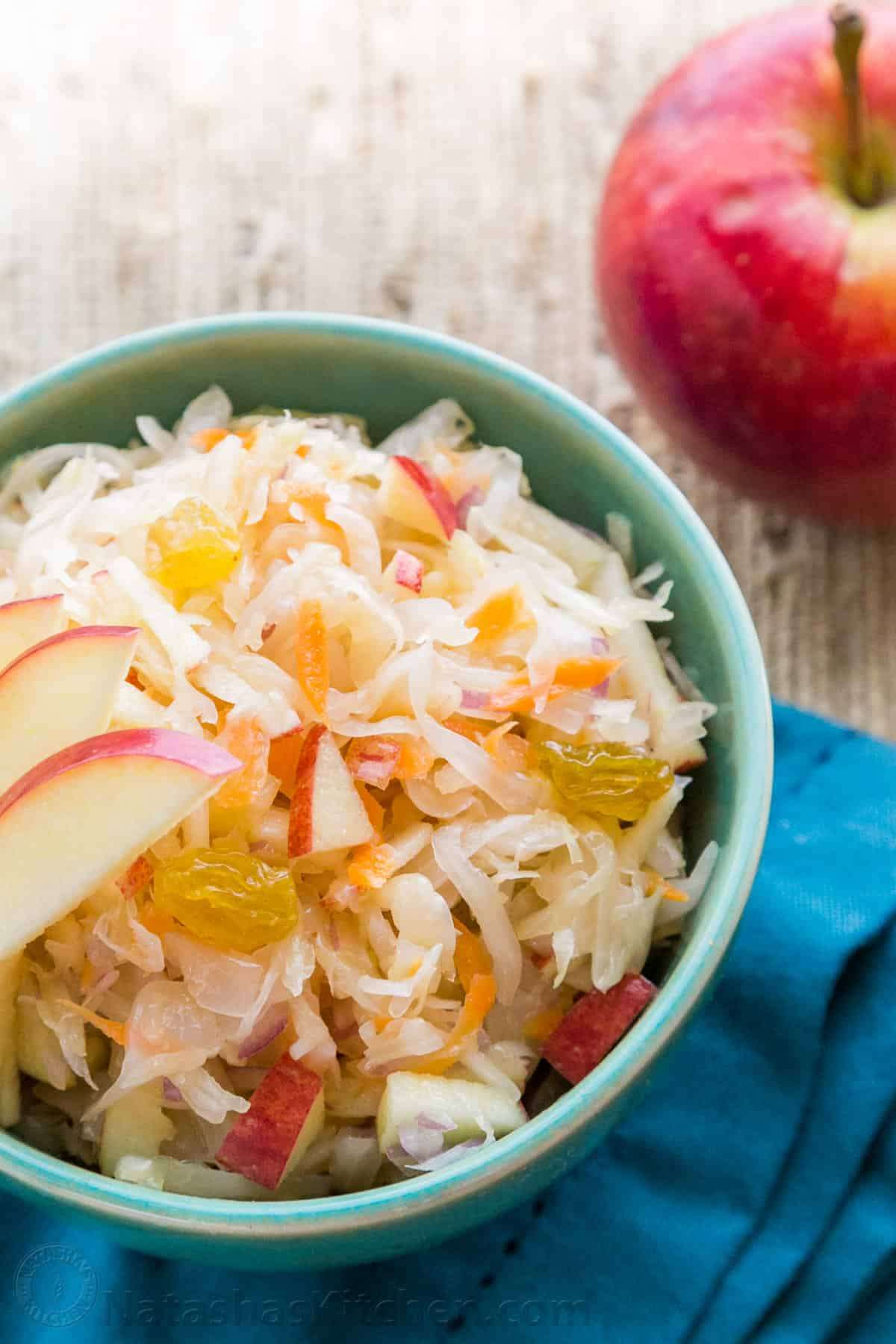
Two salad variations highlight the sauerkraut's versatility: a classic combo with purple onion and sunflower oil, and an apple sauerkraut salad blending diced apple, onion, a touch of sugar, and dried cranberries for added sweetness. These salads can refresh meals or serve as side dishes.
This recipe advises choosing pale-colored cabbage typically harvested in late season for best fermentation results and suggests avoiding aluminum pots for fermenting to prevent metallic reactions. The fermentation takes about four days, needing patience to develop its signature flavor and texture.
Ingredients
Ingredients for Homemade Sauerkraut:
- 2 cabbage 2 1/2 kg or about 5 1/2 lbs, medium/large
- 2-3 carrot grated, medium
- 2 Tbsp salt fine sea salt
- 1 Tbsp sugar
Two ways to serve as a salad:
Mom's Classic Sauerkraut Salad:
- 1/2 purple onion finely diced, small
- 2 Tbsp sunflower oil preferred for more flavor, or olive oil
Sauerkraut Apple Salad:
- 1/2 purple onion finely diced, small
- 1/2 apple any kind; I used gala, diced
- 1/2 tsp sugar
- 2 Tbsp white grape or dried cranberries
- 1-2 Tbsp extra light olive oil not extra virgin
Instructions
How to Make Russian Sauerkraut:
- Remove the outermost leaves of the cabbage, cut it into quarters and shred cabbage finely (use a mandolin to do this faster and discard the core.
- In a large silver bowl, place cabbage, carrots, 2 Tbsp sea salt and 1 Tbsp sugar and scrunch and knead it together really well for the juice to be released from the cabbage (4-5 min). You don't want it to be super juicy, just enough to cover the lettuce when you really pack it down in a jar.
- Scrunch it until juices start to come out.
- Fill a glass jar with the cabbage mixture and pack it in very tightly so that the juice from the cabbage covers the cabbage completely. You want a jar big enough to be filled only about 2/3 full so it has room to expand.
- Make a press over the top of the cabbage by pushing down with a plate (or the lid from a large sour cream container). Top with a small jar of water, a super clean rock or whatever else would make a good weight. Place the lid on the jar but do not tighten. Its a good idea to keep the bottle in the sink or over a dish since there is risk of it overflowing (this is also why we only fill it 2/3 full; it grows!). Let stand at room temp for 4 days or until sour. It will stop fermenting/rising when it's done.
- While it sits at room temperature, once each day: poke a few holes through the cabbage with the back of a wooden mixing spoon to release the gas that this process produces and pack the cabbage down tightly.
- After 4 days, refrigerate until ready to serve. Can be stored for a few weeks if kept very cold.
To serve, drain the amount of cabbage that you would like to eat by firmly squeezing out the excess juice with your hands. Add in your salad ingredients, mix well and serve.
Notes
- Choose light-colored, late-season cabbage for optimal fermentation results.
- Use non-aluminum containers during fermentation to avoid metallic taste.
- The fermenting process typically takes four days from start to finish.
User Reviews
Overall Rating
5
You'll Also Love