Homemade White Bread
User Reviews
5
Homemade White Bread
Description
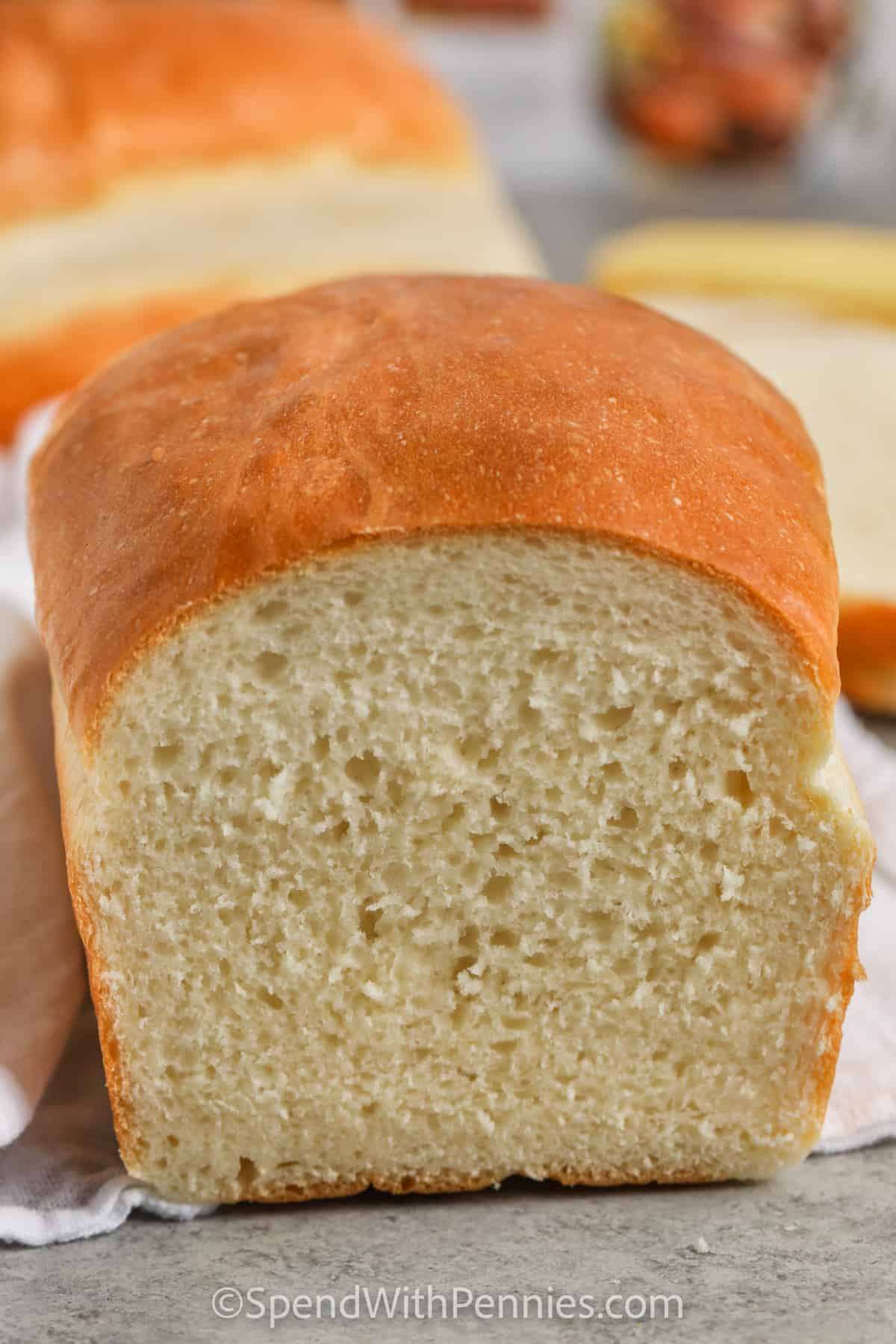
Homemade White Bread relies on active dry yeast proofed in warm water with sugar to activate fermentation. Scalded milk, which is heated to nearly boiling and then cooled, contributes to a better rise by affecting milk proteins. The dough formation starts by mixing the yeast mixture with milk, sugar, salt, butter, and gradually adding flour to develop a non-sticky dough. Kneading by hand or with a dough hook creates a smooth and elastic texture.
The dough is left to rise covered in a warm environment until doubled in size, generally around an hour. After punching down, it’s shaped into logs placed seam side down into loaf pans for a second rise. Baking follows after a 30 to 40 minute proof, giving the bread a classic golden crust with a soft interior suitable for sandwiches or toast.
Careful measurement and temperature control, as well as allowing the yeast to foam properly, ensure successful bread rising. The bread keeps well at room temperature or refrigerated for several days and can be frozen for up to six months.
Ingredients
- 1 package active dry yeast (2 ¼ teaspoons)
- ¼ cup water 110°F, 43°C, warm
- 2 tablespoons granulated sugar divided
- 2 cups milk *scalded, see notes
- 2 teaspoons salt
- 2 tablespoons butter melted
- 6-6.5 cups all-purpose flour
Instructions
- Combine yeast, warm water, and 1 teaspoon of sugar together. Rest 10 minutes until foamy*.
- In a large bowl combine cooled scalded milk (see notes), remaining sugar, salt, and butter.
- Add 2 cups of flour to the milk mixture. Add the yeast mixture and mix well.
- Continue adding flour to the mixture while stirring to make a dough that holds together and isn't sticky. You will need between 6 and 6 ½ cups of flour total.
- Place the dough on a lightly floured counter and knead until smooth and elastic, about 10 minutes.
- Place the dough in a lightly greased bowl and lightly cover with plastic wrap. Cover with a towel and let rise in a warm place until doubled in size, about 60-70 minutes.
- Punch the dough down and turn onto a cutting board. Divide the dough in half gently pat the dough into a rectangle about 8x12 inches. Roll the rectangle into an 8-inch log.
- Place the dough seam side down into 2 greased (or parchment lined) 8x4 loaf pans. Let rise about 30-40 minutes until doubled (about 1 inch over the top of the loaf pan). Preheat the oven to 400°F while the dough is rising.
- Bake bread for 25-30 minutes or until browned.
Notes
- If the yeast mixture doesn't become foamy after 10 minutes, the yeast may be inactive and won't rise the bread properly.
- Scald milk by heating to about 181°F until small bubbles form on the pot's sides, then cool to 105-110°F before mixing.
- Scalding milk improves bread rise but can be skipped.
- The dough can be kneaded using a dough hook for 3-4 minutes instead of by hand.
- Store bread at room temperature or refrigerated for up to 4 days in a sealed container; freeze wrapped for up to 6 months.
Nutrition Information
Show DetailsNutrition Facts
Serving: 2loaves
Amount Per Serving
Calories 135 kcal
% Daily Value*
| Calories | 135 | 7% |
| Carbohydrates | 26g | 9% |
| Protein | 4g | 8% |
| Fat | 1g | 2% |
| Saturated Fat | 1g | 5% |
| Polyunsaturated Fat | 1g | 6% |
| Monounsaturated Fat | 1g | 5% |
| Trans Fat | 1g | 50% |
| Cholesterol | 3mg | 1% |
| Sodium | 212mg | 9% |
| Potassium | 66mg | 1% |
| Fiber | 1g | 4% |
| Sugar | 2g | 4% |
| Vitamin A | 68IU | 1% |
| Vitamin C | 1mg | 1% |
| Calcium | 30mg | 3% |
| Iron | 1mg | 6% |
* Percent Daily Values are based on a 2,000 calorie diet.
User Reviews
Overall Rating
5
You'll Also Love