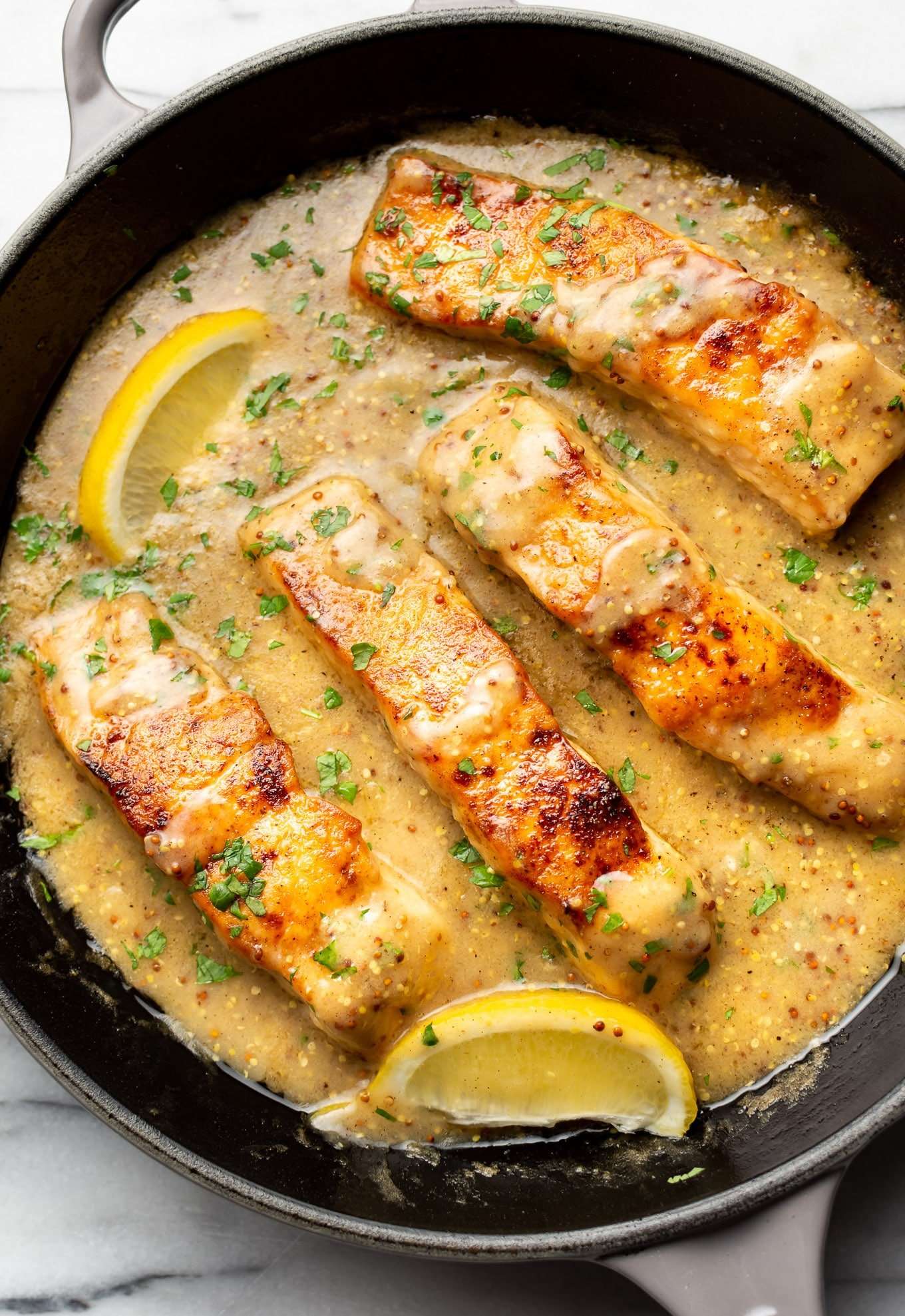
Honey Mustard Salmon
User Reviews
5
-
Prep Time
10 mins
-
Cook Time
20 mins
-
Total Time
30 mins
-
Servings
4
-
Calories
328 kcal
-
Course
Main Course
-
Cuisine
American
Honey Mustard Salmon
Description
The Honey Mustard Salmon preparation begins by seasoning salmon pieces with salt, pepper, and garlic powder, then dredging them lightly in flour to develop a crust when seared in olive oil and butter. Cooking the salmon over medium-high heat allows for a crispy exterior while maintaining tender, moist flesh inside.
After searing, the pan is used to build a sauce melting butter and incorporating flour as a thickener. Chicken broth is whisked in, followed by a mixture of grainy and Dijon mustards combined with honey, producing a smooth, lightly sweet, and tangy sauce. Returning the salmon to the pan completes cooking as the sauce thickens and coats the fish.
Garnishing with fresh parsley and optionally serving with lemon wedges adds freshness. This dish offers a harmonious blend of textures—crispy seared salmon skin or crust and a rich, flavorful mustard glaze with sweet honey highlights.
The recipe allows flexibility in mustard choice to adjust sweetness and tang, and the skin can be removed after searing if not desired. Cooking times should be monitored to prevent overcooking, preserving salmon’s tender quality.
Ingredients
- 1 pound salmon cut into 4 pieces, fresh
- salt to taste
- black pepper to taste
- 1/2 teaspoon garlic powder
- flour for dredging, 1 tablespoon
- 1 tablespoon olive oil
- 3 tablespoons butter divided
- 1 cup chicken broth
- 2 tablespoons grainy mustard
- 1 tablespoon Dijon mustard
- 2 tablespoons honey
- 1-2 tablespoons parsley fresh chopped
- lemon optional, wedges for serving
Instructions
- Cut the salmon into 4 equal pieces and sprinkle with salt & pepper, the garlic powder, and then coat each piece in flour and shake off any excess.
- Add the oil and 1 tablespoon of the butter to a skillet over medium-high heat. Let the pan heat up for a few minutes.
- Add the salmon to the skillet and sear for 3-4 minutes/side until golden (do not overcook - the salmon will finish cooking in the sauce). If using skin-on salmon, start with skin side down. If the salmon is a lot thicker than 1", sear it for slightly longer. Transfer the salmon to a plate.
- Add the remaining butter to the pan and let it melt, then sprinkle the flour in. Let it cook for about a minute (stir it a couple times).
- Whisk the chicken broth in until smooth, then add in the mustards and honey and continue whisking until they've dissolved in the sauce.
- Add the salmon back to the pan, and let it cook for another few minutes until cooked through and the sauce has thickened up a bit. You may need to turn the heat down. Season with extra salt & pepper as needed and serve with the fresh parsley sprinkled over top. I love to serve this dish with lemon wedges to balance the sweetness (and lemon and salmon go so well together).The sauce is quite sweet (as you'd expect from honey mustard). If you would prefer it to be a bit less sweet, reduce the honey to 1.5 tbsp. Keep in mind it balances the sharpness of the Dijon, so you don't want to reduce it too much without adjusting other ingredients.
Notes
- Adjust mustard types to taste, but test sweetness levels carefully to maintain balance in the sauce.
- Salmon skin can be left on for crispiness or removed after searing if preferred.
- Monitor cooking times to avoid overcooking; the salmon finishes cooking in the sauce after searing.
Nutrition Information
Show DetailsNutrition Facts
Serving: 4Serving
Amount Per Serving
Calories 328 kcal
% Daily Value*
| Calories | 328kcal | 16% |
| Carbohydrates | 13g | 4% |
| Protein | 24g | 48% |
| Fat | 20g | 31% |
| Saturated Fat | 7g | 35% |
| Polyunsaturated Fat | 4g | 24% |
| Monounsaturated Fat | 7g | 35% |
| Trans Fat | 1g | 50% |
| Cholesterol | 85mg | 28% |
| Sodium | 469mg | 20% |
| Potassium | 641mg | 14% |
| Fiber | 1g | 4% |
| Sugar | 9g | 18% |
| Vitamin A | 401IU | 8% |
| Vitamin C | 6mg | 7% |
| Calcium | 29mg | 3% |
| Iron | 2mg | 11% |
* Percent Daily Values are based on a 2,000 calorie diet.
User Reviews
Overall Rating
5
You'll Also Love