How to Dye Eggs Red for Easter
User Reviews
5
How to Dye Eggs Red for Easter
Description
The process begins by boiling water with red onion skins, sliced beetroots, and vinegar, which extracts natural pigments into the water, serving as the dye bath. After 15 minutes, the solids are removed to clear the liquid. Cleaned eggs are then submerged in this liquid; adding concentrated red food coloring paste is optional to intensify color and avoid a more brownish tint. The eggs boil for 15 minutes to ensure thorough coloring and cooking. Once cooled slightly, eggs are polished with oil to enhance shine and presentation.
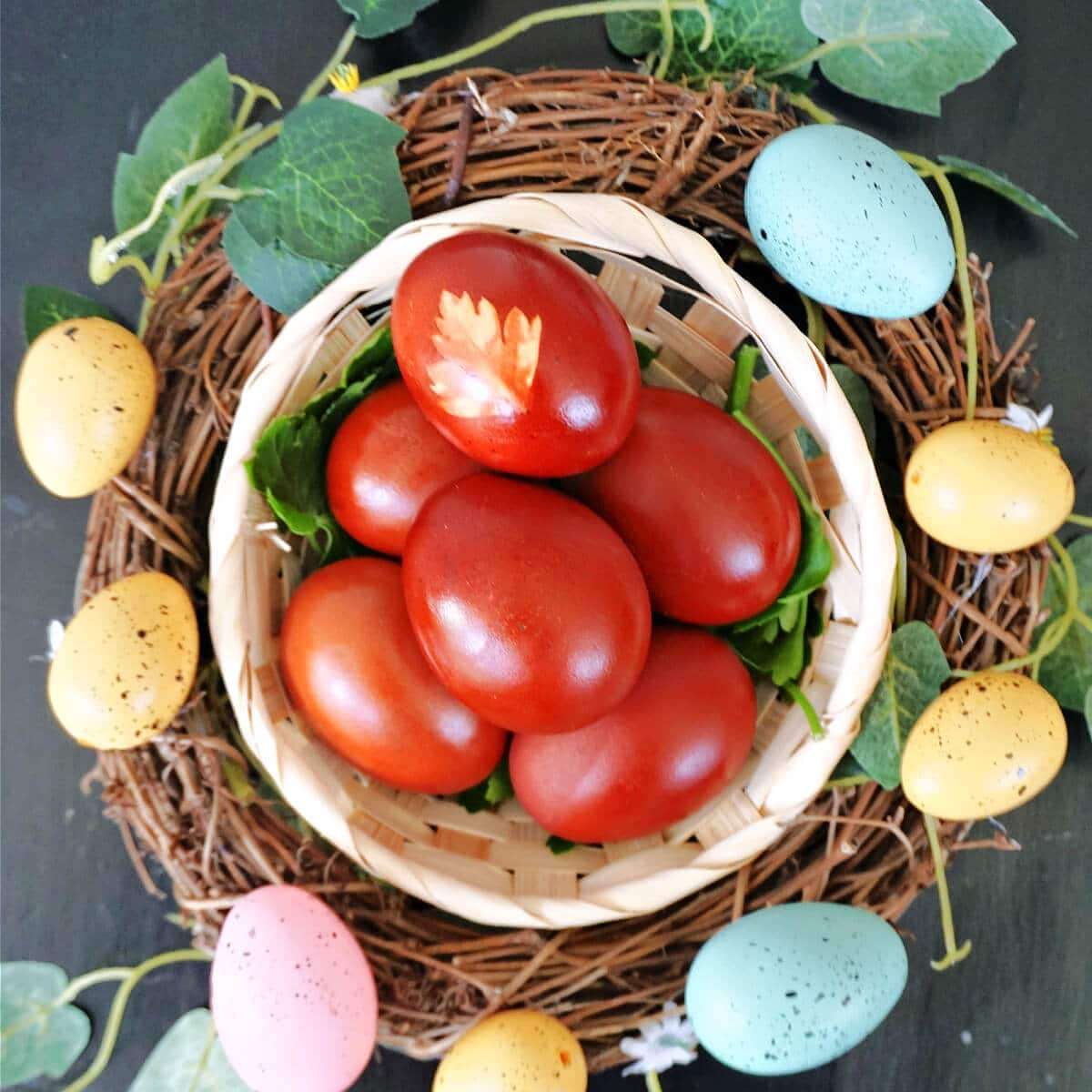
The resulting dyed eggs feature a rich red appearance suitable for Easter decorations and traditions. Vinegar plays a crucial role in fixing the color onto the eggshells, promoting evenness and depth. The dyeing method balances natural color sources with optional vibrant food coloring based on preference.
This technique suits those aiming for naturally tinted eggs with an option for more vivid finishes, and the hard boil ensures eggs are fully cooked for safe consumption or display.
Ingredients
- 6 egg
- 2 beetroot
- red onion skins from 10 onions
- 2 tablespoon vinegar
- 4 cups water
- 1 teaspoon red food colouring paste concentrated
- oil to add shine to the eggs
Instructions
- Pour the water into a pot and bring it to a boil.
- Add the red onion skins, sliced beetroots and vinegar, and boil the mixture for 15 minutes.
- Remove the skins and beets to leave clear red water.
- Carefully wash the eggs to remove any impurities, then add the eggs to the pot.
- Add the red food colouring paste if you use it - this can be optional if you don't have any, and leave the eggs to boil for 15 minutes.
- Remove from the pan, leave the eggs to cool slightly, and polish them with oil for a good shine.
Notes
- Adding vinegar during boiling is essential for achieving a dark and even red color on the eggshells.
- Using only red onion skins and beets yields a natural, softer red tone, while adding concentrated red food coloring paste results in a brighter, more vibrant color.
- Boiling eggs fully is important to ensure the color adheres well; softer boiled eggs may not achieve even coloration.
Nutrition Information
Show DetailsNutrition Facts
Serving: 6eggs
Amount Per Serving
Calories 89 kcal
% Daily Value*
| Calories | 89kcal | 4% |
| Carbohydrates | 6g | 2% |
| Protein | 6g | 12% |
| Fat | 4g | 6% |
| Saturated Fat | 1g | 5% |
| Trans Fat | 1g | 50% |
| Cholesterol | 164mg | 55% |
| Sodium | 71mg | 3% |
| Potassium | 163mg | 3% |
| Fiber | 1g | 4% |
| Sugar | 3g | 6% |
| Vitamin A | 239IU | 5% |
| Vitamin C | 4mg | 4% |
| Calcium | 43mg | 4% |
| Iron | 1mg | 6% |
* Percent Daily Values are based on a 2,000 calorie diet.
User Reviews
Overall Rating
5
You'll Also Love