How To Make Almond Butter (No Added Oil!)
User Reviews
4.8
How To Make Almond Butter (No Added Oil!)
Description
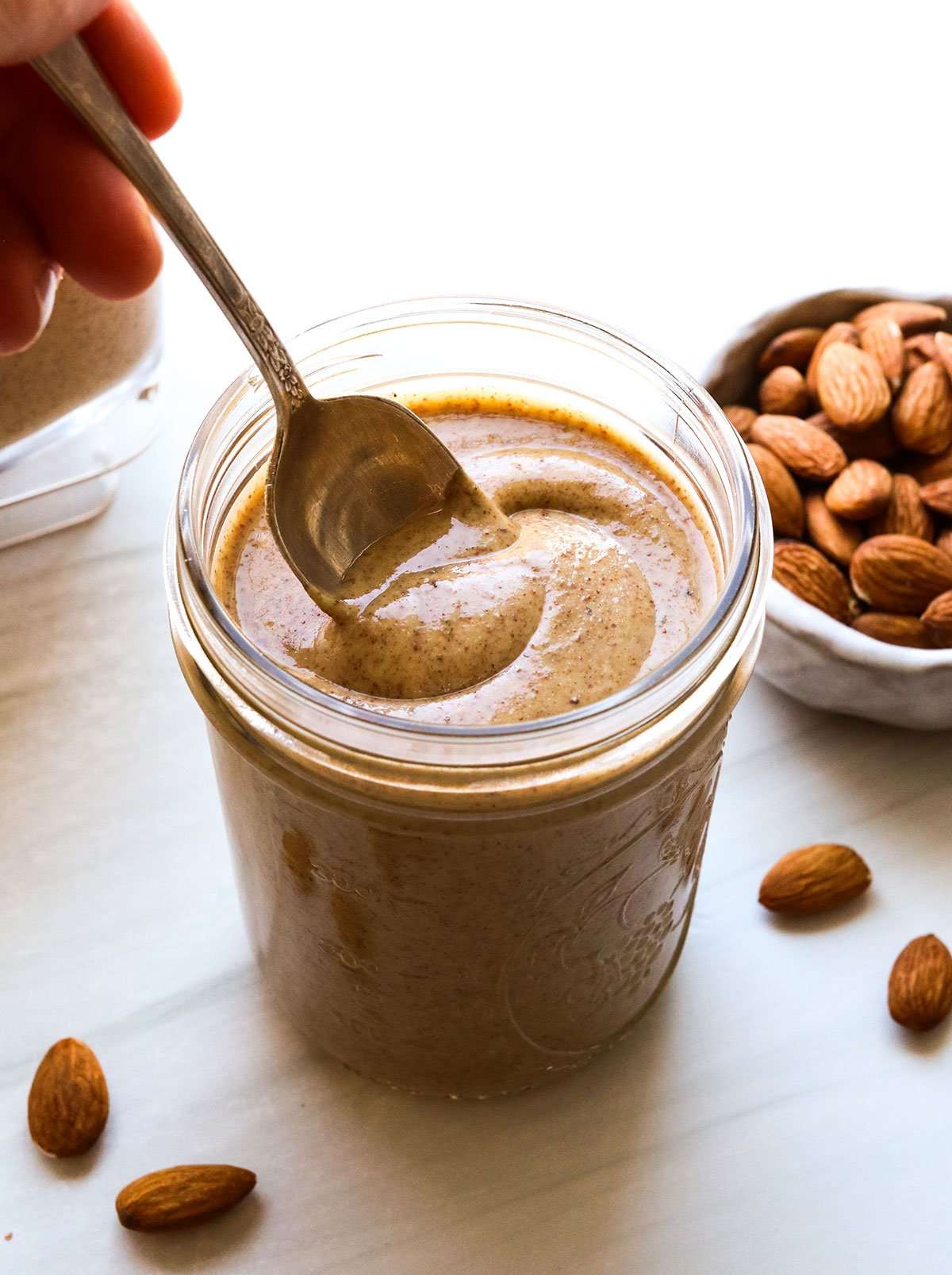
To make almond butter without added oil, whole almonds are first roasted at 350ºF for 10 minutes and then cooled to prevent overheating the food processor. Processing the warm almonds with an 'S' blade slowly breaks them down into almond flour before natural oils release, turning the mixture into a creamy butter. The process can take up to 10 minutes of continuous processing, with occasional scraping recommended but not always necessary.
This method depends on the right equipment to handle extended processing and the heat generated. The resulting almond butter is smooth, pure, and free from oils or stabilizers, retaining the nuts’ roasted flavor. Options for using a high-speed blender require different techniques and quantities.
Nutrition estimates are provided for two-tablespoon servings, helping with portion control. The process involves minimal hands-on time once roasting and cooling are done, offering a homemade version of almond butter with just one ingredient and no added oil.
Ingredients
- 1 pound almonds 3 cups, whole
Instructions
- Preheat the oven to 350ºF and spread the almonds out in a single layer on a large, rimmed baking sheet. Place them in the oven to roast for 10 minutes, then remove the pan and let them cool for at least 10 minutes before moving on. (Placing very hot almonds in your machine could melt it, so be patient!)
- Transfer the cooled almonds (it's okay if they are slightly warm) to a large food processor fitted with an "S" blade. Secure the lid and start processing. The almonds will start to look like flour and stick to the sides of your machine, but after 4 to 5 minutes of processing, it will change into a thicker consistency and release from the sides of the machine.
- You can stop and scrape the sides of your food processor at this point if you'd like to, but the whole process can be relatively hands-off with almost no scraping required. In fact, you can let the machine run for 8 to 10 minutes without scraping, and the nut butter will form on its own! This is the advantage of using a food processor, rather than a blender. (See tips in this post if you prefer to use a blender, though.)
- Once the almonds have been processed for 8 to 10 minutes, they should reach a runny, drippy consistency. At this point, you can add in a 1/2 teaspoon of fine sea salt or ground cinnamon, if you'd like added flavor. Do NOT add any wet ingredients, or it could affect the final texture.
- Store homemade almond butter in a 16-ounce mason jar. It will need to cool completely before you add the lid, so it won't collect steam inside the jar. Adding moisture to the jar could affect the shelf life. Almond butter can be stored in an airtight container in the fridge for at least 1 month when no moisture is introduced, so always be sure to use a clean spoon or knife when using it.
Notes
- Roast almonds for 10 minutes at 350ºF before processing for best flavor and texture.
- Allow almonds to cool for at least 10 minutes before processing to avoid damaging your food processor.
- A powerful food processor with an "S" blade is required for this method; other appliances may require alternate techniques.
- Nutrition info estimates a 2-tablespoon serving size of almond butter.
Nutrition Information
Show DetailsNutrition Facts
Serving: 16Serving
Amount Per Serving
Calories 164 kcal
% Daily Value*
| Calories | 164kcal | 8% |
| Carbohydrates | 6g | 2% |
| Protein | 6g | 12% |
| Fat | 14g | 22% |
| Saturated Fat | 1g | 5% |
| Polyunsaturated Fat | 3g | 18% |
| Monounsaturated Fat | 9g | 45% |
| Trans Fat | 0.01g | 1% |
| Sodium | 0.3mg | 0% |
| Potassium | 208mg | 4% |
| Fiber | 4g | 16% |
| Sugar | 1g | 2% |
| Vitamin A | 0.3IU | 0% |
| Calcium | 76mg | 8% |
| Iron | 1mg | 6% |
* Percent Daily Values are based on a 2,000 calorie diet.
User Reviews
Overall Rating
4.8
You'll Also Love