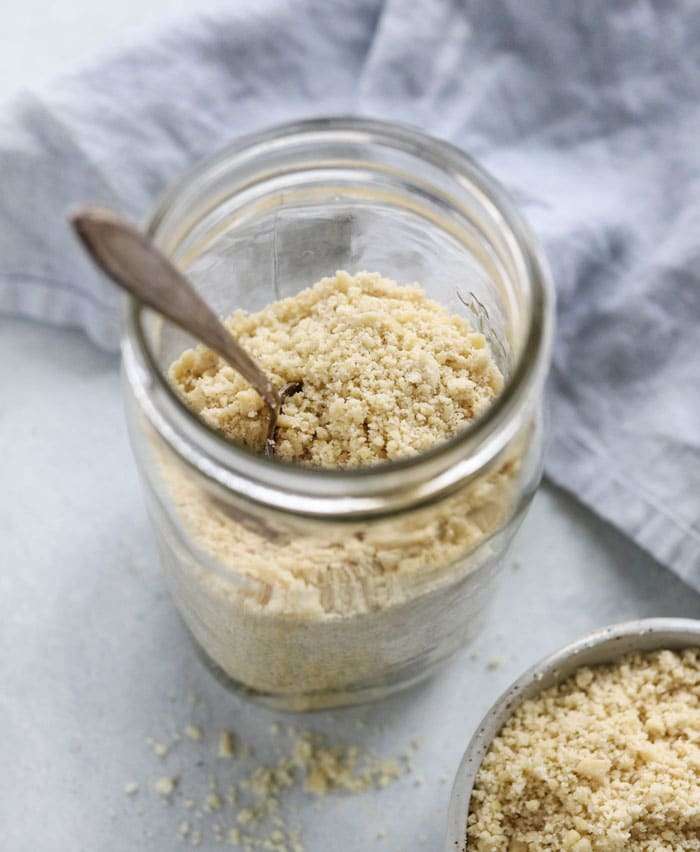
How to Make Almond Flour (Cheaper than Store-Bought!)
User Reviews
5
How to Make Almond Flour (Cheaper than Store-Bought!)
Description
The process involves placing 8 ounces of whole or slivered blanched almonds into a high-speed blender or food processor. Almonds are ground finely but should be monitored carefully to prevent over-processing, which causes the almonds to release oils and become butter. Processing smaller batches yields more even texture.
The homemade almond flour here can be slightly grainier if made in a food processor compared to the finer grind achieved with a blender. Both are suitable for use in recipes that call for almond flour, providing a cost-effective alternative to store-bought options.
For storage, almond flour should be kept in an airtight container placed in a cool, dark pantry, or better yet in refrigeration or freezer to extend shelf life up to one year. This minimizes exposure to moisture and heat that could degrade quality.
Ingredients
- 8 ounces almonds whole or slivered, blanched
Instructions
- Place the blanched almonds in a high-speed blender or food processor, and process until they are finely ground. If using a high-speed blender, be sure not to over-process as the almonds will eventually start to release their oils and become almond butter.
- For best results, do not blend more than 8 ounces of almonds at a time. (I tried using 16 ounces and couldn't get them evenly ground.) For the most finely-ground results, I've found a blender works best, but the flour I made in the food processor also works for making almond flour recipes-- the final product is just slightly grainier.
- Store leftover almond flour in an airtight container in a dark pantry, or better yet in the fridge or freezer for the longest shelf life. Almond flour can keep well for up to one year if it's not exposed to heat or moisture.
Nutrition Information
Show DetailsNutrition Facts
Serving: 8servings
Amount Per Serving
Calories 167 kcal
% Daily Value*
| Calories | 167kcal | 8% |
| Carbohydrates | 5g | 2% |
| Protein | 6g | 12% |
| Fat | 14g | 22% |
| Saturated Fat | 1g | 5% |
| Sodium | 5mg | 0% |
| Potassium | 186mg | 4% |
| Fiber | 2g | 8% |
| Sugar | 1g | 2% |
| Calcium | 67mg | 7% |
| Iron | 0.9mg | 5% |
* Percent Daily Values are based on a 2,000 calorie diet.
User Reviews
Overall Rating
5
You'll Also Love