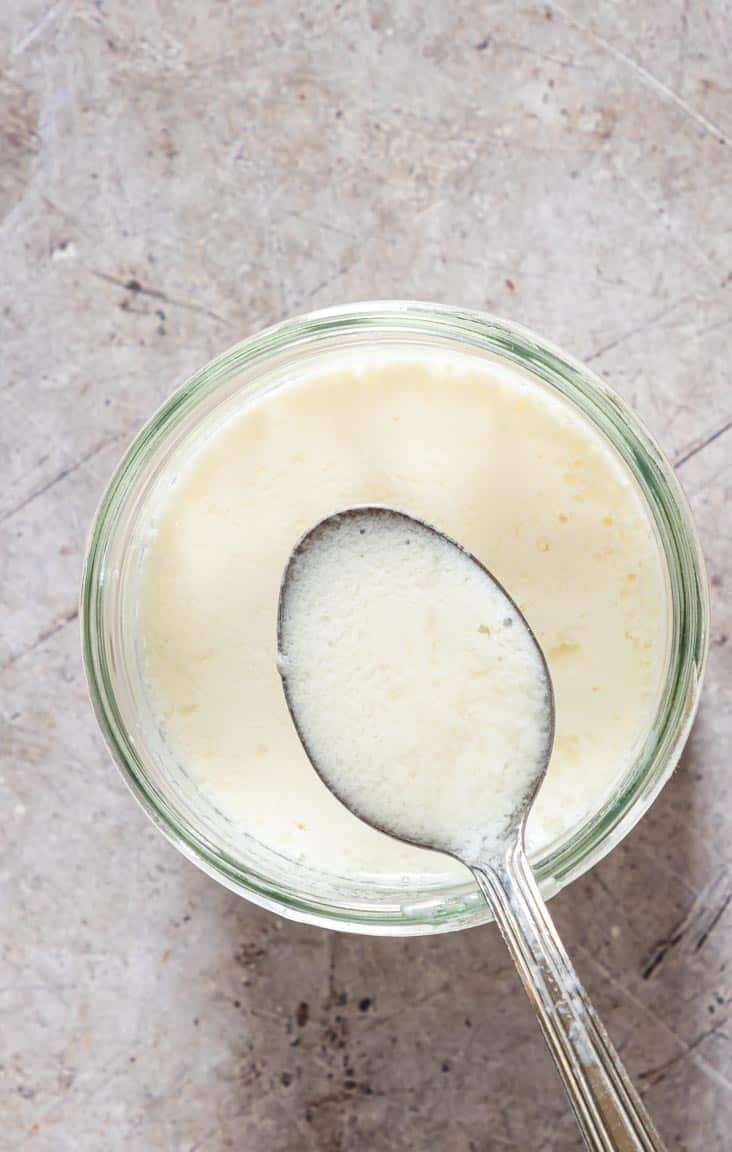
How To Make Buttermilk
User Reviews
5
-
Prep Time
10 mins
-
Servings
4 servings
-
Calories
38 kcal
-
Course
Side Dish
-
Cuisine
American, International
How To Make Buttermilk
Description
How To Make Buttermilk is a straightforward technique to create a buttermilk substitute using common household ingredients: milk and lemon juice or vinegar. By mixing the dairy or dairy-free milk with an acid and letting it stand for about 10 minutes at room temperature, the milk thickens and curdles lightly, mimicking the texture and tang of traditional buttermilk. This method allows cooks to prepare recipes calling for buttermilk without needing to purchase it separately.
The resulting mixture works well in various baked goods, marinades, and sauces, where buttermilk's acidity is required to activate leavening agents or tenderize ingredients. Care should be taken when heating this homemade buttermilk gently, as quick heating can cause curdling. Warming it slowly before incorporation into warm dishes helps avoid unwanted texture changes.
It’s flexible to the type of milk used—whole or reduced-fat dairy milk is common, and almond or other dairy-free milks can also serve as bases. The acid choice varies as well, with lemon juice, lime juice, or distilled vinegar serving the same purpose.
Ingredients
- 1 cup whole milk or dairy free milk like almond milk, 250 ml
- 1 tbsp lemon juice or vinegar
Instructions
- Add your milk into a mixing bowl or mason jar.
- Add in the lemon juice and stir.
- Mix and let stand for 10 minutes at room temperature during which it will curdle.
- Give it another stir and your homemade buttermilk is ready
Notes
- Lime juice can substitute for lemon juice if needed.
- Whole milk is preferred, but reduced-fat milk works for some recipes.
- Heat buttermilk gently to prevent curdling, especially when adding to warm or hot dishes.
- Allow the mixture to stand about 10 minutes for proper curdling before use.
Nutrition Information
Show DetailsNutrition Facts
Serving: 4servings
Amount Per Serving
Calories 38 kcal
% Daily Value*
| Calories | 38kcal | 2% |
| Carbohydrates | 3g | 1% |
| Protein | 2g | 4% |
| Fat | 2g | 3% |
| Saturated Fat | 1g | 5% |
| Cholesterol | 6mg | 2% |
| Sodium | 26mg | 1% |
| Potassium | 81mg | 2% |
| Sugar | 3g | 6% |
| Vitamin A | 99IU | 2% |
| Vitamin C | 1mg | 1% |
| Calcium | 69mg | 7% |
* Percent Daily Values are based on a 2,000 calorie diet.
User Reviews
Overall Rating
5
You'll Also Love