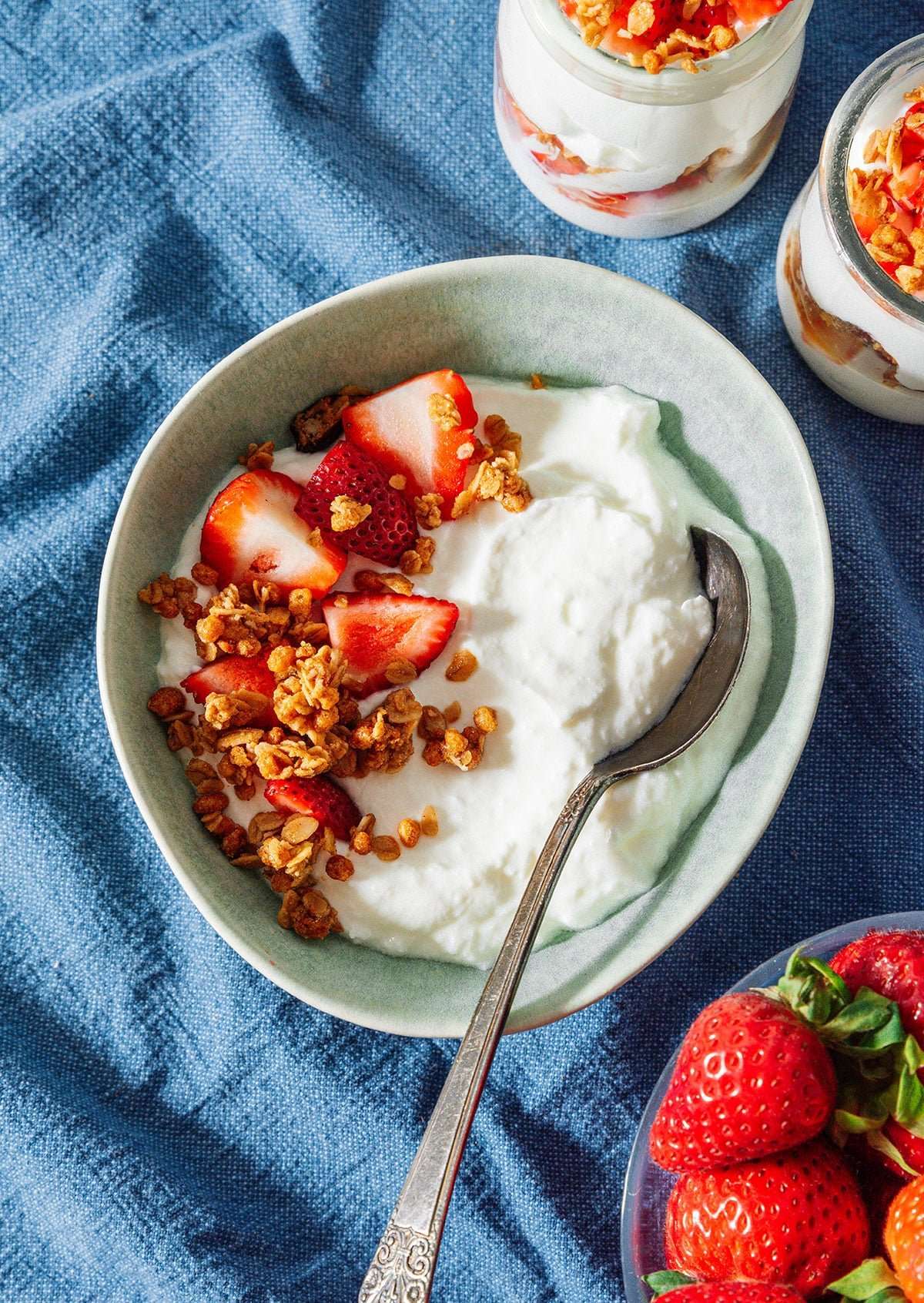
How to Make Greek Yogurt (No Special Equipment)
User Reviews
4.9
-
Prep Time
30 mins
-
Cook Time
6 hrs
-
Total Time
6 hrs 30 mins
-
Servings
2 cups
-
Calories
335 kcal
-
Course
Breakfast, Condiments
-
Cuisine
Mediterranean, Greek
How to Make Greek Yogurt (No Special Equipment)
Description
The How to Make Greek Yogurt recipe guides you through turning simple whole milk and store-bought plain yogurt with live cultures into thick, tangy Greek yogurt. The process starts with heating the milk to just below boiling, which changes protein structure for a creamy consistency. After heating, the milk is cooled rapidly in an ice bath to approximately 100-110°F, a temperature ideal for bacterial fermentation.
Once cooled, a portion of plain yogurt is whisked in to introduce active cultures. The container is covered and wrapped in a moist towel, then placed in a warm spot such as an oven with the light on, to maintain the necessary temperature for fermentation over 4 to 8 hours or overnight. This step allows bacteria to convert milk sugars into lactic acid, thickening and tangifying the yogurt.
After fermentation, the yogurt can be eaten as is or strained through cheesecloth or similar filters to remove whey and thicken it into Greek yogurt consistency. The yogurt is best served chilled and can be flavored or topped according to preference.
Storing the finished yogurt in a clean, airtight container in the refrigerator maintains freshness for up to a week.
Ingredients
- 4 cups milk 960 mL, whole
- ¼ cup PLAIN yogurt ensure the container says “live” or “active” cultures, 60 g, store-bought
Instructions
- Heat Milk: Place 4 cups whole milk in a medium pot and heat to 185-200°F (85-93°C), stirring frequently to preventing a skin from forming.
- Cool Bath: Transfer the pot with milk to an ice bath (I filled my sink with ice and water), to cool milk to 100-110°F (37-43°C).
- Mix: Add ¼ cup plain store-bought yogurt to the cooled milk and whisk well to combine.
- Ferment: Cover jar or bowl with a lid, wrap in a moist, warm towel to keep in heat, and place in oven. Turn on oven light to keep warm, and let the bacteria do its yogurt making magic for 4 to 8 hours (or overnight).*
- Strain: You can eat the yogurt like this, or strain it to make Greek yogurt. To strain, line a mesh sieve with cheesecloth (or paper towels, coffee filters etc), and pour yogurt in. Place over a large bowl and let strain in the fridge for a few hours (or overnight), until it’s reach a consistency you like.
- Serve chilled with your favorite yogurt toppings, or use it in a recipe as you would store-bought yogurt!
Notes
- Keep the fermentation temperature around 100°F by using your oven light or briefly warming the oven.
- Store your homemade yogurt in a clean, airtight container for up to one week.
Nutrition Information
Show DetailsNutrition Facts
Serving: 2cups
Amount Per Serving
Calories 335 kcal
% Daily Value*
| Serving | 1cup | |
| Calories | 335kcal | 17% |
| Carbohydrates | 8.4g | 3% |
| Protein | 19.7g | 39% |
| Fat | 24g | 37% |
| Cholesterol | 30mg | 10% |
| Sodium | 80mg | 3% |
| Potassium | 375mg | 8% |
| Fiber | 0g | 0% |
| Sugar | 11.1g | 22% |
| Vitamin A | 243IU | 5% |
| Vitamin C | 1.2mg | 1% |
| Calcium | 296mg | 30% |
| Iron | 0.1mg | 1% |
* Percent Daily Values are based on a 2,000 calorie diet.
User Reviews
Overall Rating
4.9
You'll Also Love