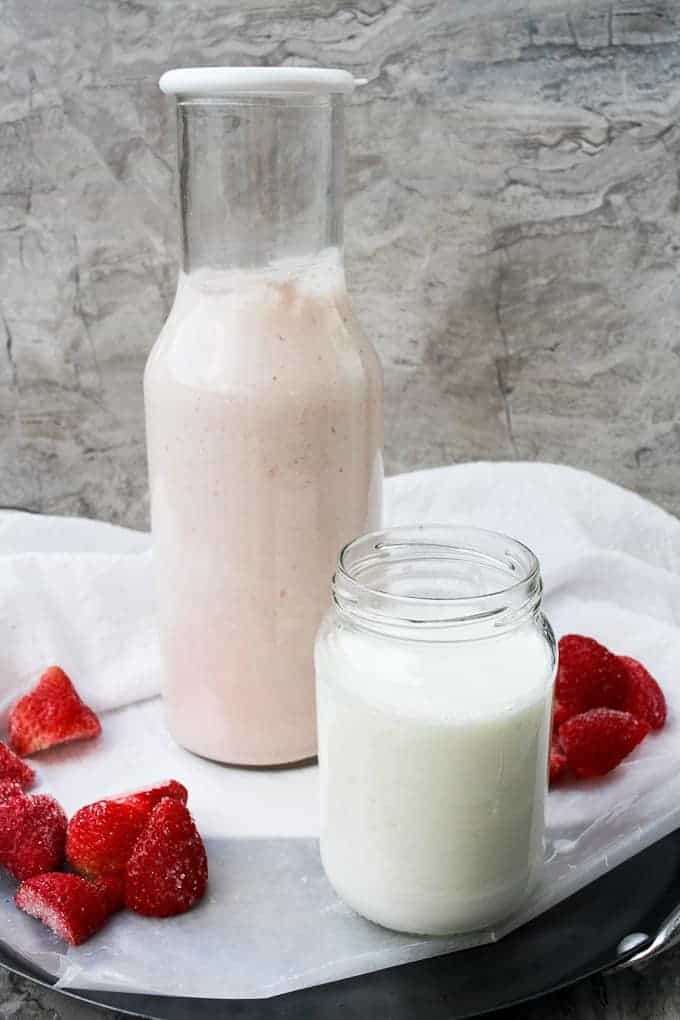
How to Make Milk Kefir
User Reviews
5
How to Make Milk Kefir
Description
How to Make Milk Kefir uses a straightforward process of fermenting milk with kefir grains, which are a symbiotic culture of bacteria and yeasts. The grains are added to milk in a jar covered with a breathable cloth or paper towel, allowing natural fermentation to occur over 12 to 48 hours depending on room temperature. The result is a thickened milk product with a tart, creamy taste that retains the nutritional qualities of milk with added probiotics. After fermentation, the grains are separated and can be reused for continuous kefir production.
The recipe offers flexibility with milk types and suggests avoiding ultra-pasteurized varieties since they may not ferment well. Fruit like strawberries and blueberries can be added to flavored batches for sweetness. The method includes tips for timing fermentation to stop before separation occurs, which can affect texture but not safety or edibility.
This kefir can be consumed plain or used in smoothies, dressings, or baking. It can also be lightly carbonated by allowing a second fermentation in a sealed container, enhancing its effervescence. The kefir grains multiply quickly and can be stored in milk in the refrigerator when not in use.
The notes provide troubleshooting advice for new kefir makers, detailing how to handle dehydrated grains, stale fermentation, and the care of grains between batches. This guidance helps maintain consistent fermentation and flavor development.
Ingredients
Basic Milk Kefir Recipe:
- 1 cup milk See Recipe Notes for non-dairy milk, 2% or whole; avoid ultra-pasteurized
- 1 teaspoon kefir grains
- Fruit Strawberries, cherries, + blueberries are highly recommended, optional for flavored kefir; amount varies with sweetness preference
Equipment Needed:
- 1 glass jar
- 1 paper towel used for straining or filtering
- 1 napkin
- 1 cheesecloth
- 1 coffee filter
- 1 rubber band
- Slotted spoon kitchen tools
- mesh colander
- nut milk bag
Instructions
Basic Kefir Recipe:
- Add kefir grains to the glass jar and add the milk.
- Cover jar with the paper towel, and seal with a rubber band.
- Set milk out of direct sunlight and allow it to ferment at room temperature for about 24 hours.Room Temperatures: When it's approximately 70ºF, the kefir will take about 24 hours. In warmer rooms, it may be closer to 12 hours, and in cooler rooms, it may take as long as 48 hours. Rooms that are warmer than 90º are generally considered unsafe for kefir fermentation, because the milk will spoil faster than the kefir grains can work.When is the Kefir Ready?: The kefir is ready when the milk has thickened, but before the milk begins to separate into a watery bottom layer and a more solidified top layer. If your kefir separates during fermentation, it's still drinkable, just stir it up. Ferment the next batch for a shorter period of time.
- When the kefir has fermented, strain out the grains using a slotted spoon, a mesh colander, or a nut milk bag. (A slotted spoon is typically the easiest method, but if you're using kefir grains that have been dehydrated, the spoon's slots might be too big.)
- Set the kefir grains in a clean jar, and start the process over with more milk.
- Optionally, pour the kefir into a blender, and add fruit. Blend until smooth.
- Refrigerate kefir for up to 2 or 3 weeks. Kefir may separate in the fridge, especially after watery fruit has been added. Simply stir before drinking.
Notes
- Start with small batches of kefir since it is made daily and grains multiply quickly.
- To lightly carbonate, seal finished kefir without grains and leave at room temperature 12-24 hours.
- Kefir grains can ferment non-dairy milk like coconut milk but may stop growing.
- Extra grains can be blended into kefir with fruit or given away.
- Grains can be stored in milk in the fridge for up to a month to pause fermentation.
- Rehydrate dehydrated kefir grains by fermenting with daily milk changes for 4-10 days before use.
- If kefir smells or looks off, discard milk and refresh with new milk for 2-3 days; if persistent, replace grains.
Nutrition Information
Show DetailsNutrition Facts
Serving: 1person
Amount Per Serving
Calories 118 kcal
% Daily Value*
| Calories | 118kcal | 6% |
| Carbohydrates | 11g | 4% |
| Protein | 7g | 14% |
| Fat | 4g | 6% |
| Saturated Fat | 2g | 10% |
| Cholesterol | 18mg | 6% |
| Sodium | 110mg | 5% |
| Potassium | 330mg | 7% |
| Sugar | 11g | 22% |
| Vitamin A | 240IU | 5% |
| Calcium | 283mg | 28% |
* Percent Daily Values are based on a 2,000 calorie diet.
User Reviews
Overall Rating
5
You'll Also Love