How to Make Pandan Juice and Pandan Extract
User Reviews
5
-
Prep Time
10 mins
-
Cook Time
5 mins
-
Total Time
15 mins
-
Servings
1 cup (240g)
-
Calories
10 kcal
-
Course
Condiments
-
Cuisine
Asian
How to Make Pandan Juice and Pandan Extract
Description
The recipe demonstrates producing pandan juice by thoroughly rinsing chopped pandan leaves, blending them with water until smooth, and straining the mixture through a nut milk bag or fine mesh strainer to remove pulp. This unstrained pandan juice imparts the natural aroma and flavor of pandan without artificial colors or additives.
The resulting juice is suitable for use in recipes requiring added liquid, such as desserts like Onde-Onde, Buko Pandan, and Pandan Coconut Jelly. It can also be used to flavor rice or partially replace liquids in other dishes. Since the homemade pandan extract lacks the concentration of commercial extracts, it typically requires triple the volume for similar flavor strength.
The recipe notes provide practical tips on measuring pandan leaves by weight for consistency and on chopping leaves into small segments to ease blending. Because of the natural properties of pandan, the juice's flavor will be less intense than commercial extracts, and usage should be adjusted accordingly.
Ingredients
- 1 cup pandan leaves see Note 1, chopped
- 1 cup water
Instructions
Unstrained Pandan Juice
- Rinse each pandan leaf thoroughly. Pandan is a little like leek in that they can hide a lot of dirt in between the leaves, especially towards the stem near the bottom.
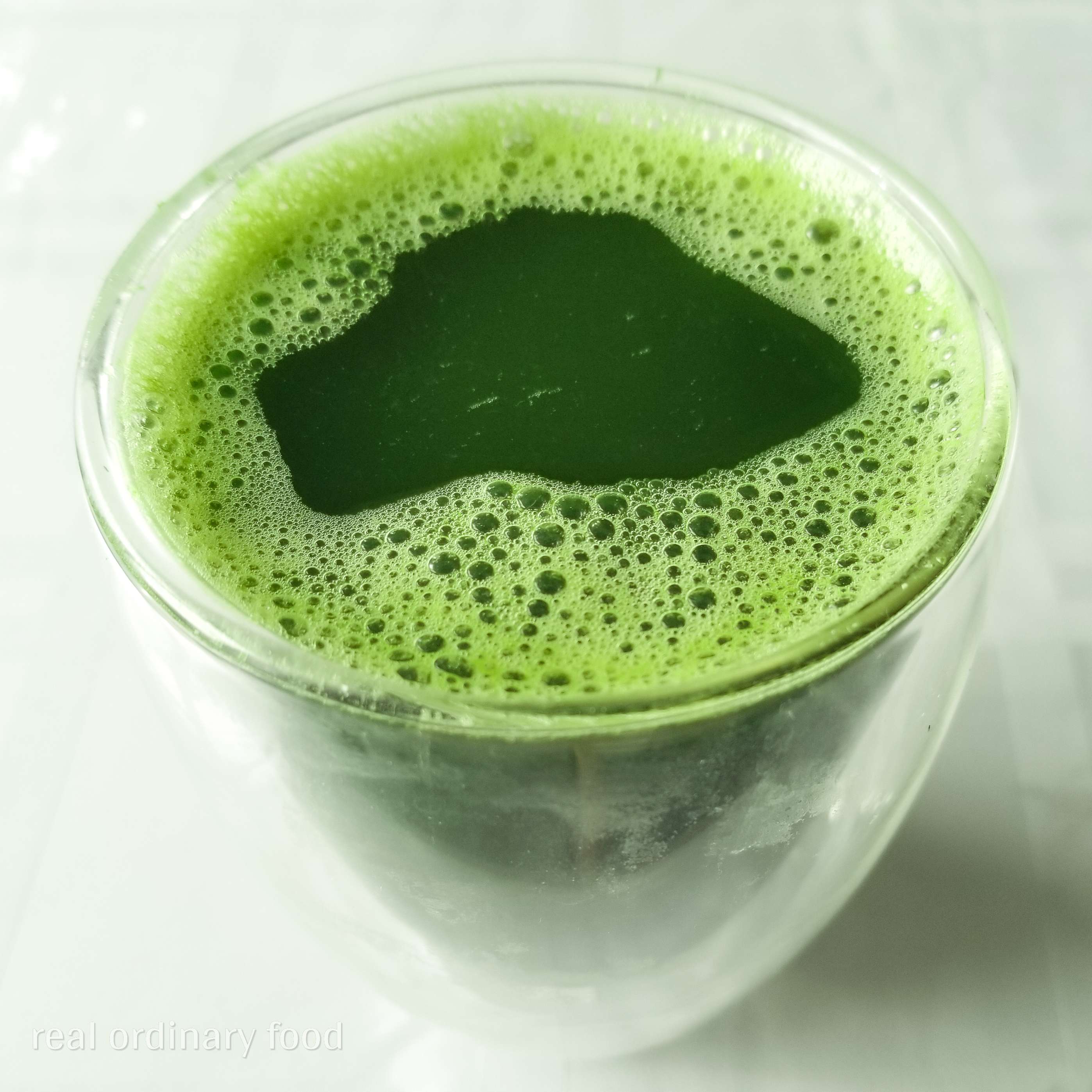
- Add the rinsed leaves along with 1 cup water to a blender. Blend on high speed until very smooth. You may need to scrape down the sides a few times.
- Pour the blended juice through a nut milk bag or fine-mesh strainer into a container. I find using a nut milk bag to be a little faster, plus it allows me to wring more juice out of the pandan pulp. But a metal strainer works too; just work in batches and press down on the pulp with the back of a spoon to extract as much juice as possible.
- You can use this strained pandan juice to make recipes with higher water content, such as Onde-Onde, Buko Pandan, Cendol, Pandan Coconut Jelly, and Kuih Seri Muka, or use it to flavour rice. Depending on the recipe, you can also swap out part of the liquid in a recipe for pandan juice. If you want a more intense green colour, you should make pandan extract instead, instructions below.
Pandan Extract
- Follow the instructions for Strained Pandan Juice. Leave the strained juice in the fridge for 48 hours, undisturbed, in an airtight jar.
- After 48 hours, you’ll notice the pandan juice has separated into a colour gradient: the bottom layer is a darker green due to the settling of the chlorophyll pigments in the juice. Pour off the pale liquid at the top and you are left with the darker concentrated stuff at the bottom, which is the extract (see Note 2). 1 cup of pandan juice yields roughly 2 tbsp of pandan extract through this method. You can use this pandan extract to add colour to baked goods, such as this Pandan Coconut Loaf.
Notes
- Chop pandan leaves into pieces no longer than 2 inches to ensure easier blending and better extraction.
- Use weight measurements (about 50g per cup) rather than leaf count for consistency, as leaf size varies.
- Homemade pandan extract is less concentrated, so use about one tablespoon homemade extract for every teaspoon of storebought extract called for in recipes.
Nutrition Information
Show DetailsNutrition Facts
Serving: 1cup (240g)
Amount Per Serving
Calories 10 kcal
% Daily Value*
| Calories | 10kcal | 1% |
| Carbohydrates | 2g | 1% |
| Protein | 1g | 2% |
| Fat | 0.1g | 0% |
| Sodium | 69mg | 3% |
| Potassium | 156mg | 3% |
| Fiber | 1g | 4% |
| Vitamin A | 3150IU | 63% |
| Vitamin C | 28mg | 31% |
| Calcium | 46mg | 5% |
| Iron | 1mg | 6% |
* Percent Daily Values are based on a 2,000 calorie diet.
User Reviews
Overall Rating
5
You'll Also Love