How to make Preserved Lemons
User Reviews
5
-
Prep Time
10 mins
-
Preserving Time
21 d
-
Total Time
21 d 10 mins
-
Servings
20 to 30
-
Calories
50 kcal
-
Course
Condiments
-
Cuisine
Middle Eastern, North African
How to make Preserved Lemons
Description
How to make Preserved Lemons involves carefully preparing whole lemons by cutting them into quarters without detaching the base and filling the crevices with kosher salt. The salted lemons are then pressed into a jar at the bottom layered with more salt. The method creates an anaerobic environment that allows the lemons to ferment and soften their peel while mellowing their acidity.
The lemons soften over time and develop complex flavors with a salty, slightly bitter, and fruity profile that complements a range of dishes. The cuts allow the salt to penetrate thoroughly without separating the wedges, which helps maintain the lemon's structure in the jar.
This preservation technique transforms fresh lemons into a unique cooking ingredient often used in tagines, sauces, salads, and dressings. Selecting organic lemons is advised since the peel is eaten after preservation. Using a jar with a rubber gasket helps prevent lid corrosion during fermentation.
The notes recommend adjusting lemon quantity depending on size, choosing organic when possible, and consult the original source for flavoring variations.
Ingredients
- 7 to 10 lemon or regular lemons if not available), plus 1-2 extra lemons for juicing, Meyer variety
- kosher salt (lots of it)
Instructions
- Grab a large canning jar that is just large enough to hold the lemons (a 32-ounce jar will hold about 7 to 10 Meyer lemons; if you want to halve this recipe, use a smaller jar). Cover the bottom of your canning jar with 1 to 2 tablespoons of kosher salt.Note: I like to use a canning jar with a rubber gasket to prevent the lid from corrosion.
- Rinse the lemons and scrub them really well. Set aside 1 or 2 lemons for juicing at the end.
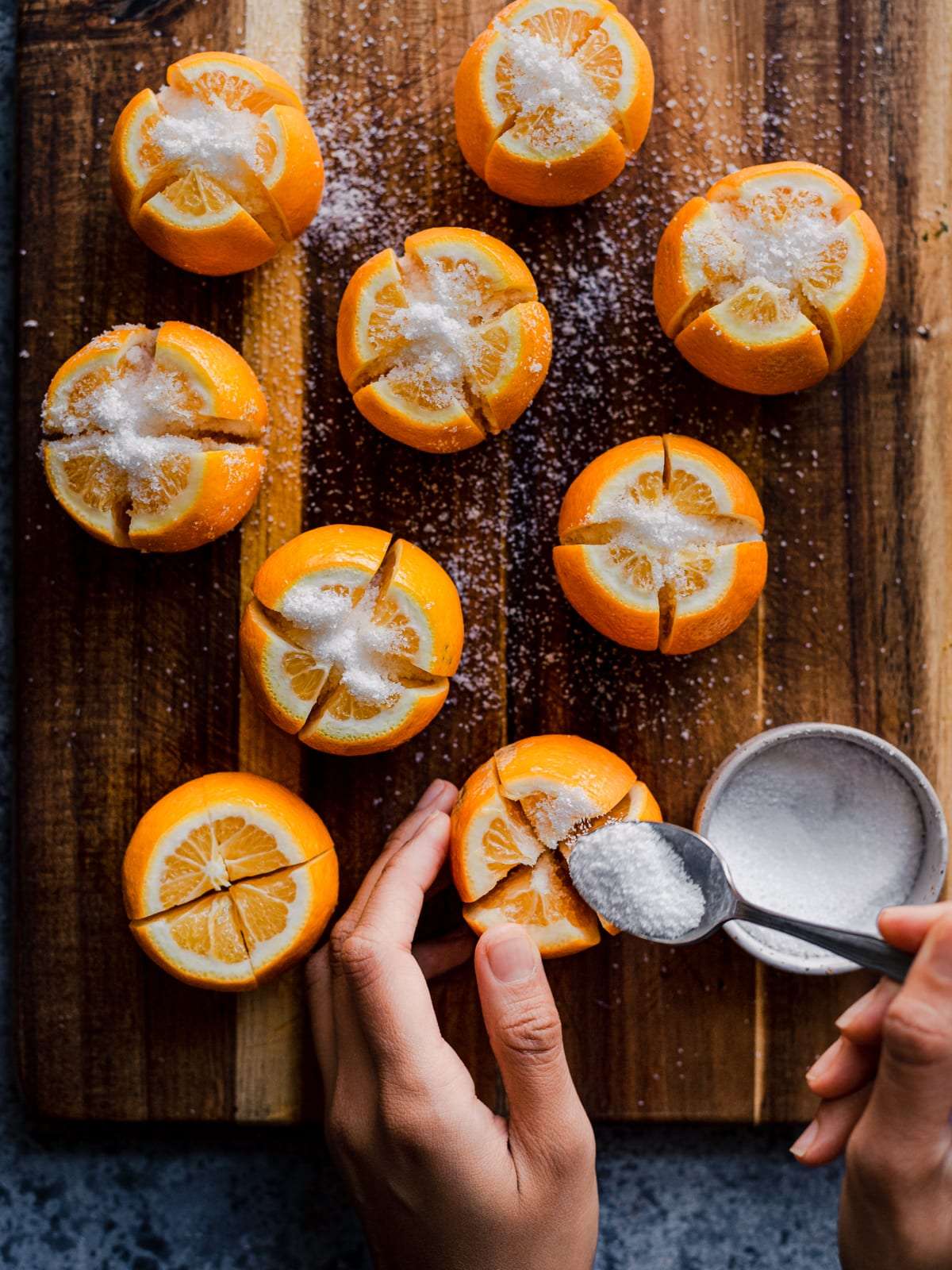
- Cut off a thin slice from both ends of each lemon so they have a flat bottom. Stand the lemon up and slice lengthwise, almost all the way through but keep the lemon attached at the base. Flip the lemon by 90º and slice lengthwise again, as if quartering the lemons into wedges, but not all the way through.
- Gently pry the lemons open but do not detach them. Fill each crevice with a generous amount of kosher salt (a generous tablespoon in my estimation). Seal the lemons up to close.
- Add a few lemons to the jar. Press them down with a muddler, a pair of tongs, a pestle, or a sturdy spoon so that they release their juices and you can make room for more lemons. Pack the jar as tightly as you can with the salted lemons, pressing down to cover them with their juices. NOTE: If the juice released does not cover the lemons, squeeze the juice from the reserved 1 or 2 lemons on top. If covered by their juices and you have a little extra space, you can salt the remaining lemons and add them to the jar.
- Cover the lemons with 2 tablespoons of kosher salt (and any optional flavorings). Seal the jar and let it sit at room temperature (I store it in my pantry) for at least 3 weeks, or until the lemon rinds are very soft. Gently shake the jar every day, turning upside down, for the first 2 weeks.
- When ready to use, you can use the entire lemon, but it’s more common to scoop out the flesh and use only the peel. If desired, wash the lemon peel before using to make slightly less salty (I don't typically do this).
Notes
- Use organic lemons when possible since the peel is consumed.
- Adjust the number of lemons based on size; smaller lemons require more.
- Choose regular lemons if Meyer are unavailable, noting flavor differences.
- Use a jar with a rubber gasket to reduce corrosion risk during fermentation.
Nutrition Information
Show DetailsNutrition Facts
Serving: 20to 30
Amount Per Serving
Calories 50 kcal
% Daily Value*
| Calories | 50kcal | 3% |
| Protein | 1g | 2% |
| Sodium | 234mg | 10% |
| Potassium | 192mg | 4% |
| Fiber | 2g | 8% |
| Vitamin A | 0.1IU | 0% |
| Vitamin C | 47mg | 52% |
| Calcium | 19mg | 2% |
* Percent Daily Values are based on a 2,000 calorie diet.
User Reviews
Overall Rating
5
You'll Also Love