How To Make Quark Cheese
User Reviews
5
-
Prep Time
20 mins
-
Cook Time
15 mins
-
Additional Time
1 d
-
Total Time
1 d 35 mins
-
Course
Condiments
-
Cuisine
German, International
How To Make Quark Cheese
Description
How To Make Quark Cheese involves heating whole milk slowly to 77°F and then adding a mesophilic starter culture to encourage fermentation. Liquid calcium chloride is added if pasteurized milk is used to aid coagulation. Liquid rennet is introduced to curdle the milk, forming curds and whey. The gentle stirring method with a skimmer helps mix ingredients evenly while preserving milk structure. After setting, the curds are allowed to form a solid mass.
Once curds form, they are cut and drained using cheesecloth to remove whey, resulting in a soft, creamy cheese with a smooth texture. The use of whole or raw milk affects richness and flavor. The process requires careful temperature control and clean equipment to produce consistent results.
Quark cheese can be eaten fresh or used as a base for other recipes needing smooth, mild cheese. It provides a versatile dairy ingredient without aging or pressing. This recipe suits home cheesemakers looking for a fresh, simple cheese.
Ingredients
- 2 gallons whole milk whole milk will produce the creamiest, most flavorful result. Raw milk, which is what I use, will produce the very best results, or half whole/half 2%
- 1/4 teaspoon mesophilic culture
- 1/2 teaspoon liquid calcium chloride (omit if using raw milk)
- 1/2 teaspoon liquid rennet
- Additional equipment needed:
- stainless steel skimmer
- cheesecloth
- Thermometer (you can use a dairy thermometer or a regular instant read digital thermometer)
Instructions
- Put the milk in a large sterilized pot over medium heat. Slowly heat it to 77 F. Don't try and speed up this process or the milk will not set properly. Stir the milk gently with a sterilized stainless steel spoon to prevent scorching. Remove the pot from the heat.
- Sprinkle the mesophilic culture evenly over the surface of the milk and let it sit for 5 minutes to rehydrate. Use a sterilized stainless steel skimmer, moving it in a gentle up-and-down motion to draw down and mix in the culture, avoiding breaking the surface of the milk. Stir the calcium chloride in 1/2 cup of cool, non-chlorinated water. Give the milk a gentle stir and while it's swirling, add the diluted calcium chloride to the milk. Immediately stir the milk with the skimmer using the same up-and-down motion. Stir the rennet in 1/2 cup of cool, non-chlorinated water and repeat the process of using the skimmer with the up-and-down motion. Make sure the calcium chloride and rennet are thoroughly mixed throughout the milk, otherwise the milk will not set properly.Cover the pot and let it sit in a draft-free location at room temperature for 24 hours (wrap the pot in a large towel if needed).After 24 hours check the milk. Tip the pot carefully to drain off the whey on the surface.
- If the milk is properly set it will have pulled away from the sides. Use a long, sterilized knife to check for a clean break in the thickened milk (see pics in blog post). If you can cut through it and get a clean break the milk is properly set. If it isn't, let it continue to sit and check again after 30 minutes. Repeat if needed. Use a long, sterilized knife to cut 2-inch-wide strips from top to bottom through the curd. Then follow the same process to cut 2-inch strips horizontally from side to side. Now that you've used a long knife to cut the curd vertically, next use the skimmer to cut the curd horizontally into cubes.
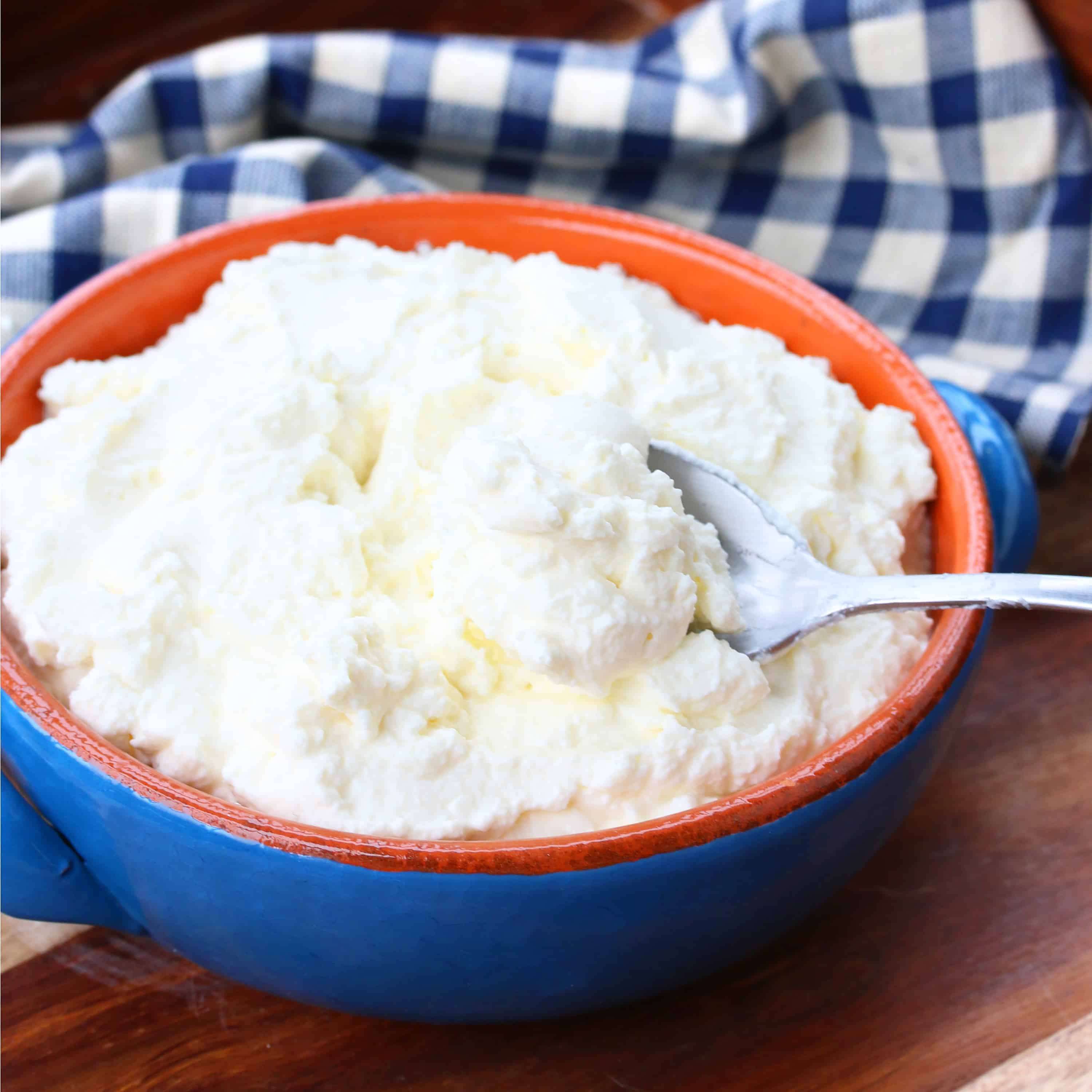
- Place the curds in a colander lined with cheesecloth. Depending on the size of your colander you may need to work in batches. Let the curds drain for about 4 hours (it may be less depending on the mesh size of your cheesecloth). Let the curds drain until you get a thick, spreadable consistency. Transfer the finished quark to a bowl, give it several good stirs to break up any lumps, cover and refrigerate until ready to use. It will keep in the fridge for up to 2 weeks. Yield: This will vary according to what type of milk you use and how long you let it drain. Yield will be approximately 4 pounds.
- For an even creamier consistency you can make what the Germans call Sahnequark, or "cream quark", by stirring in a little heavy cream.
User Reviews
Overall Rating
5
You'll Also Love