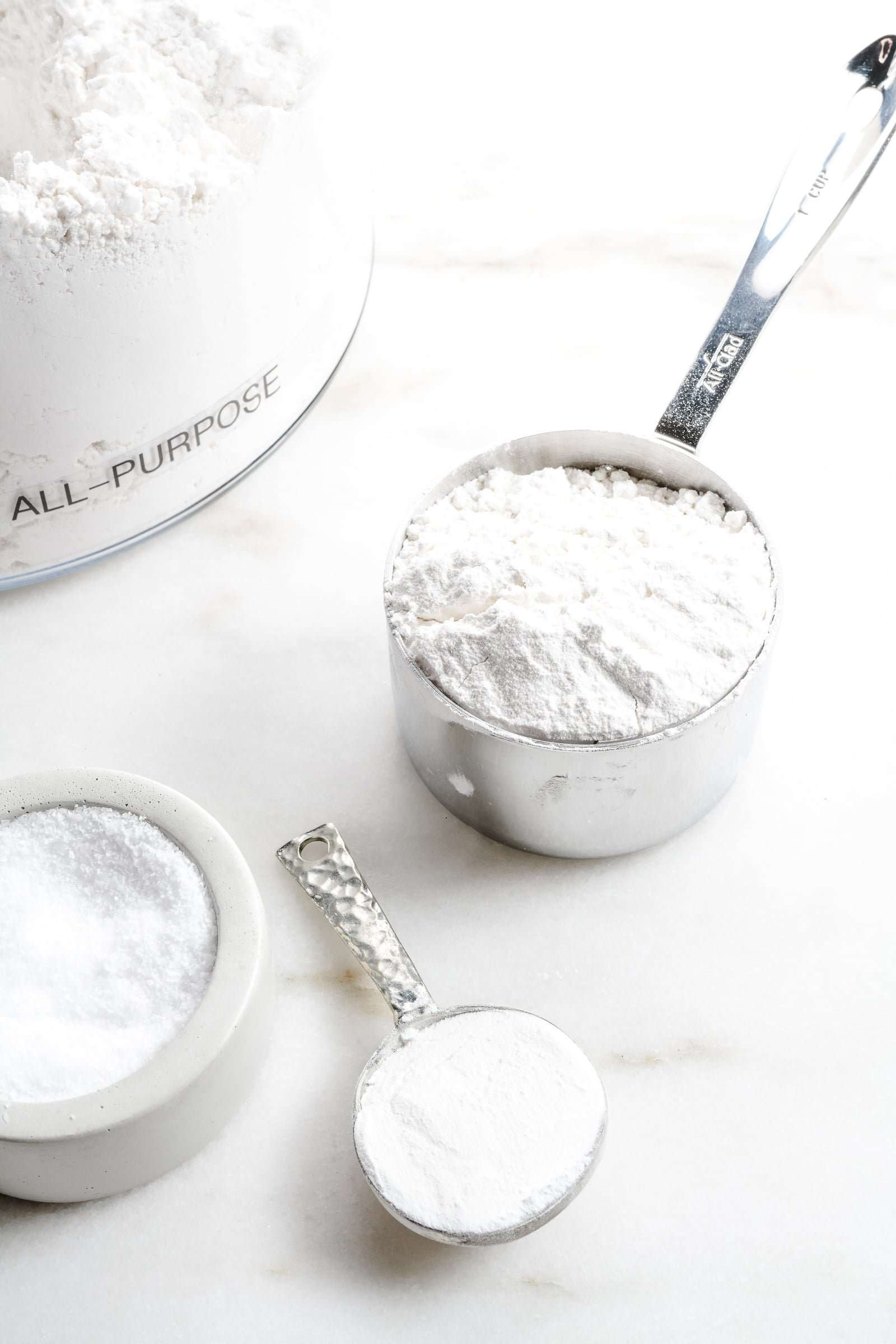
How to Make Self-Rising Flour
User Reviews
5
How to Make Self-Rising Flour
Description
Making self-rising flour at home involves measuring all-purpose flour and mixing it thoroughly with baking powder and kosher salt. The specified proportions ensure the correct leavening and seasoning for baked goods that call for self-rising flour, which typically includes pancakes, biscuits, or quick breads.
The instructions are simple: whisk the ingredients together until evenly combined. The recipe also provides a large batch formula for convenience if you prefer to prepare a bigger quantity at once, which can be stored in an airtight container for up to six months.
Having homemade self-rising flour on hand allows flexibility in baking and can be a practical alternative if commercial self-rising flour is unavailable.
Ingredients
- 1 cup all-purpose flour
- 1 1/2 /2 teaspoons baking powder
- 1/4 /4 teaspoon kosher salt
Instructions
- Measure all ingredients and whisk to combine.
Notes
- Store homemade self-rising flour in an airtight container to maintain freshness for up to six months.
- Mix well to ensure even distribution of baking powder and salt throughout the all-purpose flour.
- Use this blend as a direct substitute for self-rising flour in recipes requiring it.
Nutrition Information
Show DetailsNutrition Facts
Serving: 4(1/4) cup
Amount Per Serving
Calories 115 kcal
% Daily Value*
| Serving | 0.25 cup | |
| Calories | 115kcal | 6% |
| Carbohydrates | 25g | 8% |
| Protein | 3g | 6% |
| Fat | 0.3g | 0% |
| Saturated Fat | 0.05g | 0% |
| Polyunsaturated Fat | 0.1g | 1% |
| Monounsaturated Fat | 0.03g | 0% |
| Sodium | 147mg | 6% |
| Potassium | 185mg | 4% |
| Fiber | 1g | 4% |
| Sugar | 0.1g | 0% |
| Calcium | 70mg | 7% |
| Iron | 2mg | 11% |
* Percent Daily Values are based on a 2,000 calorie diet.
User Reviews
Overall Rating
5
You'll Also Love