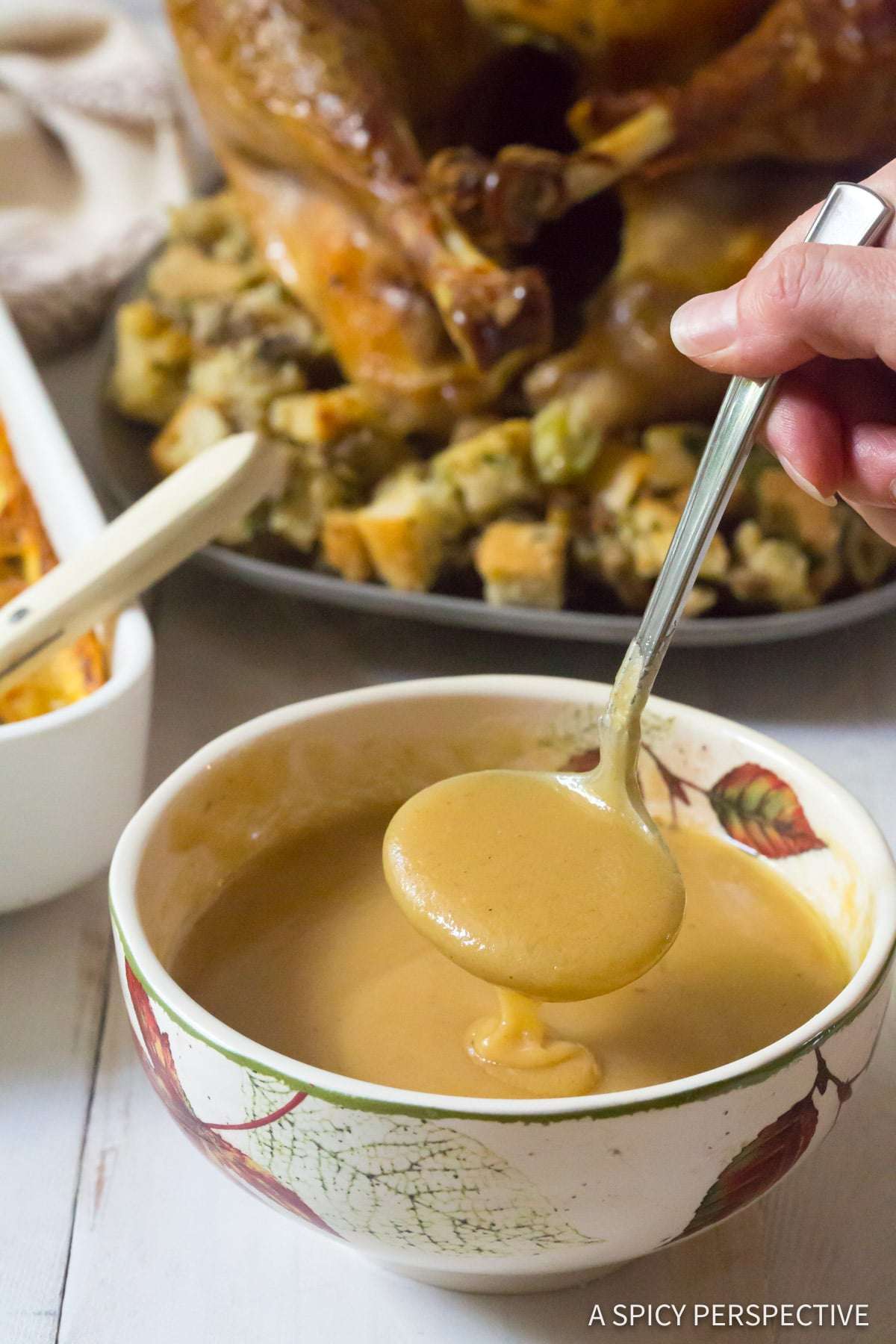
How To Make Turkey Gravy
User Reviews
5
-
Prep Time
5 mins
-
Cook Time
10 mins
-
Total Time
15 mins
-
Servings
12
-
Calories
173 kcal
-
Course
Condiments
-
Cuisine
American
How To Make Turkey Gravy
Description
After roasting a turkey, pan drippings are skimmed for fat, which is cooked with flour, chopped onion, and herbs like sage, thyme, and rosemary to form a flavorful roux base. The roux is cooked until golden and aromatic. Then, measured turkey drippings are combined with low-sodium turkey or chicken broth to total about four cups of liquid, which is whisked into the roux to create the gravy.
Taste is important, especially if the drippings are salty from brining; reduce drippings amount accordingly to prevent oversalting. The gravy thickens as it simmers and can be adjusted with broth for desired consistency. This method produces a classic homemade turkey gravy with herbal complexity and a balanced savory profile.
Ingredients
- 1-3 cups turkey pan drippings
- 1 1/2-3 1/2 cups turkey broth or chicken broth, low-sodium
- 5 tablespoons all-purpose flour
- 1/4 cup onion chopped
- 3 tablespoons fresh herbs sage, thyme, rosemary, chopped
- salt and pepper
Instructions
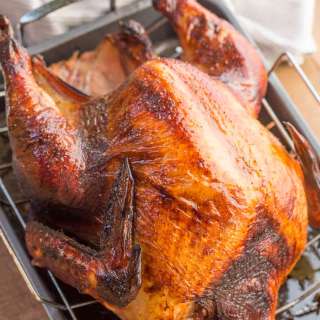
- After roasting a turkey, there are drippings left in the bottom of the pan. Depending on the size of your turkey and exactly how you prepare it, your turkey could produce anywhere from 1 to 5+ cups drippings. If you brined your turkey, the drippings will be very salty. It's important to taste the dripping before you start making gravy. If starting with "briny" drippings, use only 1 cup of dripping, or your gravy will be way too salty. Also make sure to use low sodium broth so you have better control over salt content.
- Skim off 1/4 cup turkey fat from the drippings and place it in a sauté pan. Set over medium heat and whisk in the flour to create a roux. Add the chopped onion and fresh herbs, and cook until the onions are soft and the roux is golden.
- Meanwhile measure out the pan drippings and broth to total 4 cups combined. This is not an exact science, as all drippings are different based on how to prepared your turkey. Be careful not to add too much of the drippings if they are very salty. Also, you want some turkey fat in the mix, but if your drippings are primarily fat, use less drippings and more broth.
- Pour the liquid into the roux, whisking to incorporate evenly. Once the mixture is smooth, simmer to allow it to thicken. The thickness of your gravy is entirely up to you. I like mine thick enough so coat a spoon. Once you reach your desired consistency, turn off the heat.
- Taste the gravy, then salt and pepper as needed. Gravy will thicken as it cools, so either set it on a warmer or set a lid over the pan, and keep a little extra broth to stir in at the end and loosen the gravy.
- When ready to serve, rewarm if needed. Whisk, 1/4-1/2 cup of additional broth into the gravy if needed. Then use a sieve to strain out the onions and herbs as you pour it into a gravy bowl. Serve immediately.
Nutrition Information
Show DetailsNutrition Facts
Serving: 12Serving
Amount Per Serving
Calories 173 kcal
% Daily Value*
| Serving | 0.5cup | |
| Calories | 173kcal | 9% |
| Carbohydrates | 3g | 1% |
| Protein | 1g | 2% |
| Fat | 17g | 26% |
| Saturated Fat | 5g | 25% |
| Cholesterol | 17mg | 6% |
| Sodium | 12mg | 1% |
| Potassium | 47mg | 1% |
| Fiber | 0g | 0% |
| Sugar | 0g | 0% |
| Vitamin A | 85IU | 2% |
| Vitamin C | 1.6mg | 2% |
| Calcium | 3mg | 0% |
| Iron | 0.3mg | 2% |
* Percent Daily Values are based on a 2,000 calorie diet.
User Reviews
Overall Rating
5
You'll Also Love