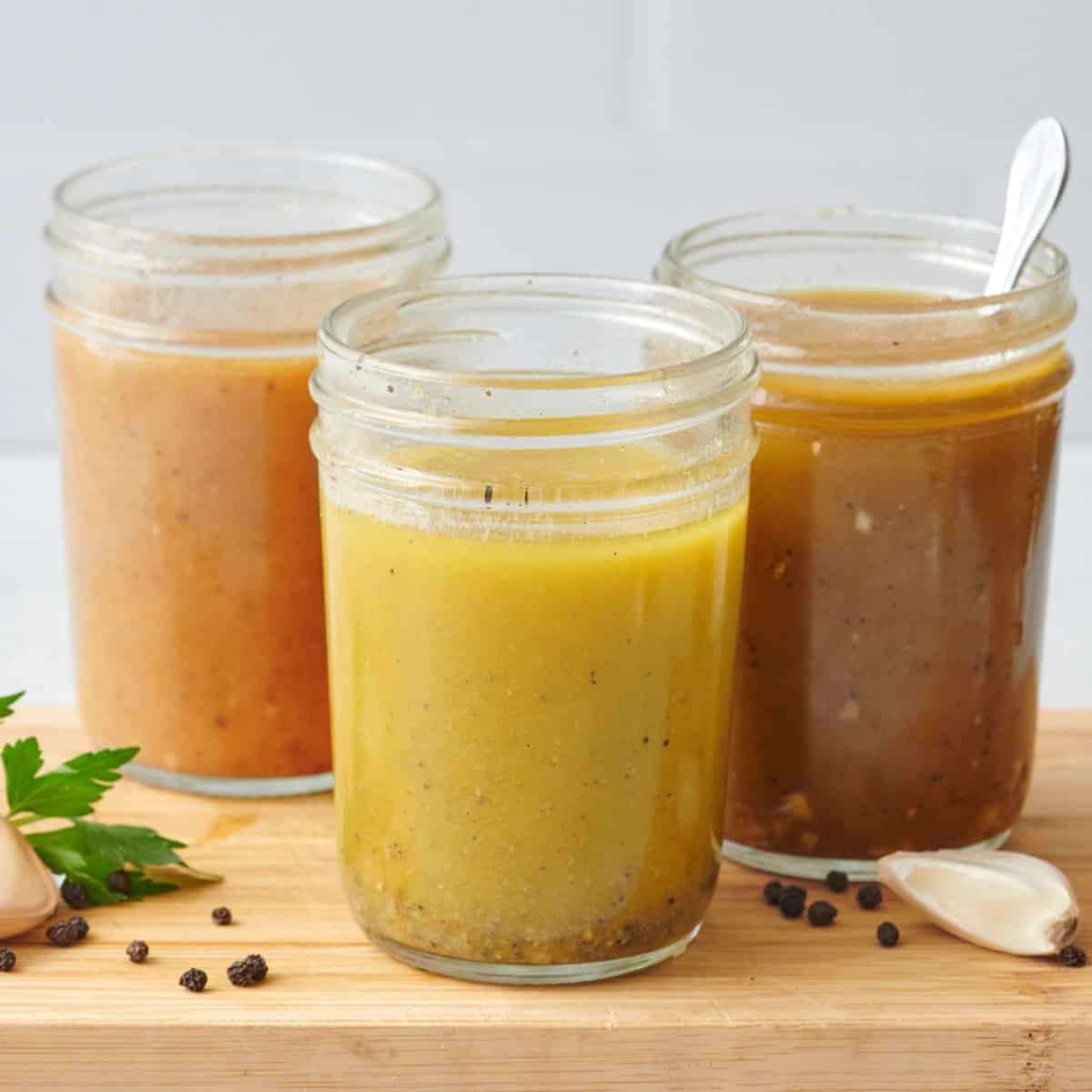
How to Make Vinaigrette
User Reviews
5
-
Prep Time
5 mins
-
Total Time
5 mins
-
Servings
2 servings
-
Calories
191 kcal
-
Course
Condiments, Others
-
Cuisine
American
How to Make Vinaigrette
Description
How to Make Vinaigrette starts by combining vinegar, minced garlic (if using), Dijon mustard, salt, and black pepper in a small jar or bowl. While whisking or shaking vigorously, extra-virgin olive oil is slowly drizzled in to emulsify the mixture, thickening it and combining the flavors smoothly. Tasting and adjusting seasoning or ratio of ingredients allows tailoring the dressing to personal preference.
The vinaigrette offers a balance of acidity from the vinegar, slight heat and binding from the mustard, and richness from the olive oil, with optional garlic adding pungency. It coats salad greens evenly and can also be used as a marinade or drizzle for cooked vegetables.
For best results, use room temperature ingredients to aid emulsification and choose a good quality extra-virgin olive oil for flavor. Different vinegars can be used to vary the taste profile, such as balsamic, red wine, or apple cider vinegar. If using fresh garlic, add it just before serving for optimal flavor and shelf life.
Leftover vinaigrette keeps in the refrigerator for up to five days, longer without fresh garlic. Always shake or stir before serving, as separation is natural.
Ingredients
- 1 tablespoon vinegar
- 1 small garlic minced (optional, clove
- ½ teaspoon Dijon mustard
- ¼ teaspoon salt
- ¼ teaspoon black pepper
- 3 tablespoons extra-virgin olive oil
Instructions
- Place the vinegar, garlic, mustard, salt and pepper in a small jar.
- Slowly drizzle in the olive oil while whisking or shaking the jar vigorously until the dressing has thickened and looks smooth and well combined.
- Taste the vinaigrette and adjust the seasoning, adding more salt, pepper, or vinegar if needed or adding more olive oil if it tastes too tangy.
Notes
- Store vinaigrette in a sealed jar in the fridge up to 5 days; without fresh garlic, it can last up to 2 weeks.
- Add minced garlic just before serving to maintain freshness and avoid quick spoilage.
- Use room temperature ingredients to help the dressing emulsify smoothly.
- Choose a high-quality extra-virgin olive oil for the best flavor impact.
- Experiment with different vinegars to customize the dressing's taste.
- Adjust ingredients to taste, adding more oil to soften acidity or vinegar to increase tanginess.
Nutrition Information
Show DetailsNutrition Facts
Serving: 2servings
Amount Per Serving
Calories 191 kcal
% Daily Value*
| Serving | 2tablespoons | |
| Calories | 191kcal | 10% |
| Carbohydrates | 1g | 0% |
| Protein | 0.2g | 0% |
| Fat | 21g | 32% |
| Saturated Fat | 3g | 15% |
| Polyunsaturated Fat | 2g | 12% |
| Monounsaturated Fat | 15g | 75% |
| Sodium | 305mg | 13% |
| Potassium | 12mg | 0% |
| Fiber | 0.1g | 0% |
| Sugar | 0.04g | 0% |
| Vitamin A | 2IU | 0% |
| Vitamin C | 0.5mg | 1% |
| Calcium | 5mg | 1% |
| Iron | 0.2mg | 1% |
* Percent Daily Values are based on a 2,000 calorie diet.
User Reviews
Overall Rating
5
You'll Also Love