How to Pick a Watermelon
User Reviews
5
How to Pick a Watermelon
Description
How to Pick a Watermelon outlines specific visual and tactile cues to identify a ripe fruit. Well-defined stripes with a clear contrast, a prominent yellow spot where the watermelon rested on the ground, and a round shape usually indicate sweetness and ripeness. Heftiness suggests that the melon is full of water and thus juicier. When thumped, a ripe watermelon produces a deep sound, distinguishing it from underripe, airy melons. A dried stem signals full maturity while scars or weathering on the surface often do not negatively affect the quality.
This guidance helps shoppers select watermelons that will be flavorful and satisfying. Proper selection reduces the risk of buying underripe or mealy fruit.
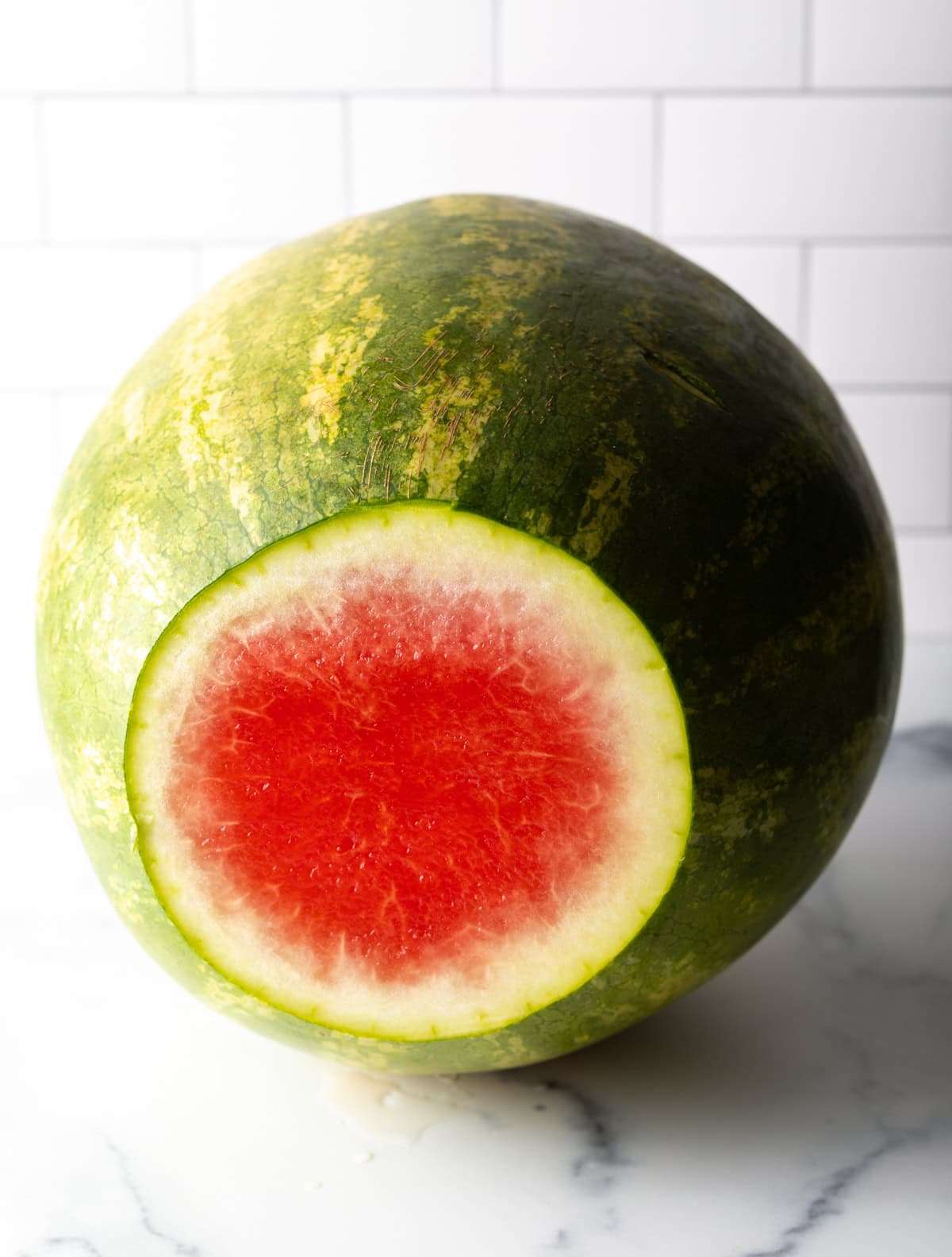
Additionally, the recommended cutting instructions suggest removing the stem ends first, quartering the fruit lengthwise, and then slicing into sections or cubes by cutting down to the rind and carefully releasing the pieces. These preparations make the watermelon easy to serve and enjoy.
Ingredients
- 1 whole watermelon
Instructions
- Well defined stripes - with distinct color variations between the green lines and the yellow lines.
- A large yellow spot on the bottom - This shows the watermelon has been sitting in the field ripening on the vine for a while, not picked too early.
- Round over oblong – Round melons tend to be sweeter than oblong. Of course, most watermelon land somewhere in the middle, if you have the option of picking a round melon, do it.
- Heavy is best – try to pick a watermelon that seems heavy for it’s size. This means it is loaded with juice. Pick up a few options to compare.
- Deep sounding tone – thump the watermelon. The sound should be deep, again demonstrating it is FULL, not dried out and airy on the inside.
- Check the stem - If there is a stem attached it should be dried up, not green. A green stem would signal that the watermelon is still in the process of ripening, but not there yet.
- Scars and spots are good – Don’t judge a book by its cover. Weathering on the outside of the melon is another indicator that the melon has had plenty of time to sweeten.
Notes
- Remove both stem ends before slicing the watermelon into quarters for easier cutting.
- Cut from the top to the rind in half- to one-inch sections to prepare slices.
- To create cubes, slice deep into flat sides about one inch apart, then cut vertically to form uniform pieces.
- Cut along the rind edges to release watermelon slices or cubes cleanly.
User Reviews
Overall Rating
5
You'll Also Love