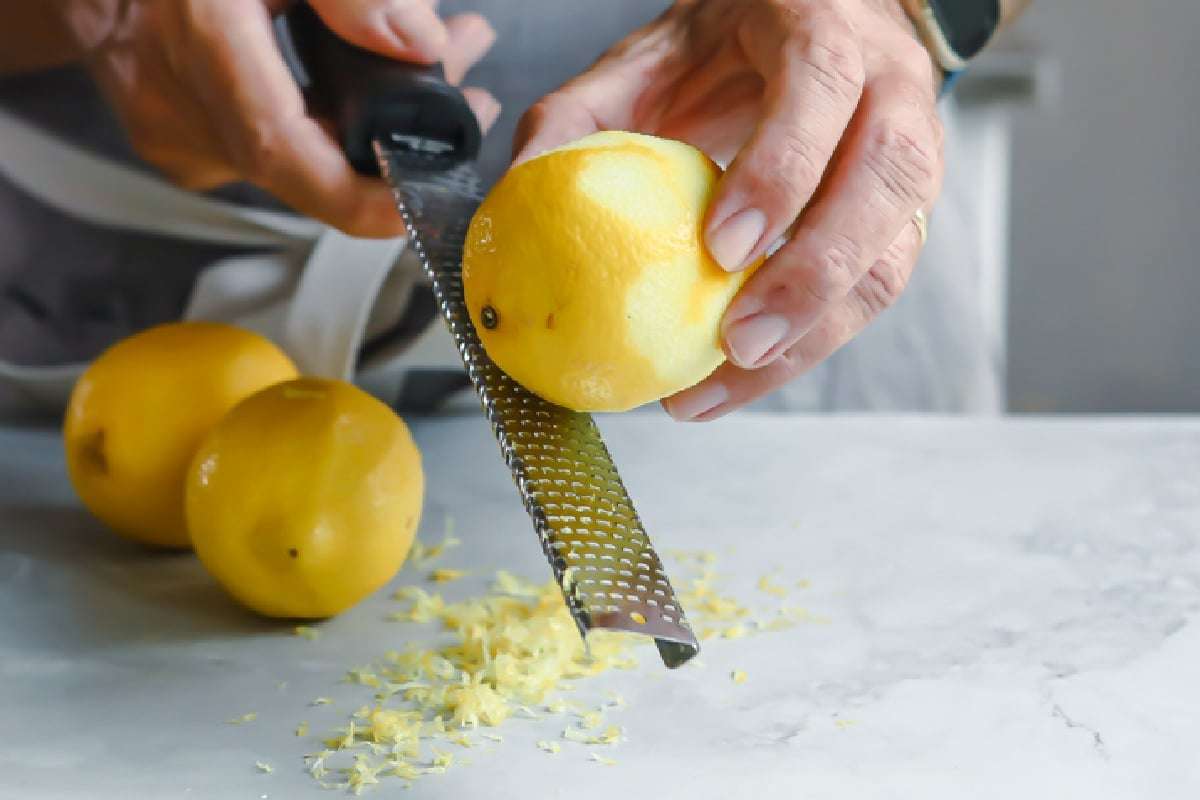
How to Zest a Lemon
User Reviews
5
-
Prep Time
5 mins
-
Total Time
5 mins
-
Servings
3 servings (1 tsp each)
-
Calories
10 kcal
-
Cuisine
American
How to Zest a Lemon
Description
The recipe How to Zest a Lemon introduces four main techniques for zesting a lemon: using a microplane, vegetable peeler, paring knife, or box grater. Each method emphasizes removing just the thin yellow skin and avoiding the bitter white pith beneath. Using a microplane involves dragging the lemon across the fine grater surface in one direction while rotating the fruit. Peeling tools require cutting thicker strips of the peel while being careful not to gouge too deep. The different approaches offer flexibility depending on the kitchen tools available. The zest collected is ideal for adding fresh bright citrus notes to dishes.
The text highlights the importance of washing and drying the lemon before zesting and advises gentle pressure to avoid pith inclusion. The expected yield from one large lemon is about one tablespoon of grated zest. Leftover zest can be stored covered in the refrigerator for up to four days, preserving its aromatic quality for later use. By following these careful steps, cooks can enhance recipes with fresh lemon flavor extracted safely and effectively.
Ingredients
- 1 lemon (see note 1)
Instructions
To zest a lemon with a microplane:
- Hold the grater in one hand and the lemon in the other over a cutting board or clean work surface. Going in one direction, push the lemon away from you across the rough side of the grater, removing the colorful part of the fruit, exposing the pith. Gently rotate the lemon as you go to get all of the zest you can from each fruit.
To zest a lemon with a vegetable peeler:
- Hold the lemon in one hand and the peeler in the other. Beginning at the top of the fruit and working your way around the lemon, use the peeler to cut into the skin and carefully remove the peel in thick, wide strips. Avoid going so deep as to remove the white pith.
To zest a lemon with a paring knife:
- Hold the lemon in one hand and the knife in the other. Beginning at the top of the fruit, cut into the skin and carefully remove the peel in strips, working your way around the lemon. Avoid going so deep as to remove the white pith.
To zest a lemon with a box grater:
- Place the grater over a cutting board or clean work surface. Holding the box grater by the handle firmly with one hand, and the lemon in the other, push the lemon away from you across the rough side of the grater, removing the colorful part of the fruit, exposing the pith. Gently rotate the lemon as you go, to get all of the zest you can from each fruit.
To zest a lemon with a zesting channel knife:
- To make zest, hold the lemon in one hand and the zester in the other. Starting at the top of the lemon, press the round blades into the skin and move them across the fruit, rotating so that you get all of the zest you can.
- To use a channel knife for garnishes, hold the lemon in one hand and the channel knife in the other. Dig the tip of the channel-shaped blade into the lemon at the middle, and rotate the lemon so that you make one long, narrow peel.
To make a lemon twist:
- Gently rotate a long strip of lemon peel around a drinking straw, securing each end with pins to hold it in place. This can be done in advance; by the time your cocktail is ready, your twist will be beautiful and perfectly curled. Just remember to give it an extra twist over the drink, to release the natural oils over the surface of the cocktail.
Notes
- Always wash and dry lemons thoroughly before zesting to remove any residues.
- Use a light touch when zesting to avoid the bitter white pith beneath the peel.
- Rotate the lemon continuously to remove zest evenly from the entire surface.
- One large lemon typically provides about 1 tablespoon of zest.
- Store leftover zest in a covered container in the refrigerator for up to 4 days.
Nutrition Information
Show DetailsNutrition Facts
Serving: 3servings (1 tsp each)
Amount Per Serving
Calories 10 kcal
% Daily Value*
| Serving | 1 tsp | |
| Calories | 10kcal | 1% |
| Carbohydrates | 3g | 1% |
| Protein | 0.4g | 1% |
| Fat | 0.1g | 0% |
| Saturated Fat | 0.01g | 0% |
| Polyunsaturated Fat | 0.03g | 0% |
| Monounsaturated Fat | 0.003g | 0% |
| Sodium | 1mg | 0% |
| Potassium | 50mg | 1% |
| Fiber | 1g | 4% |
| Sugar | 1g | 2% |
| Vitamin A | 8IU | 0% |
| Vitamin C | 19mg | 21% |
| Calcium | 9mg | 1% |
| Iron | 0.2mg | 1% |
* Percent Daily Values are based on a 2,000 calorie diet.
User Reviews
Overall Rating
5
You'll Also Love