Inari Sushi
User Reviews
4.8
-
Prep Time
30 mins
-
Additional Time
1 hr
-
Total Time
1 hr 30 mins
-
Servings
12 Inari
-
Calories
98 kcal
-
Course
Main Course
-
Cuisine
Japanese
Inari Sushi
Description
This Inari Sushi recipe starts with cooking Japanese short-grain rice using a 1:1 water ratio (slightly firmer than regular steamed rice). Kombu (dried kelp) is optional to add aroma during cooking. The sushi rice is washed multiple times to remove excess starch and then flavored with a sushi vinegar mixture made from rice vinegar, sugar, and salt.
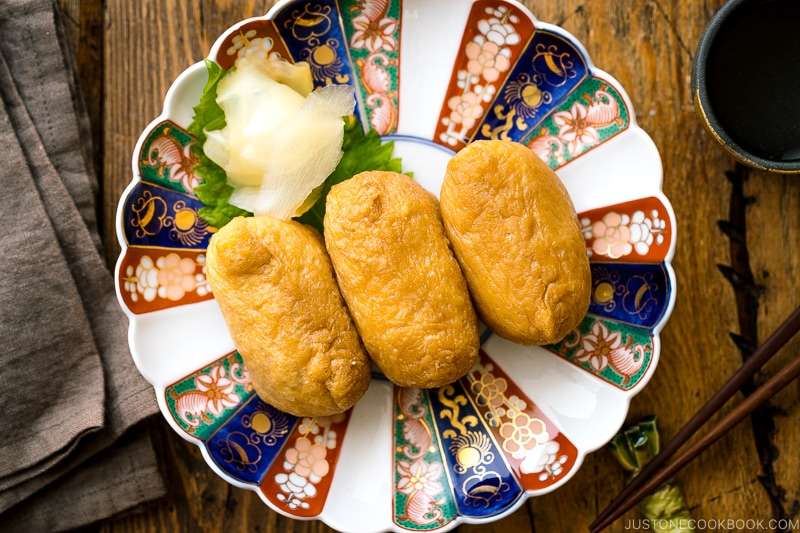
Once the rice is prepared and seasoned, it is cooled to room temperature before being packed carefully into Inari age — seasoned fried tofu pockets that provide a slightly sweet and savory exterior. Toasted white sesame seeds add a nutty topping, with pickled ginger and shiso leaves served on the side as garnish.
This dish makes a convenient, handheld sushi item with a balance of soft rice and slightly chewy, flavorful tofu wrapper, commonly enjoyed as a light meal or part of a sushi platter.
Ingredients
For the Sushi Rice
- 1½ cups Japanese short-grain white rice or 2 rice cooker cups; yields 3½ US cups (660 g) of cooked rice, uncooked
- 1½ cups water (cook the rice on the firm side, as we‘ll add more liquid with the sushi vinegar seasoning)
- 1 piece kombu 5 g, 2 x 2 inches, 5 x 5 cm per piece; optional, but it will give a nice aroma, dried kelp
- 4 Tbsp rice vinegar I used Mizkan Natural Rice Vinegar and added my own seasonings; if you use Mizkan Seasoned Rice Vinegar, skip the sugar and salt below, unseasoned
- 2 Tbsp sugar
- 1 tsp kosher salt Diamond Crystal brand
For the Inari Sushi
- 12 Inari age reserve the liquid left in the package; or make my Homemade Inari Age recipe, seasoned fried tofu pouch
- 1 Tbsp white sesame seeds toasted
For the Garnish
- ginger sushi preparation called gari
- 5 shiso leaves
Instructions
- Before You Start: Please note that the time for rice cooking varies depending on how you cook it. It usually takes about 45 minutes to 1 hour.
To Cook the Sushi Rice
- Gather all the ingredients. You must use Japanese short-grain rice or your sushi will fall apart. Please note that ¾ US measuring cup of uncooked Japanese rice is 1 rice cooker cup (150 g, 5.3 oz) and yields roughly 1¾ US cups (330 g, 11.6 oz) of cooked rice. The rice-to-water ratio for sushi rice is 1 to 1, instead of 1 to 1.1 or 1.2 for regular steamed rice. For this recipe, 2 rice cooker cups of uncooked rice yield roughly 3–4 servings (3½ US cups or 660 g) of steamed rice and make 12 Inari sushi pieces.
- First, wash 1½ cups uncooked Japanese short-grain white rice: Place the measured rice in a bowl. Do an initial quick rinse by adding just enough water to submerge all the rice, then discard the water immediately; repeat this quick rinse once more. Next, wash the rice using your fingers to gently agitate the wet grains in a circular motion for 10–15 seconds. Then, rinse it by adding water and immediately discarding the cloudy water; repeat this rinse once more. Repeat the wash and rinse steps two more times. Finally, drain the rice very well in a fine-mesh sieve and shake off any excess water.
- Put the well-drained rice in the inner pot of your rice cooker. Add 1½ cups water (to just under the 2-cup water line of your inner pot for 2 rice cooker cups of uncooked rice). If your rice cooker has a Sushi Rice mode, add water up to that line. Next, check 1 piece kombu (dried kelp) to see if there are any dirt particles and wipe off with a damp cloth, but do not wipe off the white powdery umami substance. Next, place the kombu on top of the rice. Let the rice and kombu soak in the water for 20–30 minutes. Then, start cooking. If you don’t have a rice cooker, cook the rice in a pot on the stove or an Instant Pot with the amount of water I specified in this recipe.
To Add the Sushi Vinegar
- While the rice is cooking, make the sushi vinegar. Combine 4 Tbsp rice vinegar (unseasoned), 2 Tbsp sugar, and 1 tsp Diamond Crystal kosher salt in a small bowl. Microwave it for 30–40 seconds and whisk until the sugar is completely dissolved. Alternatively, you can put it in a saucepan and bring it to a boil over medium-high heat and whisk to dissolve the sugar. Set it aside and let it cool to lukewarm or room temperature.
- If using a wooden sushi oke (also called hangiri), moisten it with running water and drain well. You can also use a baking sheet lined with parchment paper. When the rice is cooked, discard the used kombu (or repurpose it to make simmered kombu) and transfer the hot cooked rice into the sushi oke. Spread out the rice evenly so it will cool faster.
- While the rice is hot, gradually drizzle the sushi vinegar all over the rice. With a rice paddle, gently “slice” the rice at a 45-degree angle to distribute the sushi vinegar mixture and break up the chunks of rice. Gently flip the rice in between slices. Do not stir or mix the rice because the grains may break and become mushy. While using this slicing motion, vigorously fan the rice with a paddle fan or other fan. Fanning cools the rice and removes the excess moisture. It also makes the rice shine and keeps it from becoming mushy. Slice and fan until the rice is cooled to the temperature of human skin. Then, cover the prepared sushi rice with a damp towel (or paper towel) and keep it for up to a few hours at room temperature.
To Make the Inari Sushi
- Now, let’s make the Inari sushi! Take out 12 Inari age (seasoned fried tofu pouch) from the refrigerator.
- Sprinkle 1 Tbsp toasted white sesame seeds over the sushi rice and gently “slice” the rice again to combine. Next, divide the sushi rice into quarters; you’ll make three Inari Sushi pieces with each quarter of sushi rice.
- Pour the seasoning/cooking liquid from the seasoned Inari age container (or package) into a small bowl. Moisten your hands with this seasoned liquid and place a small handful of sushi rice (about ¼ cup) in your palm.
- Gently form the sushi rice into an oblong shape. Your hands should be just firm enough so the sushi rice doesn’t fall apart. Try to keep the density of the sushi ball as airy as possible. You don‘t want to squeeze the rice too tightly. Repeat with the rest of sushi rice. You should be able to make 12 sushi rice balls.
- Squeeze out the seasoned Inari age and carefully open the Inari age pockets, separating the skin all the way to the bottom of the pocket. Be gentle, as the skin is thin. Then, fold back the skin at the opening.
- Stuff each sushi rice ball into the Inari age pockets. Stuff the rice all the way into the pocket so that the two pocket corners look smooth and round.
- Finally, close the Inari Sushi: First, unroll the skin at the opening, then fold both side edges down onto the sushi rice ball.
- Then, fold the front and back edges down like you’re wrapping a present. Place the sealed Inari Sushi seam side down onto a plate or tray. Continue with the rest of the pockets. Your Inari Sushi are now ready to serve.
To Make the Kansai-Style Version (optional)
- To make Kansai-style Inari Sushi (optional), decorate the top with colorful ingredients. After stuffing it with sushi rice, keep the pocket open on top and tuck the edges of the Inari age inside the pocket so you will have smooth, round edges. Then, you can add any toppings you like. Here, I used sliced cucumber, ikura (salmon roe), shredded egg crepe (kinshi tamago), boiled shrimp, and cooked salmon flakes.
To Serve
- Serve the Inari Sushi at room temperature. Garnish with 5 shiso leaves and sushi ginger (gari), as desired.
To Store
- You can keep the leftovers in a cool place for several hours but consume them within the same day they’re prepared. You can also store them in the refrigerator for up to 24 hours. I highly recommend placing them in an airtight container or on a plate wrapped tightly with plastic and then wrapping the entire container or plate with a thick kitchen towel. The towel insulates the sushi rice from the cold air in the refrigerator so the rice doesn‘t get hard. If you have leftover Inari age, you can store it with its liquid in the freezer for up to a month. If you store it in an airtight container in the refrigerator, we recommend using it within 2–3 days.
Nutrition Information
Show DetailsNutrition Facts
Serving: 12Inari
Amount Per Serving
Calories 98 kcal
% Daily Value*
| Calories | 98kcal | 5% |
| Carbohydrates | 18g | 6% |
| Protein | 2g | 4% |
| Fat | 1g | 2% |
| Saturated Fat | 1g | 5% |
| Polyunsaturated Fat | 1g | 6% |
| Monounsaturated Fat | 1g | 5% |
| Sodium | 124mg | 5% |
| Potassium | 25mg | 1% |
| Fiber | 1g | 4% |
| Sugar | 3g | 6% |
| Vitamin A | 1IU | 0% |
| Calcium | 11mg | 1% |
| Iron | 1mg | 6% |
* Percent Daily Values are based on a 2,000 calorie diet.
User Reviews
Overall Rating
4.8
You'll Also Love