Japanese milk bread
User Reviews
5
Japanese milk bread
Description
This Japanese milk bread recipe employs the tangzhong method, where a portion of flour and water is gently cooked until thickened and cooled. This pre-gelatinized paste helps retain moisture in the loaf, producing a soft texture and longer shelf life. The main dough combines bread flour, yeast, lukewarm milk, melted unsalted butter, caster sugar, salt, and egg, with the tangzhong incorporated to enhance softness.
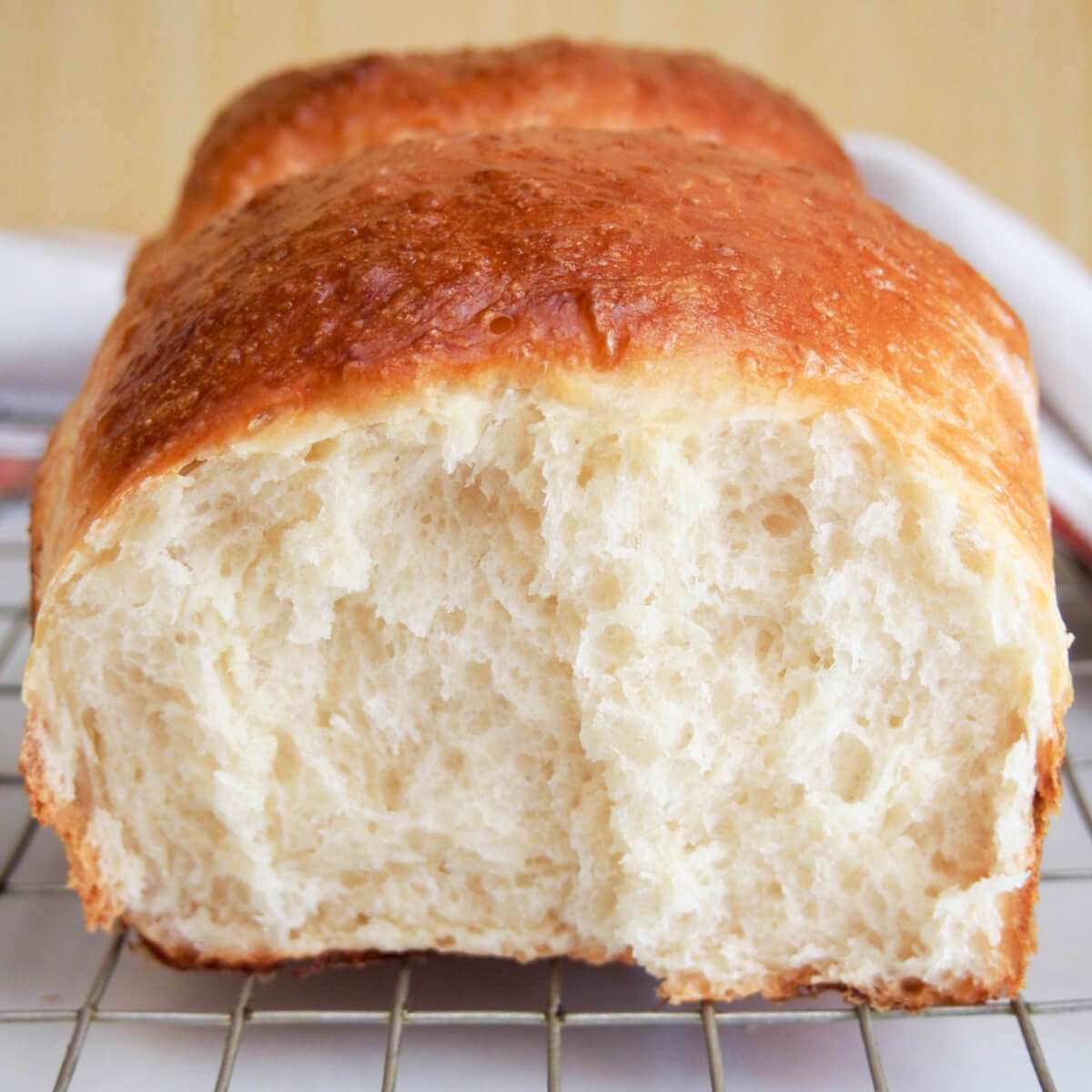
After kneading until smooth and slightly sticky, the dough is left to rise in a warm place until doubled. It is then shaped, placed in a loaf pan, and glazed with beaten egg to develop a golden crust. The loaf bakes to a tender crumb with a fine open texture, showcasing the effect of the tangzhong and enriched dough ingredients.
Japanese milk bread is versatile for various uses including sandwiches and breakfast toast due to its light sweetness and softness. It is noted that weight measurements are more precise and recommended for best consistency in baking results, although cup alternatives are given.
Ingredients
For the tangzhong
- 2 tablespoon bread flour (2tbsp is approx 20g)
- 90 ml water
For rest of loaf
- 300 g bread flour (300g is approx 2 cups plus 2 tbsp)
- 7 g yeast technically a little under but can use 1 sachet, ¼oz/ 7g, fast acting
- 120 ml milk (lukewarm or room temp, but not hot)
- 28 g butter melted but not hot, unsalted
- 5 ml salt
- 42 g sugar (caster sugar/fine)
- 1 egg
To glaze
- 1 egg (lightly beaten - won't need all)
Instructions
For tangzhong - made slightly ahead
- Put water and flour for tangzhong in a small pan. Mix until smooth and no lumps remain - do this before turning on the heat.
- Warm the flour paste gently over a medium-low heat until it thickens, stirring constantly. You should see trails left by the spoon/whisk as you stir it. Set the pan aside to cool.
To make bread
- Measure out the remaining ingredients into a large bowl (flour, yeast, milk, melted butter, sugar, salt and egg). Add the cooled tangzhong - I gently beat the egg into the tangzhong first to both save the tangzhong being too thick and help egg to mix better but you don't need to, just make sure you mix it well. Mix all the ingredients together then knead, either in mixer or by hand on a floured surface. Add a little more flour if needed.
- Once the dough is no longer sticky, transfer to a lightly oiled bowl. Cover and leave to rise in a relatively warm place until doubled - around 1 hour.
- Once it has risen, knock back the dough, divide into three pieces. Set the other pieces to one side and roll one piece into an oval.
- Fold one side of dough over to halfway across the remaining dough then fold the other side on top so you have three layers (see photos above). Gently roll slightly, if needed, then roll up the piece of dough as you would a cinnamon roll.
- Repeat with the other pieces of dough then put all three rolls of dough in an oiled loaf pan - 9x5in (22x12cm) or slightly smaller.
- Cover and leave to rise again until the loaf is just reaching the top of the pan. Preheat oven to 350F/175C. Lightly beat the egg and brush the top of the loaf with egg wash.
- Bake the loaf for approx 30 minutes until golden brown. If it browns too fast, tent with foil for the last part of cooking. Turn onto a cooling rack to cool before slicing.
Notes
- Weight measurements provide greater accuracy and consistency in bread-making and are preferred.
- The tangzhong should be cooled before mixing into the dough to maintain proper dough temperature.
Nutrition Information
Show DetailsNutrition Facts
Serving: 16slices,
Amount Per Serving
Calories 103 kcal
% Daily Value*
| Calories | 103kcal | 5% |
| Carbohydrates | 17g | 6% |
| Protein | 3g | 6% |
| Fat | 2g | 3% |
| Saturated Fat | 1g | 5% |
| Cholesterol | 15mg | 5% |
| Sodium | 154mg | 6% |
| Potassium | 37mg | 1% |
| Fiber | 1g | 4% |
| Sugar | 3g | 6% |
| Vitamin A | 74IU | 1% |
| Calcium | 13mg | 1% |
| Iron | 1mg | 6% |
* Percent Daily Values are based on a 2,000 calorie diet.
User Reviews
Overall Rating
5
You'll Also Love