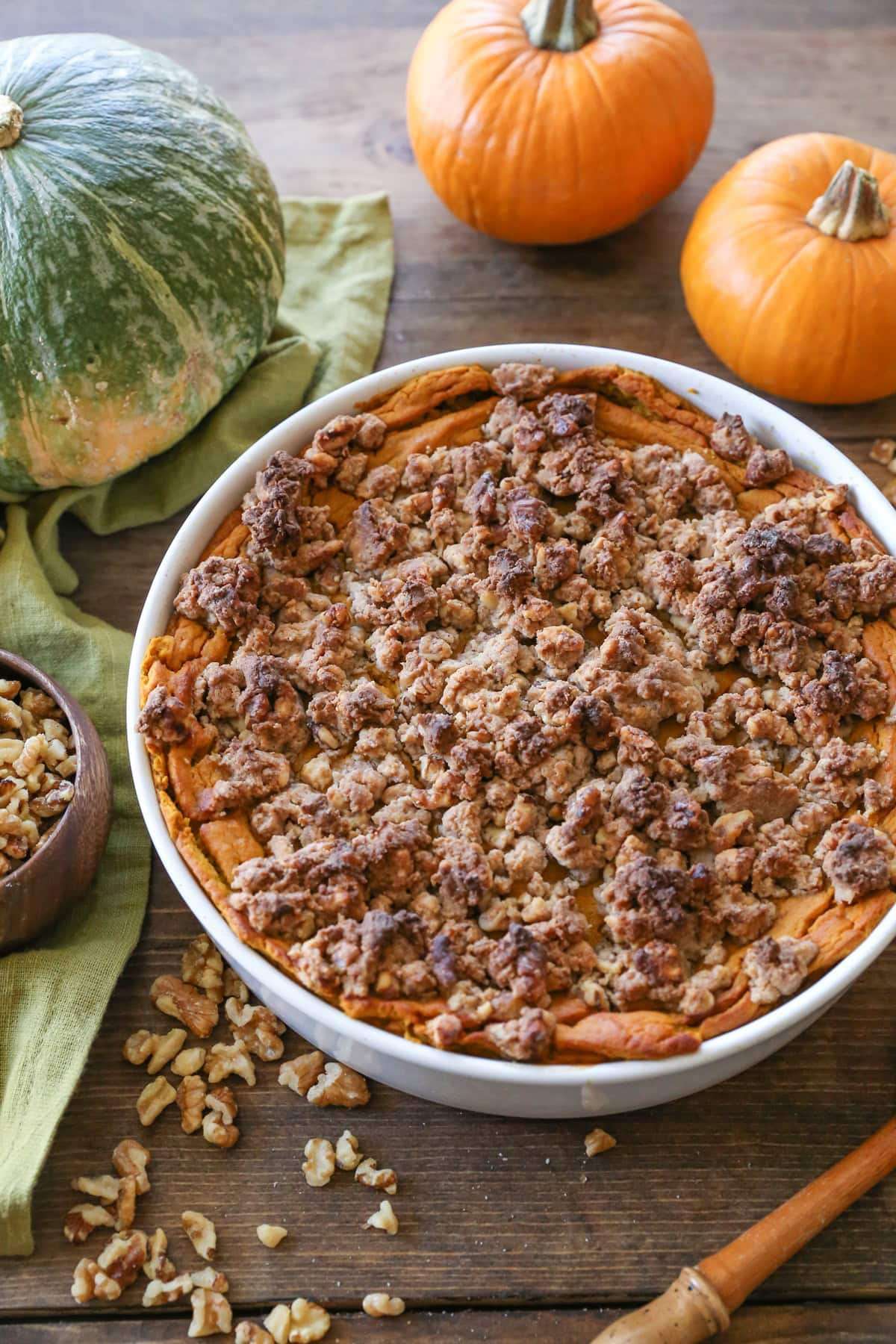
Kabocha Squash Casserole
User Reviews
5
Kabocha Squash Casserole
Description
The Kabocha Squash Casserole uses a large kabocha squash roasted until soft, then scooped and mashed or blended with eggs, pure maple syrup, vanilla extract, and spices like cinnamon, nutmeg, cardamom, and cloves. This creates a richly flavored filling with a smooth, custard-like consistency once baked. A topping combining flour, chopped raw walnuts, maple syrup, coconut oil, vanilla, cinnamon, and salt is spread over the filling before baking, adding texture contrast with a crispy and nutty layer. Roasting the squash with olive oil and salt ensures natural sweetness and depth of flavor. The moderate oven temperatures and careful blending result in a dish that holds shape but remains tender and moist.
Served warm or at room temperature, this casserole suits both holiday gatherings or everyday meals where a sweet, spiced vegetable dish is desired. It pairs well alongside roasted meats or can be enjoyed as a lightly sweetened dessert option. The use of maple syrup and warming spices gives a cozy profile without overwhelming sweetness.
Preparing the squash up to three days in advance facilitates quick assembly. The recipe offers flexibility with flour choices, accommodating gluten-free options without compromising texture. The blend method can be adapted to mashing by hand, making the recipe accessible regardless of kitchen tools.
Ingredients
Kabocha Squash Filling:
- 1 large (5-pound) kabocha squash about 5 cups mashed
- 3 large egg
- 1/2 cup pure maple syrup or honey
- 2 tsp vanilla extract pure
- 3 Tbsp all-purpose flour or regular all-purpose flour, gluten-free
- 1 Tbsp ground cinnamon
- 1 tsp salt sea salt
- 1/2 tsp ground nutmeg
- ¼ tsp ground cardamom optional
- 1/4 tsp cloves ground
Casserole Topping:
- 1 cup all-purpose flour or regular all-purpose flour, gluten-free
- 1 cup walnut chopped, raw
- 1/2 cup pure maple syrup to taste
- 6 Tbsp coconut oil or 1 stick of unsalted butter, melted
- 1 teaspoon vanilla extract pure
- 2 teaspoons ground cinnamon
- 1/2 tsp salt sea salt
Instructions
Roast the Squash:
- Preheat the oven to 415 degrees F.
- Trim the top off of the kabocha squash. Cut the squash in half, then use a sturdy spoon to scoop out the seeds and innards. Drizzle the flesh with olive oil and use your hands to spread the oil over the flesh. Sprinkle with salt and place cut-side down on a baking sheet. Roast in the preheated oven 55 to 65 minutes, or until kabocha squash is very soft when poked with a fork. Scoop the flesh out of the kabocha squash and place it in a bowl to cool. The kabocha squash may be prepared up to 3 days in advance and refrigerated until ready to use.
Make the Casserole:
- Once cool, add the kabocha squash to a high-powered blender along with the rest of the ingredients for the filling. Blend until well-combined. Note: you can use a potato masher and a mixing bowl for this step if you'd prefer. Transfer the kabocha filling mixture to a 9-inch round casserole dish (or a 13" x 9" baking dish) and preheat the oven to 375 degrees F.
- Stir together all of the ingredients for the topping until well combined. Evenly spread the topping mixture over the kabocha squash - it’s fine to have large clumps.
- Cover the casserole with aluminum foil. Bake at 375 degrees for 20 minutes. Remove the foil and bake for another 20-30 minutes, or until the topping is golden brown and the filling is bubbly. Remove from the oven and cool for 15 minutes before serving. Note: if your kabocha squash is cold going into the recipe, you may need to bake the casserole for 10-15 minutes longer. Mine is room temperature or slightly warmer when I make the casserole.
- Store leftovers in a sealed container and refrigerate up to 7 days.
Nutrition Information
Show DetailsNutrition Facts
Serving: 10Servings
Amount Per Serving
Calories 343 kcal
% Daily Value*
| Serving | 1Serving (of 10) | |
| Calories | 343kcal | 17% |
| Carbohydrates | 24g | 8% |
| Protein | 10g | 20% |
| Fat | 8g | 12% |
| Fiber | 4g | 16% |
| Sugar | 10g | 20% |
* Percent Daily Values are based on a 2,000 calorie diet.
User Reviews
Overall Rating
5
You'll Also Love