Kare Udon (Japanese Curry Udon Soup)
User Reviews
5
-
Prep Time
5 mins
-
Cook Time
10 mins
-
Total Time
15 mins
-
Servings
2 servings
-
Calories
680 kcal
-
Course
Main Course, Soup
-
Cuisine
Japanese
Kare Udon (Japanese Curry Udon Soup)
Description
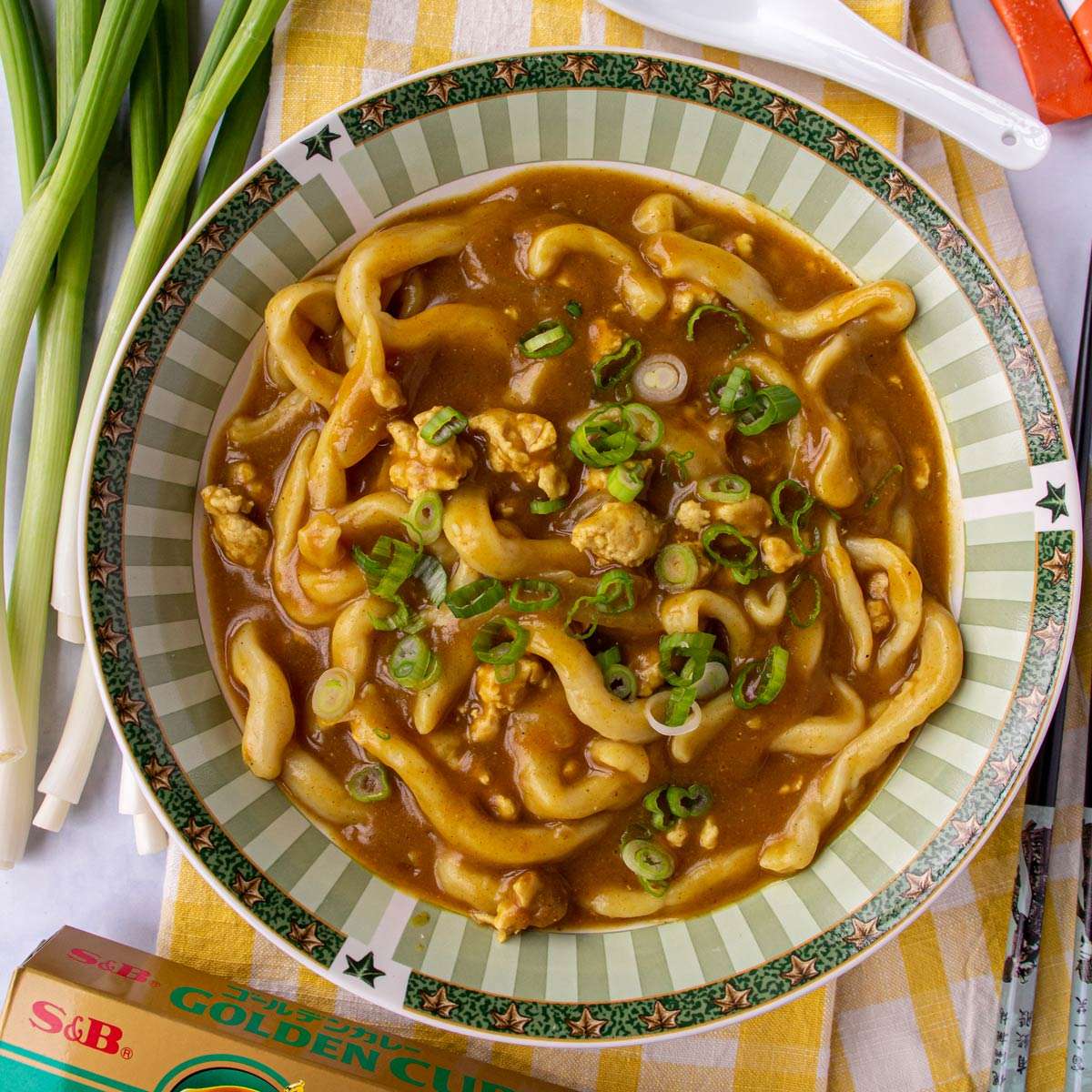
Kare Udon features udon noodles served in a broth made by simmering dashi and then adding Japanese curry roux cubes. The roux dissolves to thicken and flavor the broth, imparting a smooth curry taste that is less spicy than other curry styles. Thinly sliced protein like chicken, pork, beef, or ground meat is browned with onions before adding the dashi, contributing savory richness.
The udon noodles used are either homemade or store-bought frozen or parboiled noodles that require only reheating in the broth. The soup is finished with optional soy sauce for seasoning and garnished with scallion slices to add freshness. The result is a hearty noodle soup with a creamy, subtly spiced curry broth.
You can customize the dish by adding vegetables such as potatoes, carrots, mushrooms, or bok choy. Using instant dashi powder offers convenience, though homemade dashi enhances depth. Choosing your protein allows flexibility to suit preferences or dietary needs.
Ingredients
- 1 tablespoon vegetable oil neutral flavored such as or canola oil
- 1 onion thinly sliced, small
- 6 ounces (170 grams) protein of your choice (such as ground beef or pork, or thinly sliced chicken breast or pork loin)
- 3 cups dashi (made from scratch with bonito flakes and kombu or with instant dashi powder)
- 2 Japanese curry roux about 35 to 50 grams depending on the brand) or more to taste, small cubes
- 400 to 500 Udon Noodle frozen or parboiled fresh (or about 300 grams uncooked homemade udon noodles, boiled, drained, and rinsed, grams
- 2 teaspoons soy sauce (optional)
- 2 scallions thinly sliced for garnish
Instructions
- Heat the oil in a medium pot over medium heat. Add the onion and cook until it begins to soften, about 3 minutes. Then add the protein of your choice, stirring to cook until lightly browned and just cooked through, another 3 to 4 minutes depending on the protein.
- Pour in the dashi and raise the heat to bring it to a boil. Cut the curry roux into a few smaller pieces and add them to the pot, being careful to fully dissolve each one. This will add the primary flavoring and also thicken the broth.
- Once all the curry roux is dissolved, add the fresh (parboiled) or frozen udon noodles (frozen will take longer to heat through). Stir and jiggle around the noodles to break them up as needed (they are pre-cooked so shouldn’t take long to refresh).
- Allow the mixture to simmer briefly so ensure the noodles are heated through. Taste and add the soy sauce, if desired, and give it a final stir.
- Divide the mixture evenly into bowls and garnish with sliced scallions. Serve immediately.
Notes
- Use frozen or parboiled udon noodles for convenience; dry noodles are less chewy.
- Instant dashi powder is a quick alternative to homemade dashi but has a different flavor profile.
- Japanese curry roux provides a mild curry flavor; choose brands and spice levels to your taste.
- The protein can be varied widely, including meats, tofu, or omitted for a vegetable-based curry udon.
- Add firmer vegetables after the dashi comes to a boil and before adding curry roux for best texture.
Nutrition Information
Show DetailsNutrition Facts
Serving: 2servings
Amount Per Serving
Calories 680 kcal
% Daily Value*
| Calories | 680kcal | 34% |
| Carbohydrates | 63g | 21% |
| Protein | 32g | 64% |
| Fat | 31g | 48% |
| Saturated Fat | 8g | 40% |
| Polyunsaturated Fat | 3g | 18% |
| Monounsaturated Fat | 4g | 20% |
| Cholesterol | 63mg | 21% |
| Sodium | 1468mg | 61% |
| Potassium | 554mg | 12% |
| Fiber | 2g | 8% |
| Sugar | 2g | 4% |
* Percent Daily Values are based on a 2,000 calorie diet.
User Reviews
Overall Rating
5
You'll Also Love