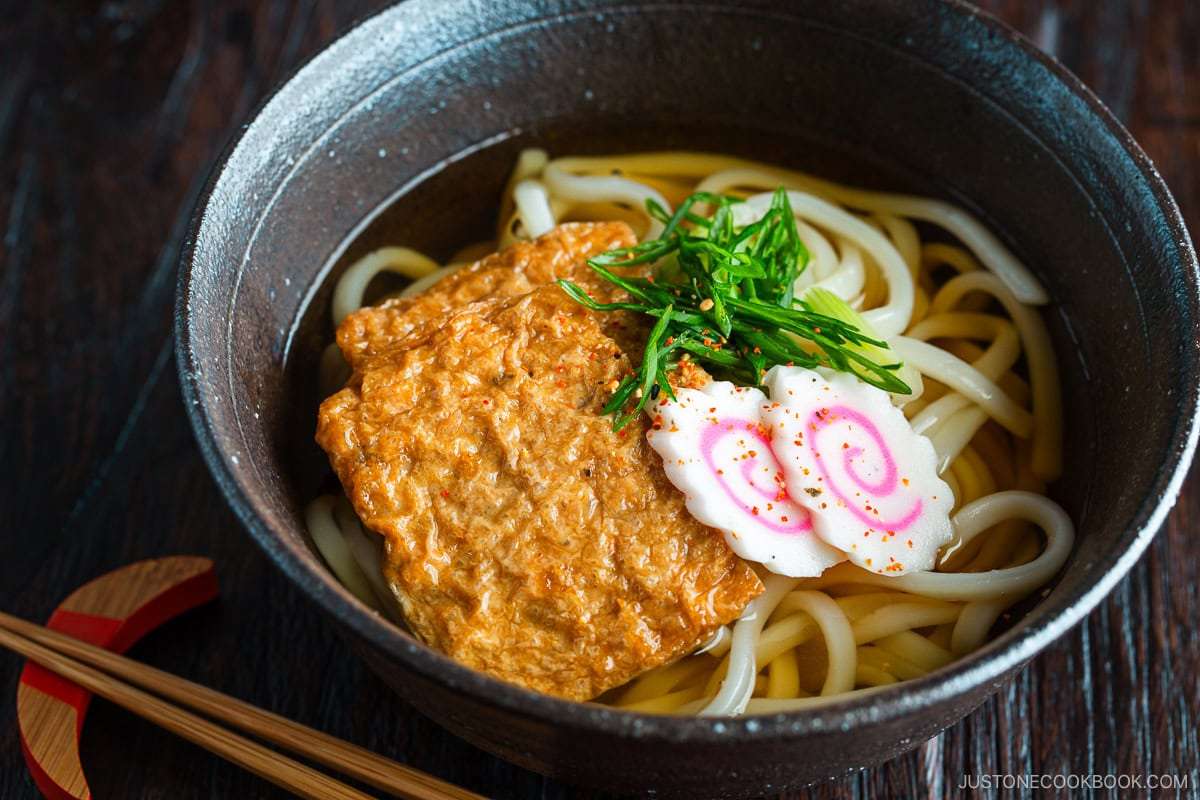
Kitsune Udon
User Reviews
4.6
-
Prep Time
10 mins
-
Cook Time
10 mins
-
Total Time
20 mins
-
Servings
2
-
Calories
328 kcal
-
Course
Main Course
-
Cuisine
Japanese
Kitsune Udon
Description
Kitsune Udon is a noodle soup centered on thick, soft udon noodles immersed in a savory broth crafted from homemade dashi stock made by simmering kombu kelp and katsuobushi bonito flakes. The broth is seasoned with mirin, soy sauce, sugar, and salt to develop a nuanced balance of sweet and umami flavors. Topping the soup are slices of Inari age—sweetened fried tofu pouches that add a silky texture and subtle savory sweetness. Additional garnishes include chopped green onion and optional narutomaki slices, a type of white and pink fish cake. The soup comes together with layered flavors highlighting the delicate balance of dashi and the pleasing texture contrasts between noodles and tofu.
The method encourages making dashi from scratch to maximize flavor. The noodles can be fresh, frozen, or dried udon, and the toppings are assembled just before serving to maintain texture. Kitsune Udon serves well as a comforting main dish with moderate seasoning and familiar Japanese components.
Ingredients
For the Homemade Dashi
- 1 piece kombu 2 x 5 inches, 5 x 12 cm per piece, dried kelp
- 2½ cups water
- 1½ cups katsuobushi packed; ½ oz; skip for vegetarian/vegan, dried bonito flakes
For the Soup Broth
- 2½ cups dashi use standard Awase Dashi, dashi packet or powder, or Vegan Dashi); dashi recipe instructions included below, Japanese soup stock
- 1 Tbsp mirin
- 1 tsp sugar
- 1 Tbsp soy sauce can substitute regular soy sauce, usukuchi (light-colored
- ½ tsp kosher salt Diamond Crystal brand
For the Kitsune Udon
- 4 Inari age canned or refrigerated; or make my homemade Inari Age, seasoned fried tofu pouch
- 1 green onion or scallion
- 4 lices Narutomaki optional; skip for vegetarian/vegan, fish cakes
- 2 ervings udon noodles (1.1 lb, 500 g frozen or parboiled udon noodles; 6.3 oz, 180 g dry udon noodles)
- Japanese seven spice optional; or a spicy kick, aka shichimi togarashi
Instructions
Before You Start...
- Gather all the ingredients. It‘s really important to have good flavorful dashi for this recipe. Although you can take a shortcut by using dashi powder or a dashi packet, I encourage you to make dashi from scratch because the broth tastes so much better! It only takes less than 30 minutes to make. See my instructions below for Awase Dashi and Kombu Dashi (vegetarian/vegan).
To Make the Homemade Dashi
- Put 1 piece kombu (dried kelp) and 2½ cups water in a measuring cup for at least 30 minutes. If you have time, soak for 3 hours or up to half a day. The kombu’s flavor comes out naturally from soaking it in water. If you don’t have time, skip soaking.
- Transfer the kombu and water to a saucepan. Slowly bring to a boil over medium-low heat.
- Just before the liquid boils (you will see bubbles around the edges of the pan), remove the kombu. If you leave the kombu inside, the dashi will become slimy and bitter. Now, this broth is vegetarian/vegan Kombu Dashi and it‘s ready to use. For non-vegetarian/vegan, add 1½ cups katsuobushi (dried bonito flakes) and bring it to a boil again.
- Once the dashi is boiling, reduce the heat, simmer for just 15 seconds, and turn off the heat. Let the katsuobushi sink to the bottom, about 10–15 minutes. Strain the dashi through a fine-mesh sieve set over a saucepan. Now you have homemade Awase Dashi.
To Make the Soup Broth
- In a saucepan, add 2½ cups dashi (Japanese soup stock), 1 Tbsp mirin, 1 tsp sugar, 1 Tbsp usukuchi (light-colored) soy sauce, and ½ tsp Diamond Crystal kosher salt and bring it to a boil. Once boiling, turn off the heat or cover and keep on a low simmer. Tip: We use the light-colored usukichi type of soy sauce here so the color of the soup broth doesn‘t become too dark.
To Prepare the Toppings
- Squeeze the excess liquid from 4 Inari age (seasoned fried tofu pouch) (or you can keep the liquid as is, if you prefer). Cut 1 green onion/scallion into thin slices. Cut 4 slices narutomaki (fish cakes) into ⅛-inch (3-mm) slices.
To Cook the Udon Noodles
- Bring a large pot of water to a boil for 2 servings udon noodles. My favorite udon is frozen Sanuki udon. Reheat the frozen udon noodles in boiling water for 1 minute (no need to defrost). If you use dry noodles, follow the package instructions.
- Pick up the noodles in a strainer or drain the hot water. Make sure to shake off the excess water (which will end up diluting your soup).
To Serve
- Divide the drained udon noodles into individual serving bowls. Pour the hot broth over the noodles to cover. Top with the Inari age, narutomaki, and green onions. Sprinkle shichimi togarashi (Japanese seven spice) on top (optional).
To Store
Nutrition Information
Show DetailsNutrition Facts
Serving: 2Serving
Amount Per Serving
Calories 328 kcal
% Daily Value*
| Calories | 328kcal | 16% |
| Carbohydrates | 57g | 19% |
| Protein | 11g | 22% |
| Fat | 2g | 3% |
| Saturated Fat | 1g | 5% |
| Polyunsaturated Fat | 1g | 6% |
| Cholesterol | 1mg | 0% |
| Sodium | 782mg | 33% |
| Potassium | 60mg | 1% |
| Fiber | 5g | 20% |
| Sugar | 8g | 16% |
| Vitamin A | 60IU | 1% |
| Vitamin C | 1mg | 1% |
| Calcium | 38mg | 4% |
| Iron | 2mg | 11% |
* Percent Daily Values are based on a 2,000 calorie diet.
User Reviews
Overall Rating
4.6
You'll Also Love