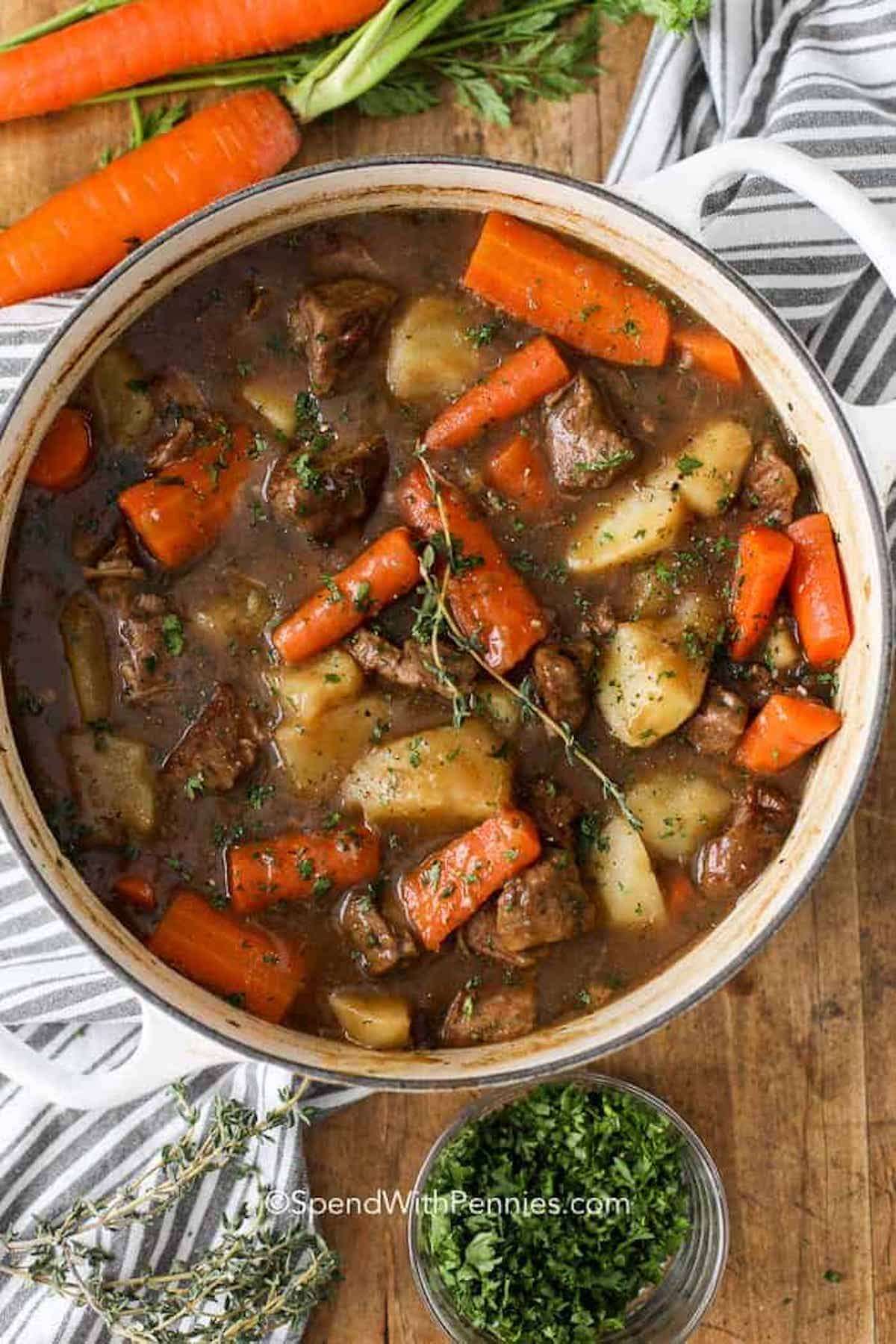
Lamb Stew (Irish Stew)
User Reviews
5
-
Prep Time
15 mins
-
Cook Time
2 hrs 10 mins
-
Total Time
2 hrs 25 mins
-
Servings
6 servings
-
Calories
537 kcal
-
Course
Main Course, Soup
Lamb Stew (Irish Stew)
Description
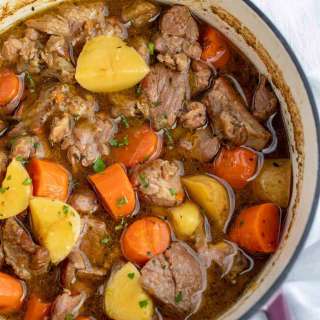
This Lamb Stew (Irish Stew) begins with seasoning lamb shoulder pieces, then browning them in vegetable oil to develop flavor. Onions are softened separately before deglazing with beef broth to lift caramelized bits from the pot. A mixture of butter and flour creates a roux to thicken the stew when combined with Guinness beer and additional broth. The lamb and onions return to the pot with bay leaves to simmer until the meat is fork tender.
Root vegetables—carrots and peeled chopped potatoes—are added with thyme for herbal aroma and cooked until they become tender, contributing texture and natural sweetness. Fresh parsley is stirred in at the end, enhancing color and a fresh taste contrast to the rich stew.
This preparation yields a stew with a deep, robust flavor balanced by the slight bitterness of Guinness beer and the earthiness of lamb and root vegetables. The texture is hearty with meltingly tender meat and soft vegetables. It pairs well with the traditional Irish Soda Bread to soak up the sauce.
For thicker stew, cornstarch mixed with water can be added gradually while boiling. Skim excess fat from the surface before thickening if the lamb is fatty. Optional green peas can be stirred in just before serving without further cooking. The browning and controlled addition of liquids ensure a smooth, thickened broth.
Ingredients
- 2 pounds lamb shoulder cut into 1 ½" pieces
- salt
- black pepper
- 2 tablespoons vegetable oil divided
- 1 large onion sliced
- 4 cups beef broth divided
- 2 tablespoons butter
- 2 tablespoons all-purpose flour
- 11.2 ounces Guinness beer 1 bottle
- 2 bay leaf
- 3 carrot chopped into 3-inch pieces
- 2 large potato about 1 ½ pounds, peeled and chopped
- 2 prigs thyme or ½ teaspoon dried thyme leaves, fresh
- ¼ cup parsley chopped, fresh
Instructions
- Season lamb with salt and pepper. In a large dutch oven or soup pot, heat 1 tablespoon oil over medium heat and brown lamb in small batches. Remove from the pot and set aside in a bowl.
- Add the onions to the pot with remaining oil. Cook until tender, about 5 minutes. Remove from the pot and add to the lamb in the bowl.
- Add about 2 tablespoons of broth to deglaze and scrape any brown bits off the bottom. Cook until broth has evaporated.
- Whisk in butter and flour. Cook for one minute. Turn heat to low. Add beer and then broth, a small amount at a time, mixing until smooth after each addition. The mixture will seem pasty and thick at first. Continue adding liquid a little bit at a time until smooth.
- Add the lamb and onions back to the pot with bay leaves and simmer for 90 minutes or until lamb is fork tender. Add potatoes, carrots, and thyme and simmer for 25 minutes or until tender.
- Stir in parsley and serve with Irish Soda Bread.
Notes
- To thicken the stew, gradually add a cornstarch and water slurry while boiling until the desired consistency is reached.
- When deglazing the pot, add just enough liquid to scrape up browned bits and let it nearly evaporate before continuing.
- Add the liquid slowly when making the roux mixture; it will be thick initially but thins as more liquid is incorporated.
- Ensure the lamb is tender before adding vegetables to avoid overcooking them.
- If needed, skim excess fat off the stew surface before thickening to reduce greasiness.
- Green peas may be added just before serving without additional simmering.
Nutrition Information
Show DetailsNutrition Facts
Serving: 6servings
Amount Per Serving
Calories 537 kcal
% Daily Value*
| Calories | 537 | 27% |
| Carbohydrates | 37g | 12% |
| Protein | 39g | 78% |
| Fat | 24g | 37% |
| Saturated Fat | 14g | 70% |
| Cholesterol | 106mg | 35% |
| Sodium | 645mg | 27% |
| Potassium | 1896mg | 40% |
| Fiber | 6g | 24% |
| Sugar | 3g | 6% |
| Vitamin A | 8160IU | 163% |
| Vitamin C | 32.3mg | 36% |
| Calcium | 105mg | 11% |
| Iron | 9.2mg | 51% |
* Percent Daily Values are based on a 2,000 calorie diet.
User Reviews
Overall Rating
5
You'll Also Love