Lion House Dinner Rolls
User Reviews
4.7
Lion House Dinner Rolls
Description
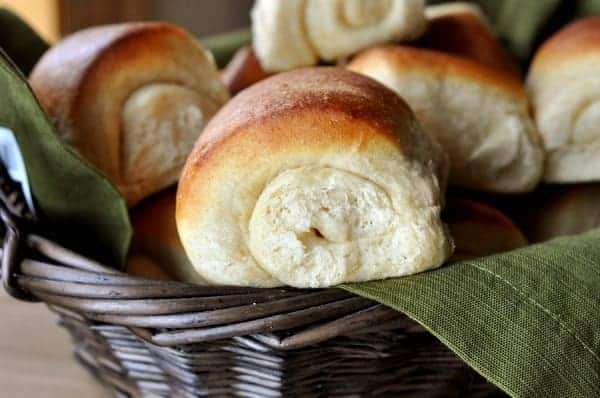
The dough for these dinner rolls starts with activating yeast in warm water or directly adding instant yeast. It includes sugar, softened butter, salt, dry milk powder, eggs, and flour, creating a rich and tender dough. After mixing and kneading, the dough doubles in size with a first rise. The dough is divided into two portions, rolled into thin rectangles, brushed with melted butter, then sliced into smaller strips and rolled into individual rolls.
The method produces rolls with soft, slightly dense texture characteristic of enriched dough breads. The butter brush and gentle shaping make for a subtle layered structure inside. Baking produces a golden crust with a delicate crumb suitable for mopping up sauces or serving alongside meals.
Recipes like this benefit from the use of nonstick pans and adjustments in flour amounts and kneading times depending on flour type and humidity.
The notes offer guidance on yeast substitutions, rolling techniques, flour variations including whole wheat options, and freezing cooked rolls for later enjoyment.
Ingredients
- 2 tablespoons active dry yeast
- 2 cups water warm
- ⅓ cup sugar
- ⅓ cup butter softened
- 1 large egg
- 2 ½ teaspoons salt
- ⅔ cup nonfat dry milk
- 5-6 cups flour see note
Instructions
- In a large bowl, combine the yeast and water. Let stand 5 minutes (no need to do this if using instant yeast – just add the yeast and water together with the other ingredients). Add sugar, butter, salt, dry milk, 2 cups flour and egg. Beat together until very smooth. Add remaining flour gradually (about 1/2 cup at a time) until a soft but not sticky dough is formed. Knead the dough for at least five minutes if using an electric mixer and for at least 10 minutes if mixing the dough by hand. When the dough is smooth, supple and elastic, place it in a lightly greased large bowl covered with greased plastic wrap and let it rise until doubled.
- Separate the dough into two portions. Roll each section out to an 11X14-inch rectangle. Brush the top with melted butter. Using a pizza cutter or sharp knife, cut the dough into two pieces, the long way (see photos below). Then slice the dough into five or six strips across so you end up with 10 to 12 small rectangles. Roll each small rectangle up like a snail and place on a silpat-lined or lightly greased baking sheet with the roll resting on it’s open edge. Repeat with the second portion of dough.
- Cover the rolls with lightly greased plastic wrap and let them rise until doubled. Bake at 375 degrees for 12-14 minutes until they are nicely browned.
Notes
- Instant yeast can replace active dry yeast; reduce yeast amount to 1½ tablespoons and skip proofing.
- Vary flour amounts based on humidity and dough feel; use a kitchen scale or adjust gradually during mixing.
- Half to three-quarters of the flour can be finely ground white whole wheat flour; 100% whole wheat flour will make rolls denser.
- Rolling technique changed from triangles to rectangles per an online tutorial; rolling method affects final roll shape.
- Baked rolls freeze well; reheat from frozen in microwave for about two minutes per 6 rolls before serving.
Nutrition Information
Show DetailsNutrition Facts
Serving: 24Rolls
Amount Per Serving
Calories 145 kcal
% Daily Value*
| Serving | 1 Roll | |
| Calories | 145kcal | 7% |
| Carbohydrates | 25g | 8% |
| Protein | 4g | 8% |
| Fat | 3g | 5% |
| Saturated Fat | 2g | 10% |
| Cholesterol | 15mg | 5% |
| Sodium | 288mg | 12% |
| Fiber | 1g | 4% |
| Sugar | 5g | 10% |
* Percent Daily Values are based on a 2,000 calorie diet.
User Reviews
Overall Rating
4.7
You'll Also Love