Maple Mustard Roasted Pork Loin
User Reviews
5
-
Prep Time
20 mins
-
Cook Time
1 hr 30 mins
-
Total Time
1 hr 50 mins
-
Servings
12 servings
-
Calories
292 kcal
-
Course
Main Course
-
Cuisine
American
Maple Mustard Roasted Pork Loin
Description
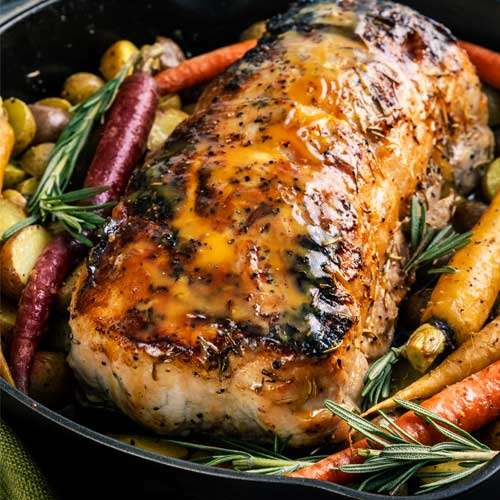
This recipe starts by trimming excess fat from a four-pound pork loin and tying it with kitchen twine at two-inch intervals to maintain shape while roasting. A brine made from water, maple syrup, kosher salt, grated fresh ginger, black pepper, dried rosemary, red pepper flakes, and crushed garlic cloves is prepared and chilled. The pork loin is submerged in this brine for 8-12 hours, allowing the flavors to penetrate and the meat to retain moisture.
After brining, the pork is roasted at 325°F until cooked through. Meanwhile, a sauce made from equal parts Dijon mustard and maple syrup is combined to serve alongside the pork, complementing its sweet and savory profile. The combination of fresh ginger and red pepper flakes in the brine adds subtle warmth and complexity, while rosemary and garlic contribute herbal aroma.
This approach results in a moist, tender pork loin with a gently spiced sweetness underscored by mustard's tang. The roasting method and twine ensure even cooking and a well-formed roast, suitable for slicing and serving with sides or as a centerpiece for a meal.
Ingredients
BRINE
- 6 cups water cold
- 1/2 cup maple syrup
- 1/3 cup kosher salt
- 3 - 4 Tbsp ginger grated fresh
- 3 tsp black pepper
- 1 Tbsp rosemary dried
- 1/2 tsp red pepper flakes
- 5 cloves garlic crushed
PORK LOIN
- kitchen twine
- 4 lb pork loin trimmed of excess fat
- 1/2 tsp kosher salt
- 1/2 tsp black pepper
- 2 Tbsp vegetable oil
SAUCE
- 1/3 cup Dijon mustard
- 1/3 cup maple syrup
Instructions
PREP WORK
- Trim pork loin of excess fat, and pat dry. Slide a length of kitchen twine underneath the pork, about 2 inches from the end. Bring the twine up over the sides of the pork and tie it with a double knot on top. Repeat with additional pieces of twine, tying in 2 inch intervals along the length of the pork loin.
MAKE THE BRINE
- Combine all brine ingredients in a very large resealable plastic bag (I used a 2 gallon size), or large airtight container. Whisk until combined well.
- Add prepared pork loin to brine, seal bag or container and refrigerate for 8-12 hours. When using a bag, I like to place the bag inside a baking dish, so in case the bag leaks, you won't have a giant mess in your refrigerator, it'll be contained in the dish.
ROAST THE PORK AND MAKE THE SAUCE
- Preheat oven to 325 F degrees. If using a roasting pan, get it out and lightly spray the rack with cooking spray. If using an oven safe skillet, get it out.
- Combine mustard and maple syrup in a small bowl, then put 2/3 of the that mixture in a small bowl, set aside for serving at the table later. The remainder of the sauce will be used for glazing.
- Remove pork from brine and pat very dry. Season pork with 1/2 tsp each salt and pepper. Discard brine.
- Heat oil in a large, heavy bottomed skillet over MED HIGH heat. Once oil is very hot, add pork and sear about 2-3 minutes per side, until browned.
- I like to use a cast iron skillet, so I can take the pan directly from the stovetop to the oven. If you prefer a roasting pan, that will work too.
- Lightly glaze pork with some of the maple mustard sauce. Roast pork for 1 hour 15 minutes.
- Glaze pork again with maple mustard sauce, then continue to roast another 10 minutes or so. Pork loin is done, and safe, when cooked to an internal temperature of 145 F degrees.
- Let pork rest 5-10 minutes, then slice and serve with the bowl of maple mustard sauce you set aside earlier.
Nutrition Information
Show DetailsNutrition Facts
Serving: 12servings
Amount Per Serving
Calories 292 kcal
% Daily Value*
| Calories | 292kcal | 15% |
| Carbohydrates | 17g | 6% |
| Protein | 34g | 68% |
| Fat | 9g | 14% |
| Saturated Fat | 4g | 20% |
| Cholesterol | 95mg | 32% |
| Sodium | 3404mg | 142% |
| Potassium | 654mg | 14% |
| Fiber | 1g | 4% |
| Sugar | 14g | 28% |
| Vitamin A | 38IU | 1% |
| Vitamin C | 1mg | 1% |
| Calcium | 50mg | 5% |
| Iron | 1mg | 6% |
* Percent Daily Values are based on a 2,000 calorie diet.
User Reviews
Overall Rating
5
You'll Also Love