Milk Kefir
User Reviews
4.7
Milk Kefir
Description
Milk Kefir involves combining kefir grains with fresh cow or goat milk in a glass jar, leaving some headspace. The jar is loosely covered and kept in a warm, shaded spot for around a day. During fermentation, beneficial bacteria and yeasts convert lactose into lactic acid, causing the milk to thicken slightly and develop a distinctive tart aroma. After fermenting, the mixture is strained to remove the grains, leaving behind the cultured milk beverage.
A second fermentation can be done by adding fresh or frozen fruit like banana to the strained kefir and letting it sit uncovered for a few more hours at room temperature to enhance probiotic levels and develop fruity flavors. The kefir is then refrigerated until ready to consume. This process yields a textured, mildly tangy fermented drink that maintains the creaminess of the milk while adding a slight effervescence from fermentation.
Milk kefir can be consumed plain, blended into smoothies, or used as a base for salad dressings and other preparations that benefit from its probiotic content and tart flavor profile.
Ingredients
- 2 teaspoons kefir grains
- 3 cups milk cow or goat milk, fresh
Instructions
- Put kefir grains, about 2 teaspoons of grains, into a clean glass jar with about 3 cups fresh milk. Make sure you leave about 1-inch of room at the top of the jar.
- Place a plastic lid on top of the jar, but do not tighten it. You want the lid to be loose on top of the jar.
- Place the jar in a warm place, out of direct sunlight, for 24 hours. I put my jar in a cabinet in our kitchen. You will know your kefir is done when it has slightly thickened and smells fermented.
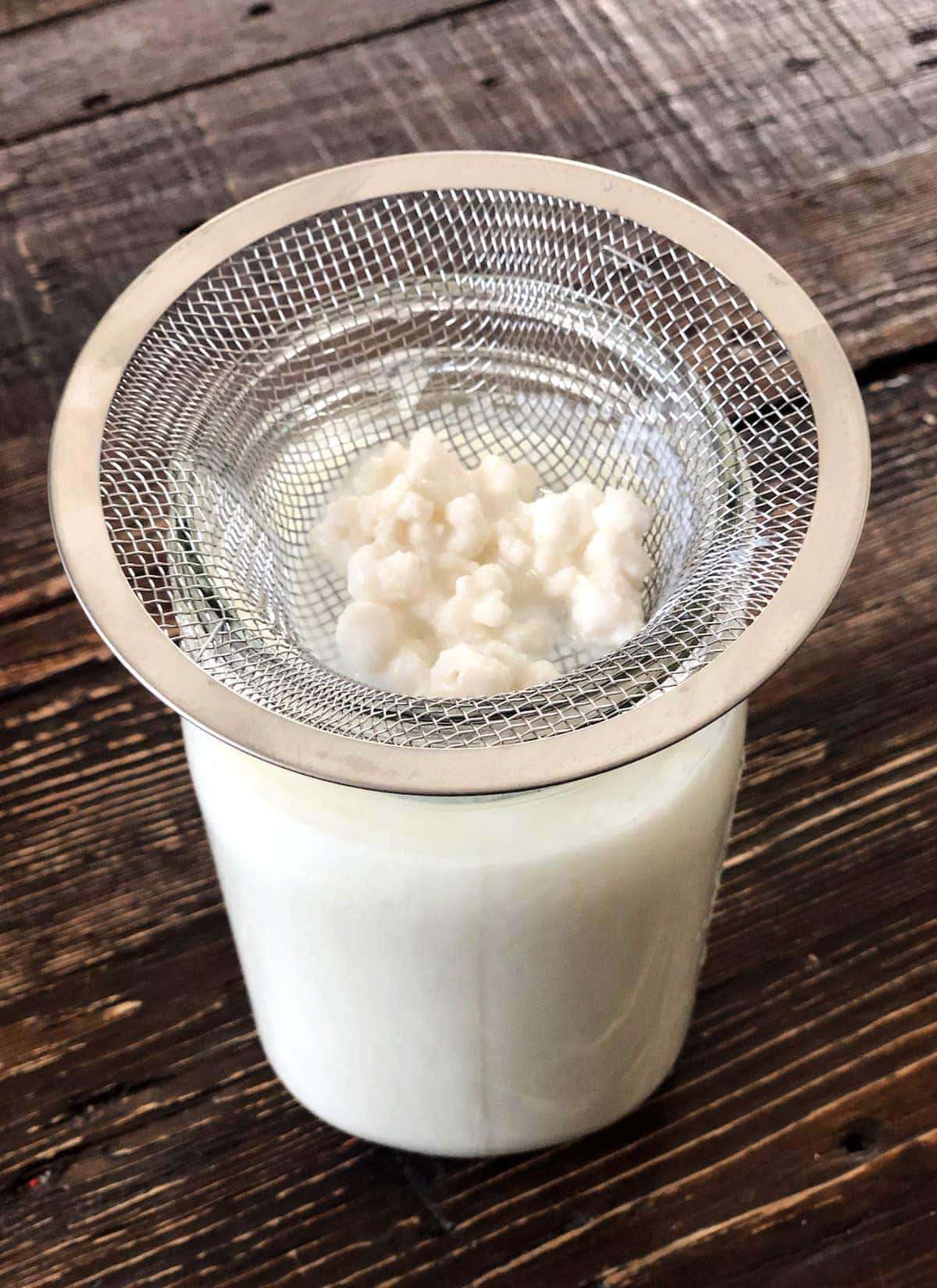
- Tighten the lid and shake well. Place a stainless-steel strainer or plastic strainer over a clean jar. Strain the kefir into the jar.
- At this point, you can add fresh or frozen fruit if you want to do a second fermentation. I add ½ banana and then put the lid on tight and let the kefir sit out on the counter for another 2 to 5 hours. This will double the amount of probiotics. If you don’t want to do the second fermentation, you can put the lid on and store the kefir in the refrigerator.
- Now, you start the process over again with the kefir grains you have in the strainer. Put the kefir grains in a clean jar, add milk, put the lid on (but not tight) and repeat the process.
Notes
- Use fresh, whole or low-fat cow or goat milk for best results.
- Do not tighten the lid during fermentation to allow gas to escape.
- Strain kefir grains gently with a stainless steel or plastic strainer to preserve their health for reuse.
- Second fermentation with fruit boosts probiotics and adds flavor, but is optional.
- Once fermented, store kefir in the refrigerator and consume within a few days for best taste.
User Reviews
Overall Rating
4.7
You'll Also Love