Milk Kefir Sourdough Starter
User Reviews
5
Milk Kefir Sourdough Starter
Description
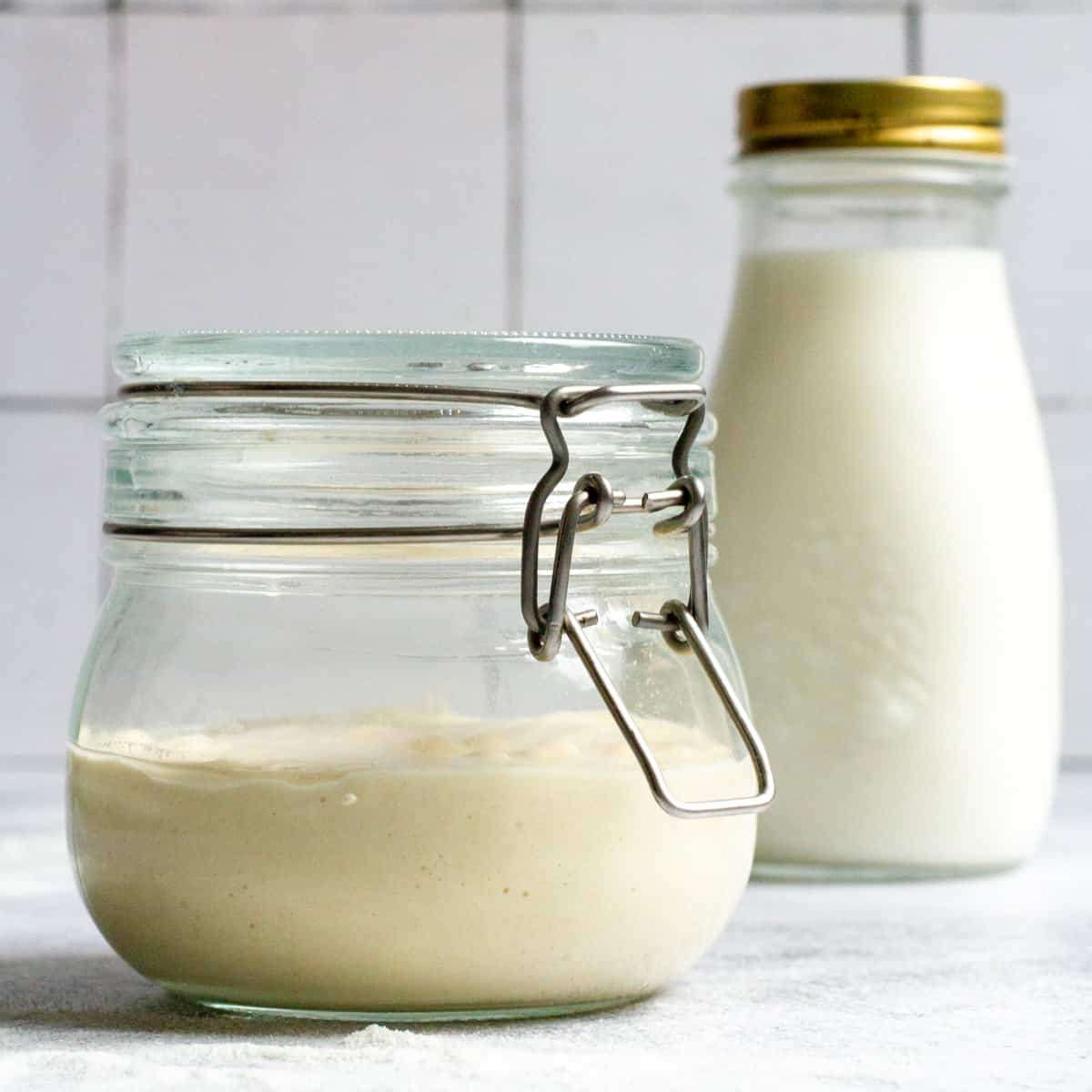
The Milk Kefir Sourdough Starter begins by whisking together equal weights of flour and plain milk kefir with live cultures, forming a batter-like mixture. It is stored at room temperature covered loosely or airtight, then stirred once or twice daily until bubbly and doubled in volume—usually within 24 to 48 hours. The active starter supports natural fermentation for sourdough baking.
This method uses milk kefir instead of traditional sourdough culture, which can yield a slightly different flavor and fermentation profile. The recipe notes caution against adding kefir grains and suggest choosing unflavored kefir. Maintenance feeding with flour and non-chlorinated water keeps the starter active, though it can be used immediately after initial rise without upkeep.
Ideal flour types include organic unbleached all-purpose, with gluten-free options requiring additional care. Maintaining starter cleanliness and container choice affects fermentation success. Temperature and water quality also impact activity, with warmer spots encouraging faster fermentation. The discard may be saved or frozen for other uses.
Ingredients
Initial Starter Materials:
- 2 ounces flour See "Flour Tips" Recipe Notes, about ½ cup, measure by weight if possible
- 2 ounces milk kefir See "Milk Kefir" Recipe Notes, plain with live cultures
Starter Maintenance (Optional):
- 2 ounces flour Use same flour as original starter, or slowly transition to another type of flour, about ½ cup, measure by weight if possible
- 2 ounces water non-chlorinated, ¼ cup
Instructions
Initial Starter:
- In a clean glass jar, whisk together the flour and milk kefir. (I like to use a fork to whisk.) The mixture should be the consistency of pancake batter. If yours is much thicker, add a little more kefir to thin it out, or if it seems very thin add more flour. (I've found rice flour needs slightly more kefir.)Cover the jar. (Cover can be loose or air-tight, see "container tips" recipe notes.)Store jar in at room temperature (about 70°-75° F).
- Stir the flour and kefir once or twice a day, until the starter is bubbly and has doubled in size. Your starter should be ready to use within about 24 to 48 hours. You should have approximately 1 cup of starter.
- No Maintenance Starter: You can proceed to use the entire batch in a recipe, skipping any starter maintenance, and simply remake the starter as desired. This is a nice option if you don't want to maintain a starter, or if you're using a gluten-free flour that may be difficult to maintain."Float Test" for Bread: Once the starter has doubled in size and is bubbly, it should have a nice enough flavor to use the discard right away in discard recipes. To test if the starter is ready for bread, pinch of a small piece of the starter and drop it in water. If it floats, it can be used in bread. If it doesn't, proceed to the starter maintenance stage and keep feeding the starter until it passes the float test.
Starter Maintenance:
- Discard the starter down to 2 ounces (~½ cup). You can use the discard in a "discard" recipe.Whisk together 2 ounces of flour, 2 ounces of water and 2 ounces of starter. Note that from this point on, you can feed the starter with water instead of milk kefir.Cover the jar, whisking once or twice a day. When the starter is bubbling and doubled in size, repeat the process. Continue discarding and feeding once a day, or place into storage until ready to use again.To store the starter: Feed the starter and then move it immediately into the fridge. Remove from the fridge and allow the starter to warm up for a few hours before using. Depending on how long the starter was in the fridge, it may take a few days to become very active again. Ideally, feed starter at least once a week even when in storage.
Notes
- Use organic unbleached all-purpose flour for consistent fermentation; gluten-free flours vary in success.
- Use plain, unflavored milk kefir with live cultures; do not add kefir grains.
- Use non-chlorinated water to avoid inhibiting fermentation.
- Maintain cleanliness of utensils and containers to prevent contamination.
- Starter can be used after 24–48 hours without maintenance or can be fed daily with flour and water to keep active.
- If liquid (hooch) forms on top, pour it off and feed starter immediately.
- Store discard frozen for other recipes or use immediately.
Nutrition Information
Show DetailsNutrition Facts
Serving: 1sourdough starter
Amount Per Serving
Calories 242 kcal
% Daily Value*
| Calories | 242kcal | 12% |
| Carbohydrates | 46g | 15% |
| Protein | 8g | 16% |
| Fat | 2g | 3% |
| Saturated Fat | 1g | 5% |
| Cholesterol | 7mg | 2% |
| Sodium | 31mg | 1% |
| Potassium | 61mg | 1% |
| Fiber | 2g | 8% |
| Sugar | 3g | 6% |
| Vitamin A | 116IU | 2% |
| Calcium | 79mg | 8% |
| Iron | 3mg | 17% |
* Percent Daily Values are based on a 2,000 calorie diet.
User Reviews
Overall Rating
5
You'll Also Love