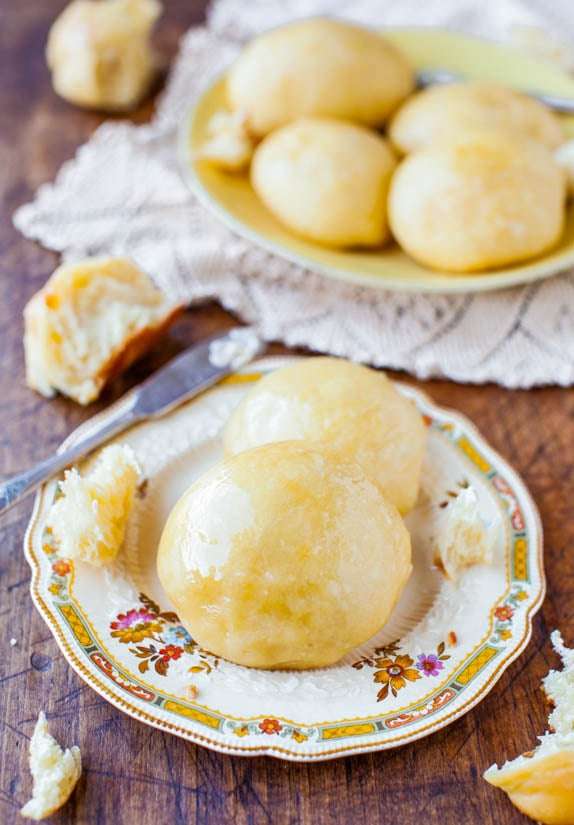
No-Knead Dinner Rolls
User Reviews
4.6
No-Knead Dinner Rolls
Description
The No-Knead Dinner Rolls recipe uses instant yeast combined with warmed water, eggs, honey, oil or butter, and flour to create a dough that doesn’t require kneading. Proofing the yeast in warm water activates the dough, then eggs, oil, honey, salt, and flour are mixed in until combined. The dough develops a rustic texture with lumps, which is normal for this formula.
After the first rise in a warm environment—created by placing the bowl in a turned-off oven warmed briefly—the dough is shaped into rolls and baked. Using either oil or butter slightly affects the texture, with oil creating softer bread and butter contributing to a firmer dough and crisper crust.
These rolls are good fresh and suitable for everyday meals where soft, sweet, buttermilk-like bread is desired. The bread pairs well with butter, honey, or savory spreads and can complement soups, salads, or sandwiches. The recipe includes an optional honey butter that adds a glaze and sweetness after baking.
For storage, keep the rolls airtight at room temperature for up to four days or freeze them for up to four months. This allows making in advance or keeping leftovers fresh.
Ingredients
No Knead Rolls
- ⅞ cup water scant 1 cup, warmed to about 125F for Platinum yeast, about 105 to 115F for most other yeast
- 2 ¼ teaspoons instant dry yeast I use Red Star Platinum, or active dry yeast; one 1/4-ounce packet
- 2 egg large
- ¼ cup canola oil or 1/4 cup butter (oil creates a softer loaf, butter creates a crustier crust; butter-based dough is firmer and slightly easier to work with, but I have no trouble with oil-based dough and prefer the bread, or vegetable oil
- ¼ cup honey
- ½ teaspoon salt or to taste
- 3 ½ cups all-purpose flour I have also used 2 1/2 cups bread flour and 1 cup all-purpose; bread flour creates chewier, firmer bread; AP creates softer, squisher bread and it’s not quite as high-rising
Honey Butter (Optional)
- ¼ cup butter unsalted, very soft
- 2 to 3 tablespoons honey
Instructions
Make the dough:
- Pour water into a microwave-safe measuring cup or bowl and warm it to manufacturer’s directions on yeast packet, about 45 seconds on high power. Take the temperature with a thermometer. If you don’t have one, water should be warm to the touch, but not hot. Err on the side of too cool rather than too hot because you don’t want to kill the yeast.
- Pour water into a large mixing bowl and sprinkle the yeast over the top; wait 5 to 10 minutes, or until yeast is foamy. This means it’s alive and will work. (This is proofing and technically with instant dry yeast you don’t have to proof it, but for this recipe, I do)
- Add the eggs, oil, 1/4 cup honey, optional salt, and whisk to combine, about 30 seconds.
- Add the flour and stir with a wooden spoon to incorporate the flour. Stir for about 1 minute more. This is as much ‘kneading’ as the recipe requires. Dough will be thick, lumpy, bumpy, and not smooth. This is okay.
- Make a ball with the dough in the center of the bowl. Cover bowl with plastic wrap and place in a warm, draft-free place to rise until doubled in bulk, about 2 hours. * (see note below)
- At this point, you have two choices: bake the rolls now or bake them later.
If baking immediately:
- If you plan to bake now, punch dough down, remove it from bowl, and turn it out onto a well-floured surface.
- Knead it only so much as necessary to shape it into balls for rolls (I divide the dough in half, and if I’m making rolls, I make 8 rolls from each half, for 16 rolls total, they’re just a bit bigger than golf balls). Or form desired shapes such as mini loaves, challah, breadsticks, pretzels, etc. Use only what you need and save the rest for later in the refrigerator.
- Place balls of dough in a cooking sprayed round baking dish or pie plate, or in an 8×8 or 9×9 pan; size depends on how many you’re making. They can be close to each other, but if they’re overly squished they’ll bake into each other.
- Cover baking dish with plastic wrap, and allow rolls to rise in a warm, draft-free environment for about 1 hour, until almost doubled in size. I use the preheated oven trick again.
- In the final minutes of rising, preheat oven to 350F.
- Bake rolls for about 15 to 18 minutes, or until lightly golden and puffed. Baking time will vary greatly based on how many rolls you’re baking, or if it’s another shape such as a mini loaf, the size of the pan, and personal preference. Watch your bread, not the clock.
- Serve as soon as bread is cool enough to handle.
If baking later:
- If you plan to bake later, take dough that’s risen for about 2 hours from step 5, keep it covered, and refrigerate it. Dough may be kept refrigerated for up to 5 days before baking.
- When you plan to bake, pick up at step 5 and follow through the section labeled "if baking immediately."
Make the honey butter:
- Stir to combine the butter and honey. Generously brush or spread the mixture over the top of the dough before baking.
- Reserve remainder to serve with rolls after baking.
Notes
- Proof yeast in warm water around 105 to 125°F depending on yeast type to ensure activation without damaging the yeast.
- Create a warm rise environment by briefly preheating the oven to 400°F then turning it off before placing the dough bowl inside.
- Store baked rolls in an airtight container at room temperature up to four days or freeze them for up to four months for longer preservation.
Nutrition Information
Show DetailsNutrition Facts
Serving: 24Serving
Amount Per Serving
Calories 131 kcal
% Daily Value*
| Serving | 1 | |
| Calories | 131kcal | 7% |
| Carbohydrates | 19g | 6% |
| Protein | 3g | 6% |
| Fat | 5g | 8% |
| Saturated Fat | 2g | 10% |
| Polyunsaturated Fat | 3g | 18% |
| Cholesterol | 21mg | 7% |
| Sodium | 29mg | 1% |
| Fiber | 1g | 4% |
| Sugar | 5g | 10% |
* Percent Daily Values are based on a 2,000 calorie diet.
User Reviews
Overall Rating
4.6
You'll Also Love