No Knead Whole Wheat Bread
User Reviews
4.5
No Knead Whole Wheat Bread
Description
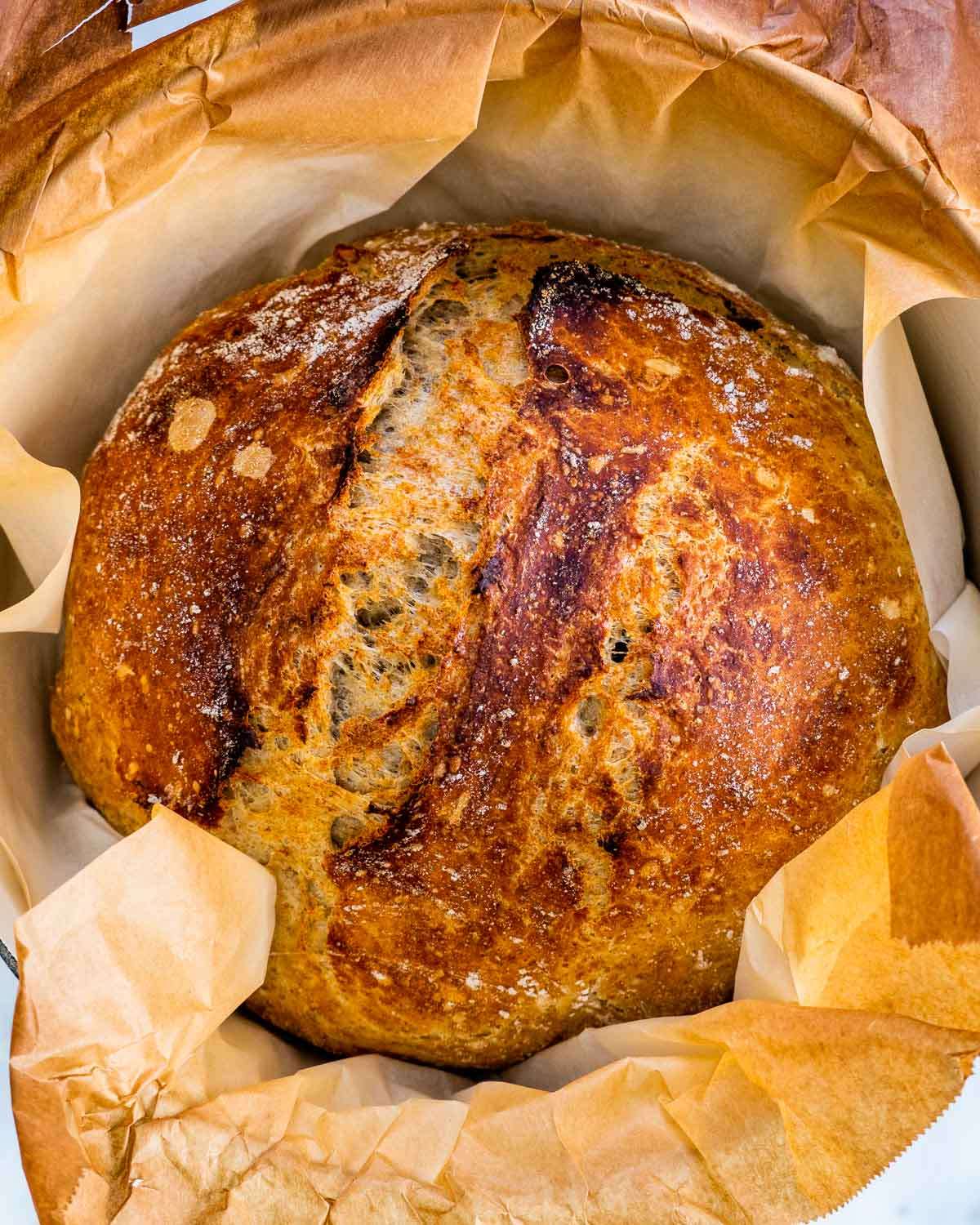
This bread recipe uses a long fermentation to develop flavor and gluten structure without kneading. Whole wheat and all-purpose flours are mixed with salt, yeast, and room-temperature water until just incorporated. The sticky dough rests covered for up to 18 hours, allowing a slow rise. The oven and Dutch oven are preheated to 475°F, and the dough, shaped into a ball, is transferred into the hot pot to bake.
Baking in a Dutch oven traps steam, forming a crisp crust while keeping the inside moist. The bread's texture is rustic and mildly dense because of the whole wheat flour. The crust should sound hollow when tapped, signaling doneness. This bread can be eaten as a sandwich base or alongside meals requiring hearty bread.
Check yeast freshness before starting, as expired yeast affects rise. If adding seeds, herbs, or cheese, mix them in with the flour initially. Use parchment paper or cornmeal to prevent sticking to the pot. Leftover bread should be wrapped tightly and is best consumed within several days, though it can be frozen up to 3 months. Avoid refrigerating dough during rise.
Ingredients
- 2 cups whole wheat flour
- 2 cups all-purpose flour
- 2 teaspoon salt
- ¾ teaspoon active dry yeast
- 2 cups water room temperature
Instructions
- Mix Ingredients and Rest: In a big bowl combine whole wheat flour and all-purpose flour, salt and yeast. Pour the water into the bowl and using a spatula or a wooden spoon, mix it until it's all incorporated. It will be sticky, so just mix until most of the flour is incorporated. Cover the bowl with plastic wrap and let it sit on your counter for 12 to 18 hours.
- Preheat Oven and Pot: Preheat oven to 475°F. Add your Dutch Oven to the oven and heat it as well while you're prepping the dough.
- Shape Dough: Flour your hands really well and and sprinkle plenty of flour over the dough in the bowl. With your floured hands gently remove the dough from the bowl, scraping at the sides first, adding more flour as needed (see video) and roughly shape it into a ball. Take the ball of dough and drop it directly into the pot or place it on a piece of parchment paper and grab the parchment paper with the dough and place it in the pot. Be careful not to burn yourself, the pot will be quite hot, so use oven mitts to handle it. Cover the pot with the lid and place it back in the oven.
- Bake: Bake the bread for 30 minutes covered with the lid on, after which remove the lid and bake for another 10 to 15 minutes until golden brown. and crusty.
- Cool: Remove from the oven, transfer to a cooling rack and let cool before slicing and serving.
Notes
- Use fresh, unexpired yeast for proper dough rise.
- Store unopened yeast in a cool, dry place or freezer; let frozen yeast come to room temperature before use.
- Add mix-ins like seeds, herbs, or cheese during initial mixing if desired.
- Do not refrigerate dough while it rises; keep at room temperature for best fermentation.
- Use parchment paper or sprinkle cornmeal in the Dutch oven to prevent sticking.
- Check bread doneness by tapping the bottom for a hollow sound or measuring internal temperature (190–200°F).
- Store baked bread wrapped tightly for 3 to 4 days at room temperature or freeze for up to 3 months.
Nutrition Information
Show DetailsNutrition Facts
Serving: 10Serving
Amount Per Serving
Calories 176 kcal
% Daily Value*
| Serving | 1slice | |
| Calories | 176kcal | 9% |
| Carbohydrates | 37g | 12% |
| Protein | 6g | 12% |
| Fat | 1g | 2% |
| Saturated Fat | 1g | 5% |
| Sodium | 469mg | 20% |
| Potassium | 122mg | 3% |
| Fiber | 3g | 12% |
| Sugar | 1g | 2% |
| Calcium | 13mg | 1% |
| Iron | 2mg | 11% |
* Percent Daily Values are based on a 2,000 calorie diet.
User Reviews
Overall Rating
4.5
You'll Also Love