Pan bread with Sourdough Discard
User Reviews
5
Pan bread with Sourdough Discard
Description
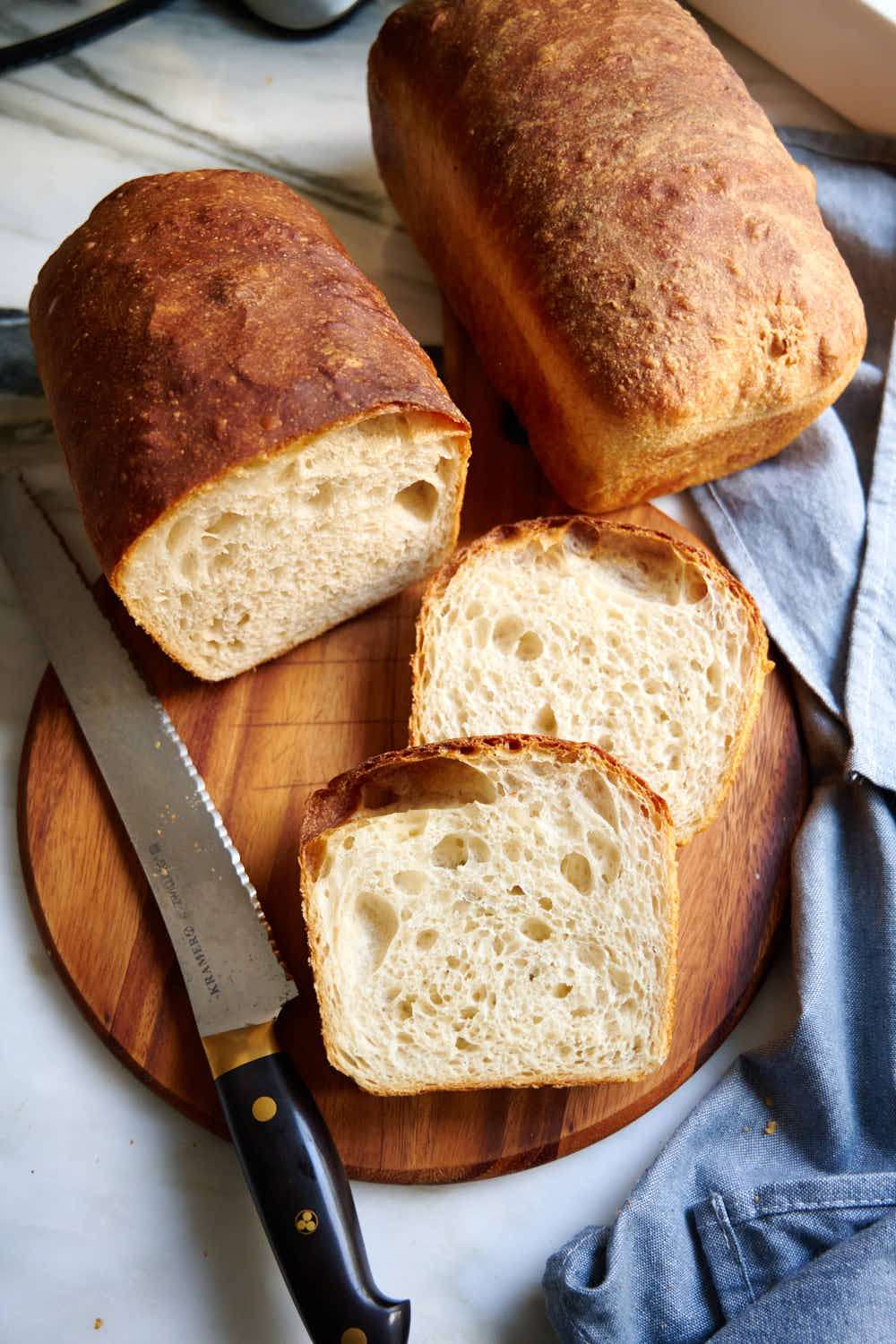
Pan bread with Sourdough Discard uses a mix of bread flour, water, sourdough discard, kosher salt, and instant yeast to balance fermentation and leavening. The process begins by combining water and discard, then adding flour, yeast, and salt carefully to avoid premature interaction. After mixing the sticky dough, it rests to hydrate, followed by three rounds of stretch and folds to build dough strength. The dough is then allowed to rise until roughly doubled. Dividing and shaping into logs that fit 9"x5" pans, the dough proofed covered with paper towel and plastic wrap prevents sticking and develops a tender crust while baking.
The bread yields a crumb with internal softness and moderate chew, benefiting from the sourdough flavor depth and yeast rise. The baking pans encourage a consistent shape and crust thickness, appealing for everyday bread uses such as sandwiches or toasts. The method allows for controlled fermentation and handling of sourdough discard without sacrificing reliable bread structure.
Ingredients
- 800 g bread flour King Arthur brand recommended
- 576 g water at 85F (29C)
- 200 g sourdough starter sourdough discard
- 16 g kosher salt
- 3 g instant yeast SAF Gold recommended
Instructions
- Add water and sourdough discard to a large bowl and stir until the starter is dispersed.
- Add flour, then yeast on one side of the flour and salt on the other, making sure the two don't touch each other. Mix by hand, squeezing the dough between your fingers, until a sticky homogeneous mass is formed. Cover the bowl with plastic wrap and let rest for 30 minutes.
- After 30 minutes have passed, perform a stretch and fold, then another one after 20 minutes, and another one 20 minutes later. Let the dough continue its fermentation for an additional hour to 1.5 hours or until it just doubles in size. Don't let it increase in size more than that.
- Gently turn the dough over onto a work surface and cut it in half with a serrated knife. Shape each piece into a log about 9" long, then place the logs seam side down into liberally buttered 9" x 5" bread pans.
- Cover each pan with a piece of paper towel (this will prevent sticking of the dough to the plastic wrap), then a plastic wrap. Let proof for about 1-2 hours or until the dough doubles in size.
- Preheat the oven to 425F (220C). Fill another bread pan or similar with boiling water about halfway and carefully place it on the bottom of the preheated oven.
- Transfer bread pans into the oven and bake at 425F (220C) for 20 minutes.
- After the 20 minutes is up, remove the water pan, decrease the temperature to 400F (205C) and bake for an additional 25 minutes (30 minutes if you want a more crunchy crust).
- Next, remove the bread pans from the oven and place them on top of the stove. Using oven mitts, carefully remove the bread from the bread pans and place it on a cooling rack.
- Using an oven mitt to hold the bread, carefully slice and enjoy it while the bread is hot; or let it cool down completely before eating.
- Once the bread had fully cooled down, wrap it in plastic and store it at room temperature. It will stay fresh for a few days.
Nutrition Information
Show DetailsNutrition Facts
Serving: 241 slice per serving
Amount Per Serving
Calories 128 kcal
% Daily Value*
| Calories | 128kcal | 6% |
| Carbohydrates | 26g | 9% |
| Protein | 4g | 8% |
| Fat | 1g | 2% |
| Saturated Fat | 0.1g | 1% |
| Polyunsaturated Fat | 0.2g | 1% |
| Monounsaturated Fat | 0.1g | 1% |
| Sodium | 260mg | 11% |
| Potassium | 35mg | 1% |
| Fiber | 1g | 4% |
| Sugar | 0.1g | 0% |
| Vitamin A | 1IU | 0% |
| Vitamin C | 0mg | 0% |
| Calcium | 6mg | 1% |
| Iron | 0.3mg | 2% |
* Percent Daily Values are based on a 2,000 calorie diet.
User Reviews
Overall Rating
5
You'll Also Love