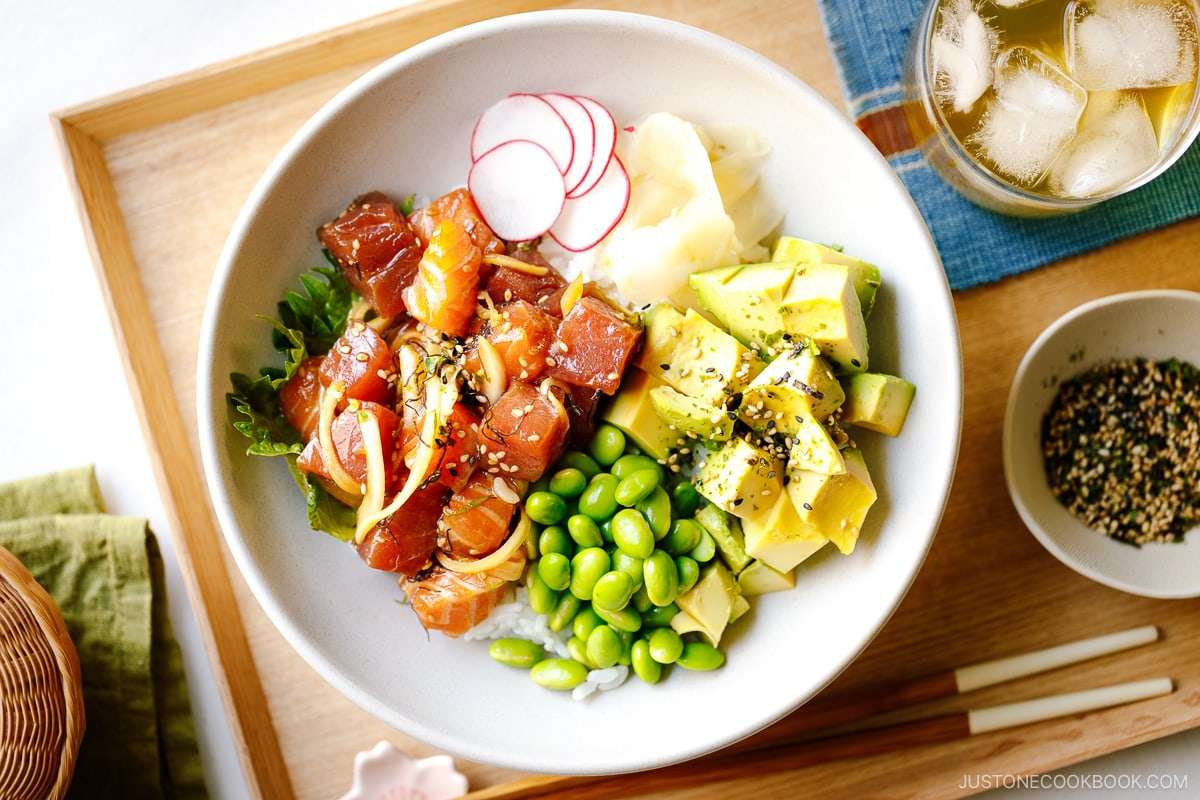
Poke Bowl
User Reviews
4.8
-
Prep Time
15 mins
-
Additional Time
1 hr
-
Total Time
15 mins
-
Servings
3
-
Calories
435 kcal
-
Course
Main Course
-
Cuisine
Japanese
Poke Bowl
Description
The Poke Bowl recipe features diced sashimi-grade tuna and salmon mixed with seaweed and thinly sliced onions, marinated for about an hour in a blend of soy sauce, toasted sesame oil, rice vinegar, and a touch of salt. This preparation allows the flavors to meld without overpowering the freshness of the fish. Sesame seeds add a subtle nutty note.
Served on Japanese short-grain rice, the bowl combines soft rice with the delicate textures of fish and crispness from optional toppings such as avocado, edamame, cucumber, radish, and pickled ginger. This variety contributes both color and a mix of creamy, crunchy, and tangy elements.
Creative toppings expand the dish's complexity, offering options like furikake seasoning, microgreens, or spicy mayo. Toppings can be tailored to personal preference to enhance flavor and texture, making the poke bowl adaptable to various palates.
Marinating time improves flavor integration but is optional. Leftover rice can be cooked in advance and frozen for convenience. The recipe highlights fresh, raw seafood and traditional Hawaiian and Japanese elements.
Ingredients
For the Poke
- 1 small clump ogo seaweed dried; about the size of 1 ping pong ball; for 4 servings, I used half the ogo from a Noh Foods Hawaiian Poke Mix package; skip if you cannot find it, Hawaiian variety
- ½ lb tuna try ahi or skipjack for an authentic flavor, sashimi-grade
- ½ lb salmon though not traditional in poke, salmon brings a nice color to this dish, sashimi-grade
- 1 green onion or scallion
- ¼ sweet onion (use Maui onion for the best flavor)
For the Seasonings
- 3 Tbsp soy sauce (GF soy sauce for gluten-free)
- 1 Tbsp sesame oil toasted
- 2 tsp rice vinegar unseasoned
- ⅛ tsp kosher salt for a more authentic flavor, try Hawaiian sea salt to taste; used from the same poke mix above, Diamond Crystal brand
- ½ Tbsp white sesame seeds toasted
For the Donburi Bowl
- 3 ervings Japanese short-grain rice about 1⅔ cups, 250 g per donburi serving, cooked
For the Creative Toppings (optional; see Notes for more ideas)
- avocado (sliced or cubed; see my simple tutorial to learn how to cut an avocado)
- edamame boiled, shelled
- cucumber cubed or sliced, Japanese or Persian varieties
- radish thinly sliced, red
- ginger you can make your own Pickled Sushi Ginger, sushi preparation called gari
- shiso leaves aka perilla, ooba
- furikake you can make homemade Furikake, rice seasoning
Instructions
Before You Start...
- Please note that I recommend a marinating time of 1 hour for the poke to develop the best flavor. If you‘re short on time, you can always marinate for less time or serve it without marinating.
- For the steamed rice, I recommend cooking 2¼ cups uncooked Japanese short-grain rice (3 rice cooker cups, 15.9 oz, 450 g). This yields 6⅔ cups (990 g) cooked rice, enough for 3 donburi servings (roughly 1⅔ cups, 250 g each). See how to cook short-grain rice with a rice cooker, pot over the stove, Instant Pot, or donabe. See how to freeze the leftovers in my post How to Store Cooked Rice.
- Now, gather all the ingredients.
To Prepare the Ingredients
- To a small bowl, add 1 small clump Hawaiian ogo seaweed (dried) and enough water to cover. Soak for 5 minutes to rehydrate.
- Squeeze the water out and cut the ogo into smaller pieces, about 1 inch (2.5 cm) long.
- Thinly slice ¼ sweet onion lengthwise.
- Thinly slice 1 green onion/scallion.
- Cut ½ lb sashimi-grade tuna into bite-sized cubes, about ¾ inch (2 cm).
- Cut ½ lb sashimi-grade salmon into bite-sized cubes, about ¾ inch (2 cm).
To Season and Marinate
- Put the tuna and salmon in a large bowl. Then, add the onion, green onion, and ogo.
- To the bowl with the tuna and salmon, add 3 Tbsp soy sauce, 1 Tbsp toasted sesame oil, 2 tsp rice vinegar (unseasoned), and ⅛ tsp Diamond Crystal kosher salt or Hawaiian sea salt.
- Sprinkle in ½ Tbsp toasted white sesame seeds and gently mix it all together. Cover the poke and marinate it in the refrigerator for at least 1 hour (or up to 12 hours in advance) to develop the flavors. During this time, prepare your optional toppings.
To Serve
- Divide 3 servings cooked Japanese short-grain rice into individual large (donburi) bowls or on plates. Let the rice cool down a little bit, for 3–5 minutes (you don‘t want to warm up the raw tuna). Then, pile the poke on top. If you‘d like, you can add creative toppings of your choice now. I enjoy sliced or cubed avocado (see how to cut an avocado), shelled edamame, thinly sliced Japanese or Persian cucumber (I forgot to add!), thinly sliced red radish, sushi ginger (gari), shiso leaves (perilla/ooba), and furikake (rice seasoning). See my Notes below for more topping ideas. Serve immediately and enjoy!
To Store
- It‘s best to enjoy it on the same day. You can keep the poke ingredients in the refrigerator for up to 24 hours. I recommend cooking the rice just before serving.
Notes
- Avocado adds a creamy texture similar to fatty tuna and enriches the bowl.
- Vegetables like cucumbers, radishes, and carrots can be diced or sliced for crunch and color.
- Edamame offers a protein boost and added substance to the dish.
- Microgreens and cherry tomatoes provide freshness and nutritional variety.
- Fish roe such as masago adds saltiness and visual interest.
- Seaweed and sesame seeds contribute texture and aromatic flavor.
- Macadamia nuts, when roasted and chopped, enhance creaminess with a mild taste.
- Furikake and pickled ginger bring umami and zest respectively, complementing the fish.
- Spicy mayo made with Japanese mayo and sriracha can give a creamy, spicy element.
Nutrition Information
Show DetailsNutrition Facts
Serving: 3Serving
Amount Per Serving
Calories 435 kcal
% Daily Value*
| Calories | 435kcal | 22% |
| Carbohydrates | 31g | 10% |
| Protein | 37g | 74% |
| Fat | 17g | 26% |
| Saturated Fat | 3g | 15% |
| Polyunsaturated Fat | 6g | 35% |
| Monounsaturated Fat | 6g | 30% |
| Cholesterol | 70mg | 23% |
| Sodium | 1250mg | 52% |
| Potassium | 633mg | 13% |
| Fiber | 1g | 4% |
| Sugar | 1g | 2% |
| Vitamin A | 1761IU | 35% |
| Vitamin C | 2mg | 2% |
| Calcium | 50mg | 5% |
| Iron | 3mg | 17% |
* Percent Daily Values are based on a 2,000 calorie diet.
User Reviews
Overall Rating
4.8
You'll Also Love