Preserved Lemons
User Reviews
4.9
-
Prep Time
10 mins
-
Additional Time
24 d
-
Total Time
24 d 10 mins
-
Servings
18
-
Calories
005 kcal
-
Course
Condiments
-
Cuisine
Middle Eastern, Moroccan
Preserved Lemons
Description
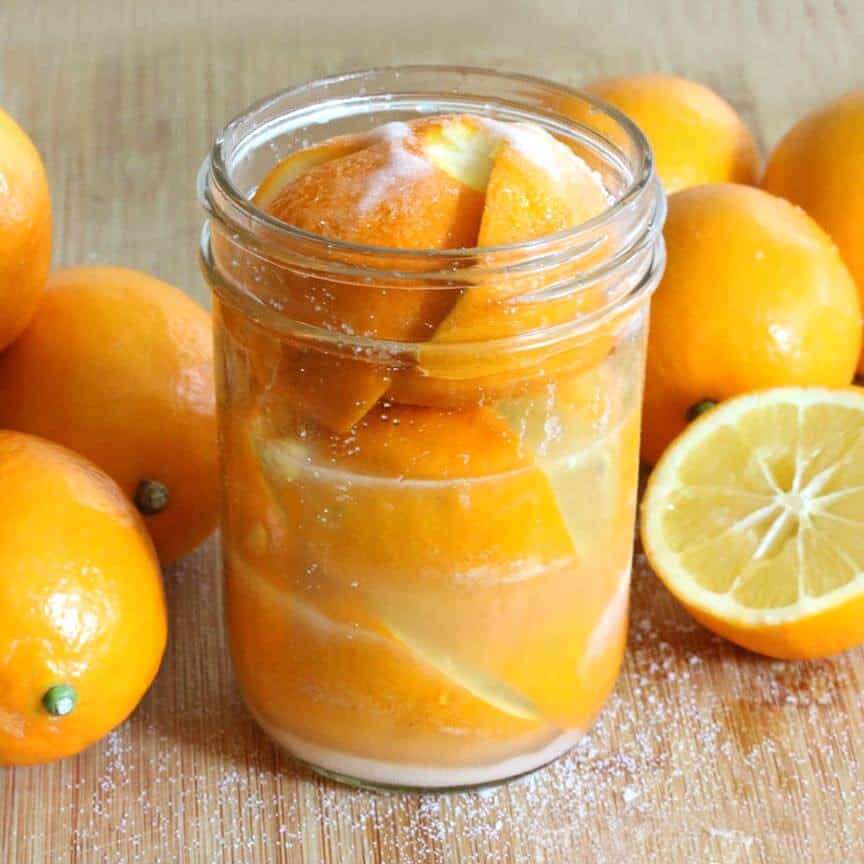
The Preserved Lemons recipe involves preparing lemons by trimming and quartering them while keeping the quarters attached, then filling the cavities with sea salt. Salt is also added to the jar to create layers between lemons, which are pressed down firmly to release juice that covers them. Additional lemon juice may be added to ensure lemons are immersed, promoting preservation through natural fermentation.
The use of sea salt or kosher salt avoids discoloration from iodized table salt. Organic lemons are preferred for fewer chemicals, or non-organic lemons should be soaked in vinegar water and rinsed thoroughly. Once sealed and stored in a cool, dark place or refrigerated, the lemons cure and develop softened peels with unique flavor, prized for adding brightness and umami to recipes.
Preserved lemon pulp is usually discarded after use as it becomes overly salty and fermented, while the peels are washed before adding to dishes. The method can be adapted to other citrus fruits like limes, oranges, grapefruit, and kumquats, provided sufficient acidity and lemon juice topping ensure proper preservation.
Ingredients
- 3 lemon or Eureka, Lisbon, etc, organic recommended per pint-sized jar, Meyer variety
- 5-6 teaspoons sea salt regular table salt contains iodine which will turn the lemons gray, or kosher salt
- lemon extra, for juicing
- water sterile, boiled and cooled
Instructions
- Note: you can make however many preserved lemons you like, but roughly 3 will fit per pint-sized jar.Thoroughly clean the lemons. Organic is recommended. If you can't find organic, let the lemons sit in some vinegar water for a few minutes, then rinse.Trim the nubs off both ends of each lemon. Quarter each lemon, slicing them down just over 3/4 of the way to leave the slices attached at the end.Put one teaspoon of salt into the cavity of each lemon.Place one teaspoon salt into the bottom of the jar. Put a lemon in the jar, cut-side down, pressing firmly to squish out the lemon juice. Put a teaspoon of salt on top of the lemon. Firmly press the second lemon down on top of the first lemon. Repeat with the third lemon, pressing down firmly. Add a teaspoon of salt on top of the lemon.The jar should be at least halfway full with lemon juice. If needed, squeeze some additional lemon juice into the jar to bring it to the halfway point. Don't waste that lemon; slice it and stuff the slices into the jar. Pour the boiled/cooled water into the jar to fill it to the top.Screw the lid on and let it sit at room temperature for 3 days, shaking it and rotating the jar upside-down/right-side up a few times per day. After 3 days transfer the jars to the refrigerator and let them sit for at least 3 weeks before using. Stored in the fridge, they will keep for at least 6 months (see note).
Notes
- Store preserved lemons in a cool, dark place or refrigerate them to extend shelf life beyond typical room temperature storage.
- Discard lemon pulp when using preserved lemons; the peel is the desired component and should be rinsed to remove excess salt before use.
- This preservation method also works for other citrus like limes, oranges, grapefruit, and kumquats, but lemon juice must be added for acidity.
Nutrition Information
Show DetailsNutrition Facts
Serving: 18Serving
Amount Per Serving
Calories 005 kcal
% Daily Value*
| Calories | 0.05kcal | 0% |
| Carbohydrates | 0.02g | 0% |
| Protein | 0.002g | 0% |
| Fat | 0.001g | 0% |
| Sodium | 646mg | 27% |
| Potassium | 0.4mg | 0% |
| Fiber | 0.004g | 0% |
| Sugar | 0.004g | 0% |
| Vitamin A | 0.04IU | 0% |
| Vitamin C | 0.1mg | 0% |
| Calcium | 0.4mg | 0% |
| Iron | 0.01mg | 0% |
* Percent Daily Values are based on a 2,000 calorie diet.
User Reviews
Overall Rating
4.9
You'll Also Love