Pulled Pork Pancakes
User Reviews
5
Pulled Pork Pancakes
Description
This recipe features classic pancakes prepared from a batter of all-purpose flour, baking powder, sugar, salt, milk, egg, and melted butter. The batter is cooked on a griddle until bubbles form then flipped to achieve a golden finish. About eight pancakes are made, kept warm until serving.
The pulled pork is heated with barbecue sauce and served alongside or atop the pancakes, introducing a rich and smoky meat component. The whiskey-maple syrup adds a boozy sweetness combining corn syrup, sugar, whiskey, and maple extract, cooked and cooled before use.
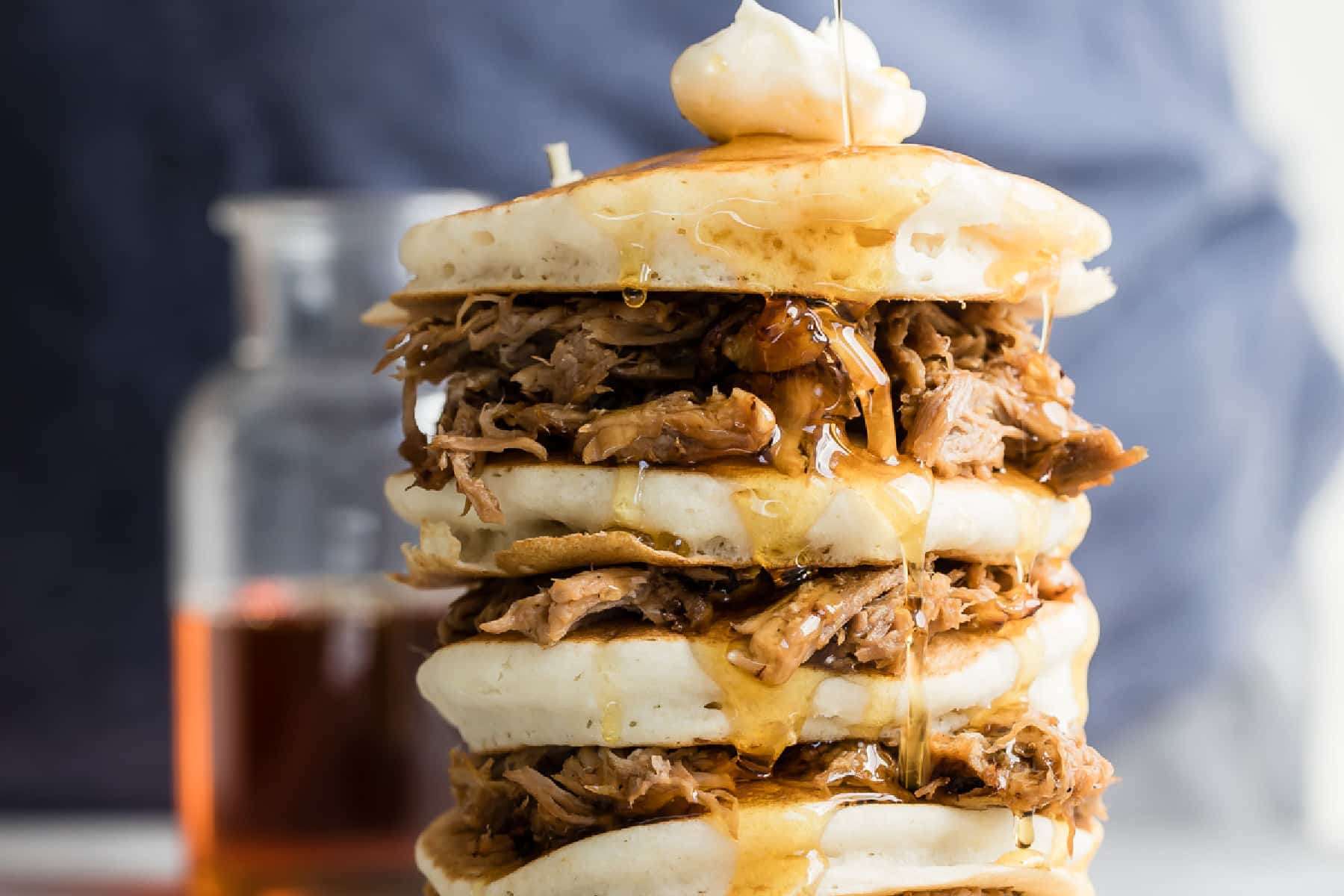
Serving these pancakes alongside the pulled pork and syrup creates layers of sweet, savory, and smoky flavors. The pancakes provide a tender base, while the syrup adds moisture and a unique topping experience. This dish is well-suited to a weekend brunch or a special meal using leftover pulled pork.
The recipe notes suggest using any preferred milk or milk alternatives and recommend greasing the skillet if crispy edges are desired. Leftover components can be stored separately refrigerated up to four days. Whiskey flavor in the syrup can be omitted or substituted with plain maple syrup to suit taste preferences.
Ingredients
For the whiskey maple syrup (see note 1):
- 1 cups water
- 1 cups dark corn syrup
- 1/2 cup granulated sugar
- pinch salt
- 1 1/2 teaspoons whiskey
- 1/2 teaspoon maple extract flavored
For the pancakes:
- 1 1/2 cups all-purpose flour
- 3 1/2 teaspoons baking powder
- 1 tablespoon granulated sugar
- 1/2 teaspoon salt
- 1 1/4 cups milk (see note 2)
- 1 large egg
- 3 tablespoons butter melted
For serving:
- 1 cup pulled pork see note 3, prepared
- barbecue sauce to taste (see note 4)
- butter
Instructions
To make the syrup:
- In a small saucepan, combine water, corn syrup, sugar, and salt. Bring to a boil and boil 5 minutes (Warning: the syrup may boil over if you don’t keep an eye on it). Remove from heat and cool at least 15 minutes. Stir in whiskey and maple extract.
To make the pancakes:
- In a large bowl, whisk together flour, baking powder, sugar, and salt. Make a well in the center and pour in the milk, egg, and melted butter; mix until smooth.
- Heat a griddle or frying pan over medium high heat, greasing if desired (see note 5). Pour or scoop the batter onto the griddle, using approximately ¼ cup for each pancake.
- When bubbles start to form on the first side, carefully flip and brown the second side. Repeat with remaining batter (you should have about 8 pancakes). Keep warm until serving time (a 200-degree oven works well).
To serve:
- In a small saucepan or in the microwave, add cooked pulled pork and barbecue sauce to taste. Heat until the pork reaches 165 degrees on an internal thermometer.
- Build stacks of pancakes with pulled pork in between each pancake. Top with butter and drizzle with warm whiskey maple syrup.
Notes
- You can substitute whiskey maple syrup with regular maple syrup if preferred.
- Any milk or milk alternative from skim to whole or plant-based types can be used for the pancake batter.
- Leftover pulled pork can be used from oven-roasted or slow cooker methods.
- Lightly grease the skillet if you prefer crispy edges on pancakes; a non-stick skillet can be used without fat for a smoother surface.
- Store leftover pulled pork and pancakes separately in airtight containers refrigerated up to four days.
Nutrition Information
Show DetailsNutrition Facts
Serving: 4servings (s pancakes + 1/4 cup pork each)
Amount Per Serving
Calories 401 kcal
% Daily Value*
| Serving | 2 pancakes + 1/4 cup pork | |
| Calories | 401kcal | 20% |
| Carbohydrates | 43g | 14% |
| Protein | 18g | 36% |
| Fat | 17g | 26% |
| Saturated Fat | 9g | 45% |
| Polyunsaturated Fat | 1g | 6% |
| Monounsaturated Fat | 5g | 25% |
| Trans Fat | 0.3g | 15% |
| Cholesterol | 109mg | 36% |
| Sodium | 802mg | 33% |
| Potassium | 302mg | 6% |
| Fiber | 1g | 4% |
| Sugar | 7g | 14% |
| Vitamin A | 456IU | 9% |
| Vitamin C | 0.2mg | 0% |
| Calcium | 322mg | 32% |
| Iron | 3mg | 17% |
* Percent Daily Values are based on a 2,000 calorie diet.
User Reviews
Overall Rating
5
You'll Also Love