Quick-pickled Russian sauerkraut
User Reviews
5
-
Course
Condiments
-
Cuisine
Russian
Quick-pickled Russian sauerkraut
Description
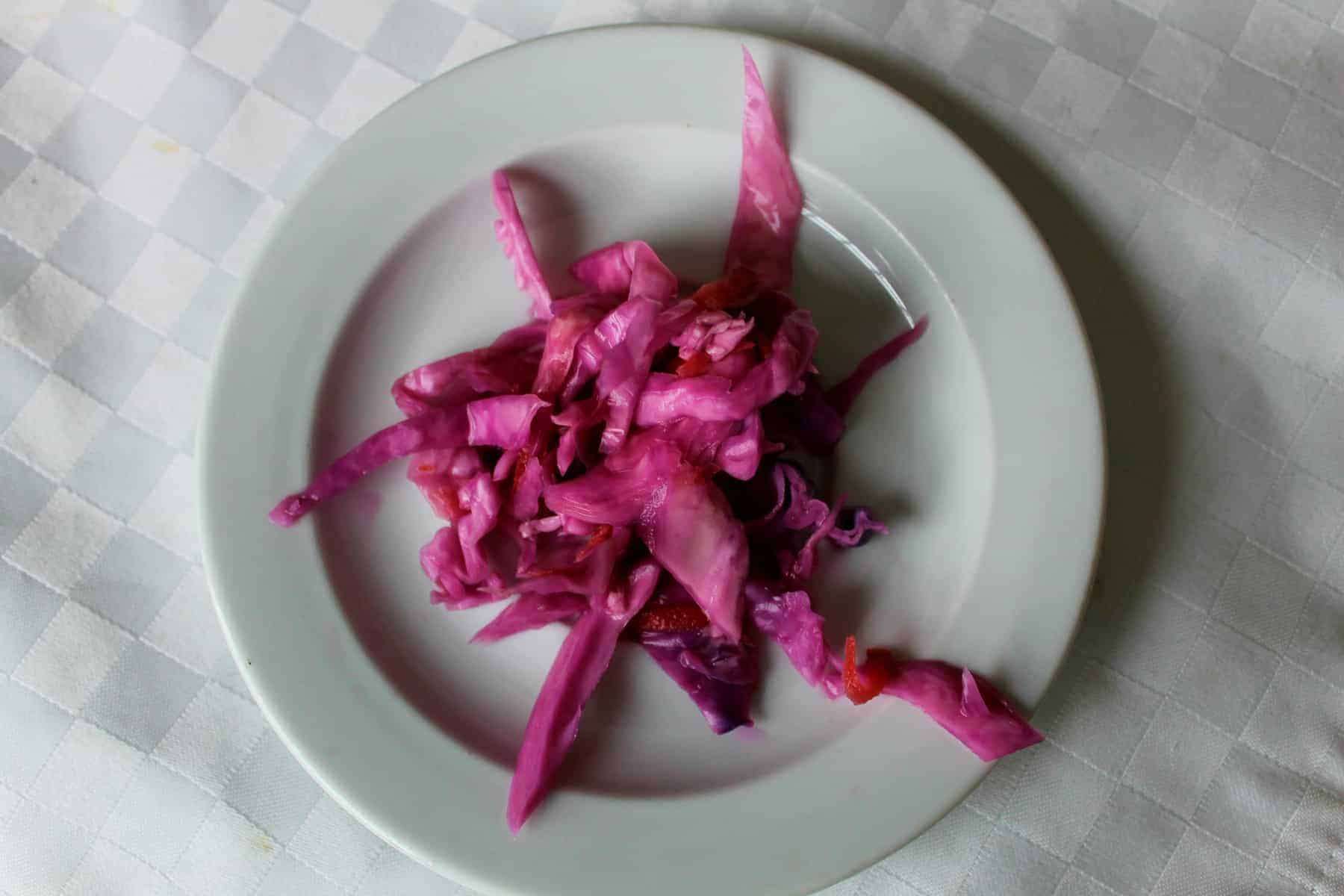
Quick-pickled Russian sauerkraut starts with finely shredded cabbage, salted to release its juices, combined with grated carrots and cranberries that add both sweetness and tartness. Whole spices like black peppercorns, allspice, cloves, and bay leaves enhance its aroma. The mixture is tightly packed into a sanitized jar layered with whole cabbage leaves to protect the vegetables during fermentation. A vinegar and water brine is added, creating an acidic environment that delivers a sharp tang. The process produces a crunchy and flavorful sauerkraut that can complement various dishes, offering a refreshing acidity and a unique blend of textures.
The cranberries or lingonberries provide a distinctive fruitiness uncommon to typical sauerkraut. The spices infuse subtle warmth and complexity, making this version stand apart. The preparation requires patience as the flavors meld during pickling, resulting in a tangy and crisp relish that works well with hearty foods or as a side salad addition.
Ingredients
- 1 kilogram cabbage late season, medium- or large-sized head. My grandparents use only white cabbage, but I sometimes use a mix of white and purple, use a dense
- salt preferably pickling or canning salt, about 1.5-2 tablespoons, up to 30 grams
- 1 teaspoon sugar
- 1 cup or 200 grams, of 5% vinegar, lemon juice, or a combination thereof
- 1 cup carrot grated
- 50 grams cranberries or lingonberries (if you've somehow magically got 'em), ½ cup
- black peppercorns whole allspice, whole cloves, and 2-3 bay leaves (or more, to taste, a teaspoon each
- 800 ml of water
- A 2-litre jar a large crock, clay pot, or enameled pot with a cover
Instructions
- Prepare utensils for pickling: rinse your jar, crock, or enamel pot thoroughly with very hot, then cold water. Let dry.
- Wash cabbage in cold running water. Chop cabbage into narrow strips (julienne), or cut into small pieces of similar shapes. Set aside 2-4 whole cabbage leaves. Carrots also need to be washed, cleaned thoroughly and grated.
- In a deep bowl, mix chopped cabbage with ½ tablespoon of salt and massage well, so the cabbage lets out a little juice.
- Take ¼ cup of the carrot and cranberries and blend for a a few seconds in a blender, so that some of the berries break open and let out some liquid.
- Add carrots and cranberries to bowl with cabbage. Add your whole spices, and mix well. Let rest for a few minutes.
- At the bottom of your clean jar, crock, or enameled bucket, put 1-2 washed and scalded cabbage leaves, coating the entire bottom of the jar. Fill the prepared dish with chopped cabbage, carrot and cranberries mixture, patting it down tightly with a wooden spoon each time, to ensure the cabbage continues to let out liquid. Ensure that the jar is almost full of cabbage, leaving about 2 inches of room at the top.
- Prepare brine: Boil 800 ml of water and 200 ml of vinegar (or vinegar-lemon combination). Add one tablespoon of salt (non-iodized) and sugar to water, and stir until completely dissolved.
- Pour boiling brine into cabbage-filled jar. Cabbage should be completely covered with brine. Top with 1-2 whole cabbage leaves, washed in scalding hot water. close jar or crock tightly with lid.
- Place jar or crock in a deep dish (a pot, bowl or casserole dish will all do just fine), as some brine may seep out of the container as the cabbage lets out more water, and place in a dark and warm corner of the house. Leave at room temperature for 1 to 3 days, depending on your temperature (no more than one day on a hot summer day).
- After 1-3 days, store sauerkraut in a glass jar with a lid in the refrigerator. Enjoy in sandwiches, on its own, or as a side with potatoes and some marinated and grilled tofu, or braised meat.
User Reviews
Overall Rating
5
You'll Also Love