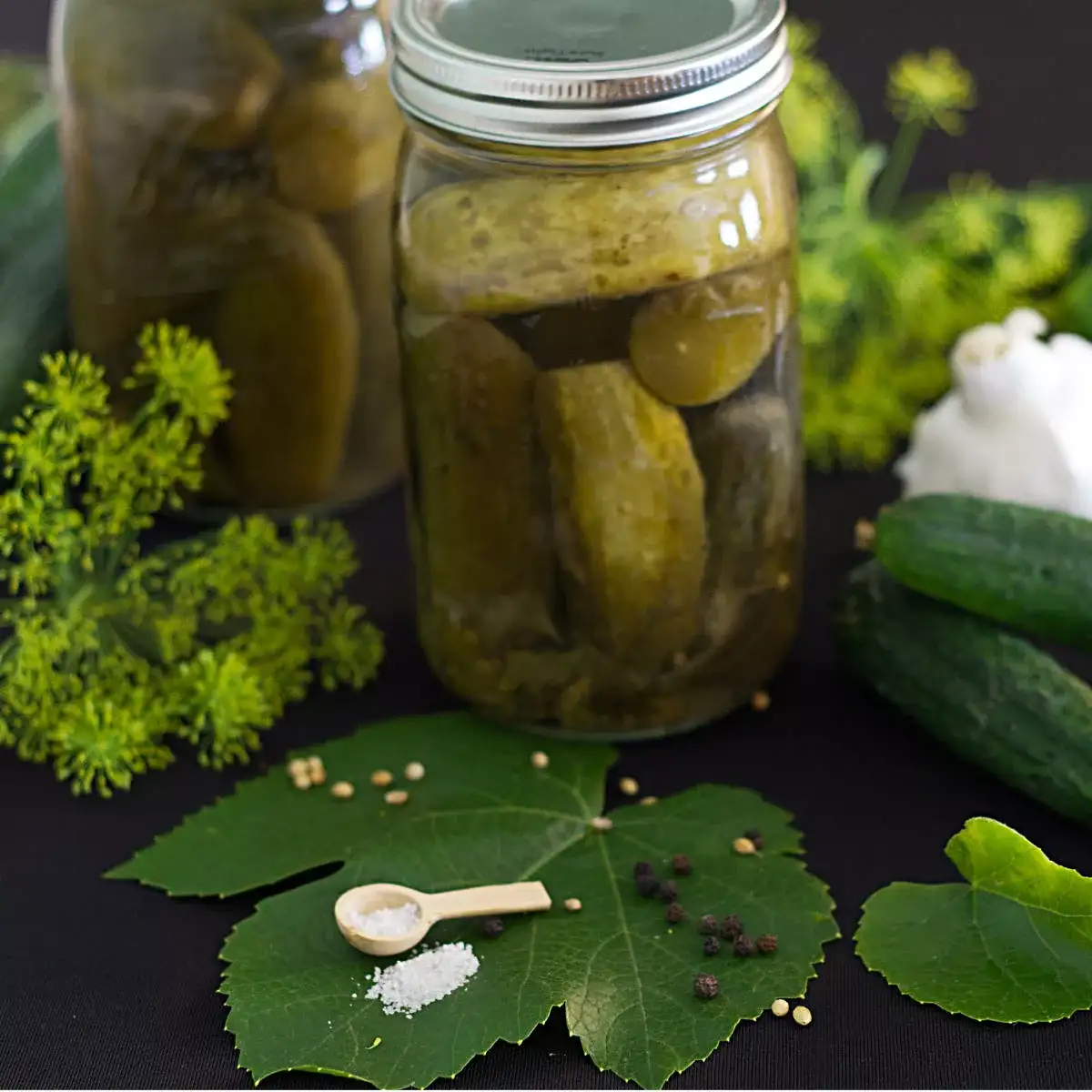
Recipe for Lacto Fermented Pickles
User Reviews
5
Recipe for Lacto Fermented Pickles
Description
The recipe calls for small cucumbers about 3 inches long, soaked briefly in water then rinsed and drained. Dill, garlic, grape leaves, coriander, and peppercorns are arranged in alternating layers with the cucumbers inside a large pickling crock, ensuring even distribution of flavor. The 3% salt brine fully covers the vegetables to prevent mold while promoting fermentation. Maintaining the temperature around 65-68°F fosters optimal lactic acid bacteria growth for a clean, sour flavor.
The fermentation takes a minimum of three days and can last longer depending on taste preference. The process enhances the cucumbers’ crunch while developing a characteristic sourness and spice notes from the added herbs and spices. Once fermented, the pickles can be stored refrigerated to slow further fermentation and prolong shelf life.
This traditional lacto-fermentation requires patience and attention to temperature and brine levels but results in flavorful preserved pickles that differ from vinegar-based ones by their natural probiotic qualities and complex taste.
Ingredients
- 20 pounds cucumber Preferably around 3 inches long
- 20 talks dill 2 bundles of dill heads, heads
- 4 bulbs garlic
- 330 g salt
- 4 tbsp Coriander
- 3 tbsp peppercorns
- 20 grape leaves
- 2.5 gallons water
Instructions
- Prepare the cucumbers by soaking them in water in a large bowl for 10 minutes. Then place them in a colander and rinse them under running water. Set aside to drain.
- Separate the cloves of garlic from the root. Using a silicone garlic peeler, peel the garlic.
- Gently rinse the dill plants. Allow to dry on sheets of paper towel. Break off heads and tender stalks. Discard the woody part of the stem, which is closer to the root and the root itself.
- Gently rinse grape leaves and pat dry with paper towel.
- Measure out and combine whole coriander and peppercorns.
- Make a 3% salt water brine by mixing the salt with water and stirring until the salt has dissolved fully.
- Using a 3 gallon pickling crock, place cucumbers, garlic, grape leaves and spices, in alternate layers. Place the weights on top and pour in the brine. Ensure that all of the vegetables are submerged below the brine.
- Store within a temperature range of 60 - 70 degrees F. (Ideal range is 65-68 degrees F.) Check pickles on day 3 to see if fermentation is complete. Look for all 3 signs of fermentation to be present. These are: cloudy brine, pickles tasting tangy and sour and pickles being a dull green color. If not all 3 indicators are present, then wait another day and check. Continue to check and look for all indicators, this should not take longer than 10 days.
- Once you are satisfied pickles are ready, then start to place them vertically into mason jars. Each jar will hold approximately 12 pickles, depending on the original cucumber size. Make sure garlic, dill, coriander, peppercorns, grape leaves and brine are also placed in every jar. Screw lid on tightly and store in refrigerator.
Notes
- Keep cucumbers fully submerged beneath the brine to ensure anaerobic fermentation and avoid spoilage.
- Maintain storage temperature between 60-70°F, ideally 65-68°F, for best fermentation results.
- This recipe requires at least three days of fermentation before pickles develop characteristic sourness and taste.
- Use grape leaves and dill heads for traditional added flavor and to help retain crispness in the pickles.
- Prepare enough brine at 3% concentration (30 grams of salt per liter of water) to cover all vegetables thoroughly.
Nutrition Information
Show DetailsNutrition Facts
Serving: 483 pickles
Amount Per Serving
Calories 86 kcal
% Daily Value*
| Serving | 3pickles | |
| Calories | 86kcal | 4% |
| Carbohydrates | 20g | 7% |
| Protein | 2g | 4% |
| Fat | 1g | 2% |
| Saturated Fat | 0.1g | 1% |
| Polyunsaturated Fat | 0.1g | 1% |
| Monounsaturated Fat | 0.1g | 1% |
| Sodium | 2671mg | 111% |
| Potassium | 483mg | 10% |
| Fiber | 2g | 8% |
| Sugar | 15g | 30% |
| Vitamin A | 1604IU | 32% |
| Vitamin C | 22mg | 24% |
| Calcium | 49mg | 5% |
| Iron | 1mg | 6% |
* Percent Daily Values are based on a 2,000 calorie diet.
User Reviews
Overall Rating
5
You'll Also Love