Roast Pheasant
User Reviews
4.9
-
Prep Time
10 mins
-
Cook Time
1 hr
-
Total Time
1 hr 10 mins
-
Servings
6 people
-
Calories
476 kcal
-
Course
Main Course
-
Cuisine
American
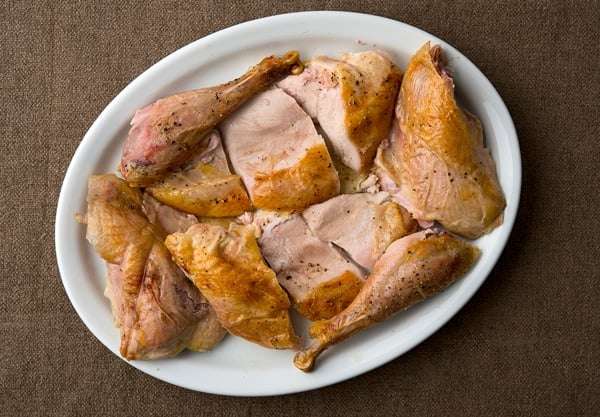
Roast Pheasant
Description
Roast Pheasant begins with submerging whole birds in a salt and sugar brine infused with optional bay leaves and crushed juniper berries, which tenderizes the meat and imparts subtle flavor. After 4 to 8 hours of brining in the refrigerator, the bird can optionally be dried uncovered in the fridge for 12 to 24 hours to encourage crispier skin during roasting.
When ready to cook, the pheasants are brought to room temperature, coated with olive oil or softened butter, and sprinkled with black pepper. The oven is preheated to a high temperature, ideally up to 500°F or at least 400°F for a shorter roasting time. This method results in golden, crispy skin and moist, seasoned meat inside.
This roast works well as a centerpiece poultry dish for special meals or seasonal dinners. The brining step ensures the meat retains moisture, making the pheasant less prone to drying out in the oven. The recipe recommends adjusting brine time depending on the age of the bird for best results.
Ingredients
- 2 pheasant whole
- 8 cups water
- 1/2 cup kosher salt
- 2 tablespoons sugar
- 2 bay leaves optional
- 1 tablespoon juniper berries optional, crushed
- 2 tablespoons olive oil or softened butter
- black pepper to taste
Instructions
- Brine the bird. Make a brine by bringing the water, salt, bay leaves, juniper and sugar to a boil. Cover and let cool to room temperature. When it cools, submerge your pheasant in the brine and keep it in the fridge for 4 to 8 hours. The longer you brine, the saltier the pheasant will become. I brine pen-raised birds for 4 hours, old roosters for 8 hours.
- Optional step: If you really want a crispy skin, take the birds out of the brine and set them uncovered in the fridge for 12 to 24 hours. This dries out the skin (but not the meat} and helps you get crispier skin.
- When you are ready to cook, take the pheasant out of the fridge and let it sit at room temperature for at least 30 minutes and up to an hour. Heat your oven. Get it to 500°F if possible, but at least 400°F. Give yourself at least 15 minutes of preheating, and up to a half hour. Oil the bird. You can do this with olive oil or you can smear butter all over it. Crack some black pepper over the bird.
- Stuff with a piece of onion or apple and a few fresh herbs. A cut lemon is a good choice, too. Do not pack the cavity. Truss the bird if you want. I do this often because it helps the pheasant cook more evenly. (Here's a video on how to truss a chicken, which is basically the same thing as a pheasant.)
- Roast the pheasant uncovered for 15 minutes at your high temperature. Take the pheasant out and lower the temperature to 350°F. Leave your oven door open to speed this process.
- Optional step: Baste the bird with either butter or a glaze. When I do this, I like to use a boiled-down combination of butter and maple syrup.
- Return the pheasant to the oven and roast uncovered for 30 to 45 minutes. You want the internal temperature of the thigh meat to be about 155°F to 160°F and for the bird’s juices to run pretty clear. A little pink in the juice — and in the bird — is what you want. The higher end of this cooking time will give you a well-done bird, which I try to avoid but many people prefer.
- Remove the pheasant and let it rest for 10 to 15 minutes. This resting time is vital, as it lets the juices redistribute within the pheasant. It will also finish off the cooking process through carry-over heating.
Nutrition Information
Show DetailsNutrition Facts
Serving: 6people
Amount Per Serving
Calories 476 kcal
% Daily Value*
| Calories | 476kcal | 24% |
| Carbohydrates | 5g | 2% |
| Protein | 52g | 104% |
| Fat | 26g | 40% |
| Saturated Fat | 7g | 35% |
| Cholesterol | 162mg | 54% |
| Sodium | 9538mg | 397% |
| Potassium | 555mg | 12% |
| Fiber | 1g | 4% |
| Sugar | 4g | 8% |
| Vitamin A | 405IU | 8% |
| Vitamin C | 12mg | 13% |
| Calcium | 43mg | 4% |
| Iron | 3mg | 17% |
* Percent Daily Values are based on a 2,000 calorie diet.
User Reviews
Overall Rating
4.9
You'll Also Love