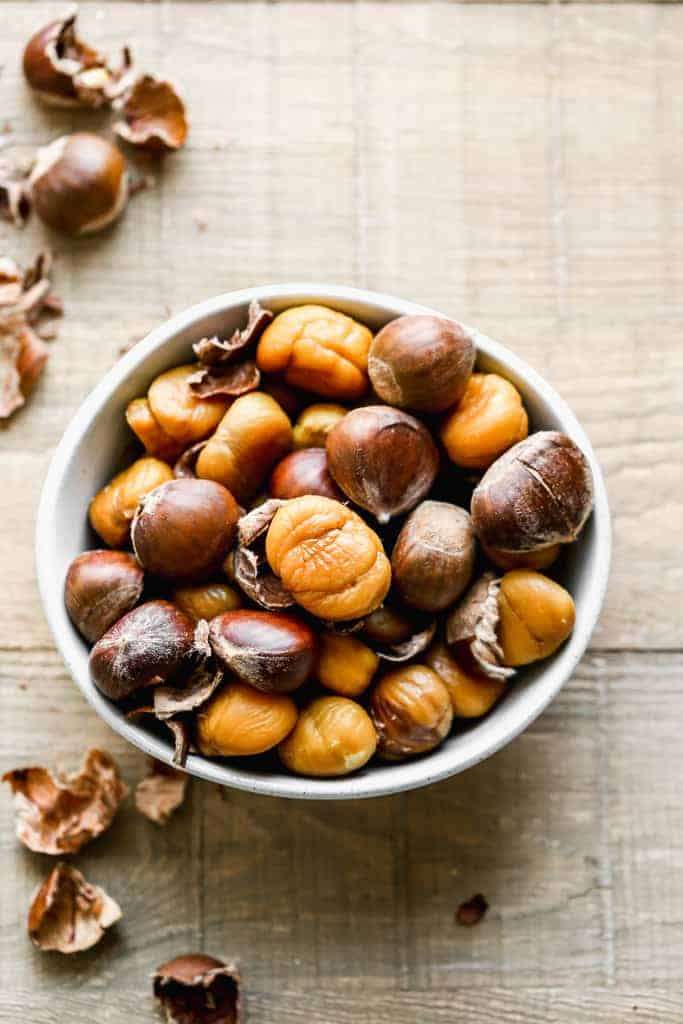
Roasted Chestnuts
User Reviews
5
Roasted Chestnuts
Description
This recipe involves carefully slitting chestnuts on the rounded side to prevent bursting during cooking. The nuts then soak in water for 10–12 hours, softening the shells and the inner skin. After drying, they are roasted in an oven at 350°F until the shells curl back and the flesh softens, making peeling manageable. The result is warm, tender nutmeats with a mild, sweet flavor and soft texture.
Flavor and texture can be further enhanced by candying the chestnuts with a brown sugar and butter glaze to add sweetness. Roasted chestnuts are versatile for eating plain or incorporating into other dishes. Several alternative cooking methods such as open fire roasting, grilling, steaming in an Instant Pot, or microwaving are described, each adjusting time and heat but preserving the essential cuts and soaking steps.
For storage, unroasted chestnuts keep up to two weeks refrigerated; peeled roasted chestnuts store for a few days or can be frozen. Choosing fresh, firm chestnuts and avoiding horse chestnuts is important, as the latter are toxic and not edible. This recipe offers both a traditional oven roasting method and tips for other common techniques.
Ingredients
- 16 oz. chestnut
- water
Instructions
- Slit chestnuts: Place one chestnut on a cutting board with the flat side down (rounded side up). Grasp the chestnuts firmly between your thumb and pointer finger and use a serrated knife to make a long slit across the rounded side of the nut. Be sure you cut all the way through the shell. Then make a second cut, forming an x" on the rounded side of chestnut. Making a slit in the chestnut is essential to ensure they don't explode in the oven and will make them easier to peel.
- Soak: Place chestnuts in a bowl and cover them with water. Let them soak overnight or for 10-12 hours. (Or, see my notes for a quicker soak option).
- Roast: Preheat oven to 350ºF. Remove the chestnuts from the water and pat them dry. Place them in a single layer on a baking sheet with the flat side down and slit side facing up. Roast chestnuts for 30-35 minutes or until you see that the skins have pulled back and the nut inside has softened.
- Steam: As soon as you remove them from the oven, place the hot chestnuts on a damp kitchen towel, lifting the ends of the towel to form a bag. Twist the bag closed and squeeze the chestnuts inside firmly (you should hear them crackle). Let them sit in the towel for 10-15 minutes. This allows any extra steam to escape and will aid in the peeling process.
- Peel: Once the chestnuts have had a chance to steam, you can start removing the skins. It's easiest to remove the skins when the nuts are hot so remove the shell immediately by gently pulling back on the "x" and peeling away hairy, papery skin around the chestnut to reveal the yellow nut inside. Discard any nuts that seems gooey or look like they are spoiled inside.
- Enjoy: Eat them plain, serve them with soup or pasta, or store them in the fridge for up to 3 days.
Notes
- Cut a wide X on each chestnut’s rounded side to prevent bursting in the oven and ease peeling.
- Soak chestnuts overnight or 10–12 hours to soften shells and internal skin, improving roast results.
- Store unroasted chestnuts in the refrigerator up to two weeks; peeled roasted chestnuts last a few days or can be frozen.
- Choose firm, shiny chestnuts without blemishes or holes; be sure not to use horse chestnuts as they are poisonous.
- Several preparation methods exist including roasting in oven, on open fire, grilling, Instant Pot steaming, and microwaving.
- Candied chestnuts can be made by coating roasted, peeled chestnuts with a brown sugar, water, and butter syrup and briefly baking.
Nutrition Information
Show DetailsNutrition Facts
Serving: 4Serving
Amount Per Serving
Calories 222 kcal
% Daily Value*
| Calories | 222kcal | 11% |
| Carbohydrates | 50g | 17% |
| Protein | 2g | 4% |
| Fat | 1g | 2% |
| Saturated Fat | 1g | 5% |
| Sodium | 2mg | 0% |
| Potassium | 549mg | 12% |
| Vitamin A | 29IU | 1% |
| Vitamin C | 46mg | 51% |
| Calcium | 22mg | 2% |
| Iron | 1mg | 6% |
* Percent Daily Values are based on a 2,000 calorie diet.
User Reviews
Overall Rating
5
You'll Also Love