Salmon Miso Soup
User Reviews
5
-
Prep Time
20 mins
-
Cook Time
20 mins
-
Total Time
40 mins
-
Servings
6 servings
-
Calories
405 kcal
-
Course
Main Course, Appetizer, Soup, Lunch
-
Cuisine
Japanese
Salmon Miso Soup
Description
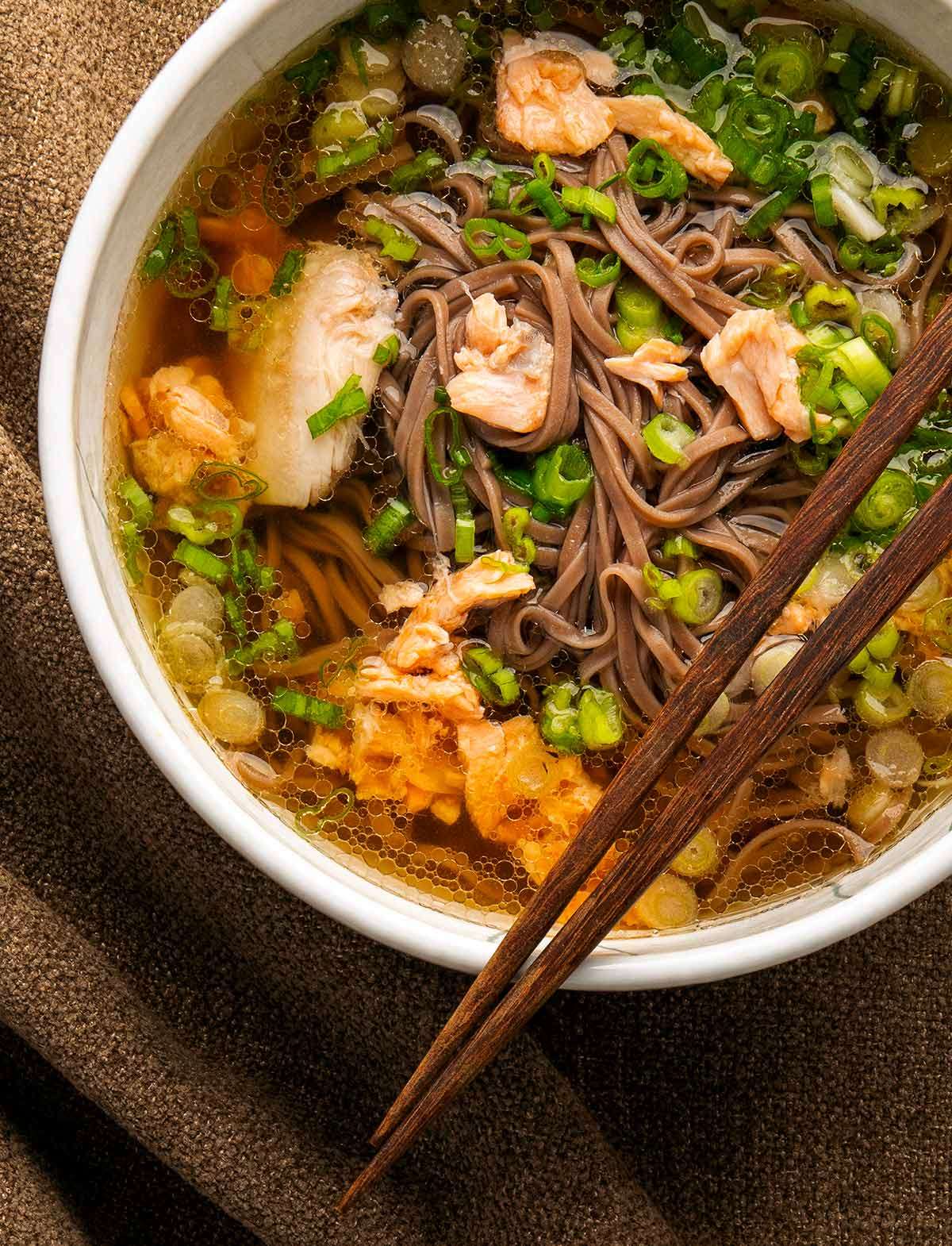
This soup uses a base of salmon stock or dashi, providing a flavorful foundation derived from fish and seaweed. The noodles are soba, made from buckwheat, adding a firm, slightly nutty texture. Cooked salmon pieces, which can include scraps or diced fillets from salmon or related fish, are added to each serving bowl along with sliced green onions (or suitable substitutes such as scallions or shiso leaves) for freshness and mild pungency.
Miso paste—red or white depending on season and flavor intensity—is whisked into the warm stock to create a rich, savory broth. The soup is served promptly after assembling to maintain the texture of the noodles and the flavor of the fresh miso. The flexibility in fish choices and miso amounts allows adjustment of taste and richness to preference.
Salmon Miso Soup works well as a nourishing, light meal or starter. The combination of warm broth, miso depth, and salmon protein suits colder days or whenever a simple, restorative soup is desired.
Ingredients
- 2 quarts salmon stock see headnotes, or dashi
- 1 pound soba noodles
- 1/2 pound salmon or diced salmon, cooked scraps
- 1/2 cup red miso or white miso
- 1/4 cup green onion sliced
Instructions
- Get your salmon stock or dashi warm in a pot. Cook your soba noodles according to the instructions on the package. Drain and set some in each person's bowl.
- Add some salmon to each bowl, along with some green onions.
- Mix the miso with the stock -- you can double the amount of miso if you'd like -- and pour into each person's bowl. Serve at once.
Notes
- Use salmon or related fish like trout, char, whitefish, sablefish, jacks, or small tuna for the salmon pieces.
- Choose good-quality soba noodles and real Japanese miso for best flavor, with red miso offering a stronger taste and white a milder one.
- Adjust miso quantity to taste; the provided amounts are guidelines rather than strict measurements.
- Green onion substitutes such as scallions, chives, chrysanthemum leaves, or shiso offer variety in flavor and garnish.
- Homemade salmon stock enhances depth, but dashi can be used as an alternative base.
Nutrition Information
Show DetailsNutrition Facts
Serving: 6servings
Amount Per Serving
Calories 405 kcal
% Daily Value*
| Calories | 405kcal | 20% |
| Carbohydrates | 64g | 21% |
| Protein | 27g | 54% |
| Fat | 6g | 9% |
| Saturated Fat | 1g | 5% |
| Polyunsaturated Fat | 3g | 18% |
| Monounsaturated Fat | 2g | 10% |
| Cholesterol | 21mg | 7% |
| Sodium | 2474mg | 103% |
| Potassium | 707mg | 15% |
| Fiber | 1g | 4% |
| Sugar | 2g | 4% |
| Vitamin A | 89IU | 2% |
| Vitamin C | 1mg | 1% |
| Calcium | 142mg | 14% |
| Iron | 4mg | 22% |
* Percent Daily Values are based on a 2,000 calorie diet.
User Reviews
Overall Rating
5
You'll Also Love