Skillet Bread
User Reviews
5
Skillet Bread
Description
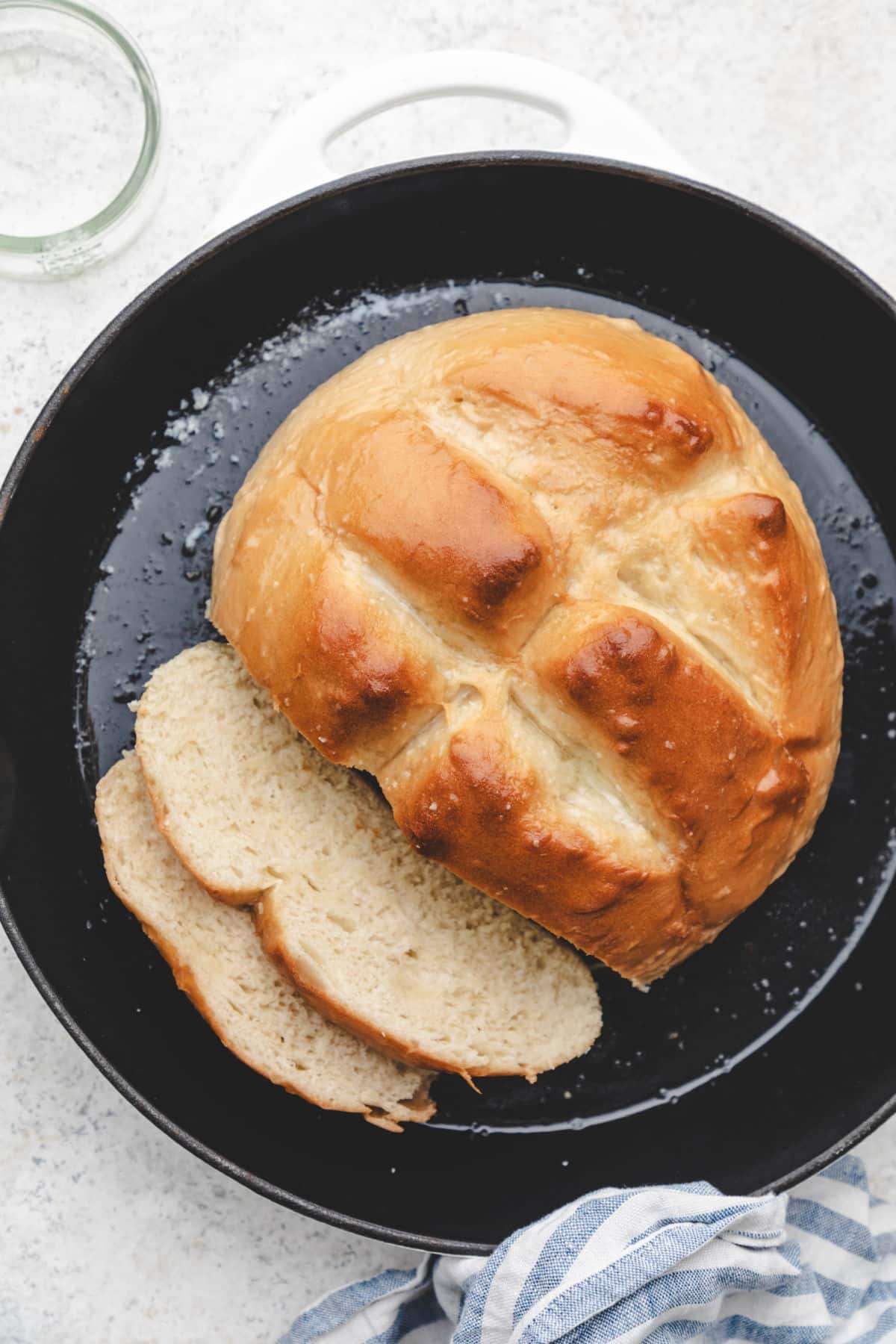
The recipe begins by proofing yeast in warm water mixed with honey. Once bubbly, flour, olive oil, and salt are added and kneaded into a pliable dough. The dough rises twice: an initial 30-minute bulk rise and a second rest after shaping in the skillet. Slits are cut on top before baking at 400°F to allow steam release and control the shape during baking.
Baking time varies but the bread develops a brown crust quickly, so it should be watched closely towards the end. Brushing the finished bread with melted butter and a sprinkle of sea salt softens and flavors the crust, complementing the bread’s natural textures.
This bread is ideal for home bakers with a stand mixer or a willingness to knead by hand, and using a cast iron skillet yields an evenly browned loaf with satisfying crust texture.
Ingredients
- 1 ½ cups water 105-115 degrees, warm
- 2 tablespoons honey
- 2 ¼ teaspoons active dry yeast
- 2 tablespoons olive oil
- 3 ½ - 4 cups bread flour
- 1 ½ teaspoons salt
Instructions
- In the bowl of a stand mixer fitted with the dough hook, stir the water, honey, and yeast together.
- Let mixture sit for 5-10 minutes, or until foamy.
- Add 2 ½ cups of flour, olive oil, and salt.
- Knead on low, continuing to add flour 1/4 cup at a time until it forms a soft, smooth dough that clears the sides of the bowl.
- Once it forms the dough, continue to knead for 5 minutes on low.
- Cover and let rise for 30 minutes.
- Form the dough into a tight ball and place in a cast iron skillet. I use a 12" skillet.
- Cover and let rest for 30 minutes.
- Toward the end of the second rising time, set your oven rack to the lower middle position and preheat oven to 400F.
- Just before you place the bread in the oven cut two slits width-wise and one lengthwise.
- Bake for 12-20 minutes. The bread will brown quickly toward the end of the baking time, so keep an eye on it.
- OPTIONAL: I brush a little melted butter over the baked bread and sprinkle sea salt on top.
Notes
- Water temperature should be warm (105-115°F)–warm to the touch but not hot–to properly activate yeast without killing it.
- Olive oil can be replaced with a neutral oil if preferred without affecting the recipe significantly.
- All-purpose flour can be used instead of bread flour, though texture might be slightly different.
- Cast iron skillet ensures even baking and browning; other oven-safe heavy skillets could be experimented with cautiously.
- Brushing the baked bread with melted butter and sea salt adds softness and flavor to the crust but is optional.
- Nutrition values are approximate and may vary based on specific ingredient brands.
Nutrition Information
Show DetailsNutrition Facts
Serving: 12servings
Amount Per Serving
Calories 165 kcal
% Daily Value*
| Serving | 1serving | |
| Calories | 165kcal | 8% |
| Carbohydrates | 30g | 10% |
| Protein | 5g | 10% |
| Fat | 3g | 5% |
| Saturated Fat | 1g | 5% |
| Sodium | 293mg | 12% |
| Potassium | 44mg | 1% |
| Fiber | 1g | 4% |
| Sugar | 3g | 6% |
| Calcium | 6mg | 1% |
| Iron | 1mg | 6% |
* Percent Daily Values are based on a 2,000 calorie diet.
User Reviews
Overall Rating
5
You'll Also Love