Slow Cooker Bison Roast with Mashed Rutabaga
User Reviews
4.5
-
Prep Time
20 mins
-
Cook Time
6 hrs
-
Total Time
6 hrs 20 mins
-
Servings
4 people
-
Calories
396 kcal
-
Course
Main Course
-
Cuisine
American
Slow Cooker Bison Roast with Mashed Rutabaga
Description
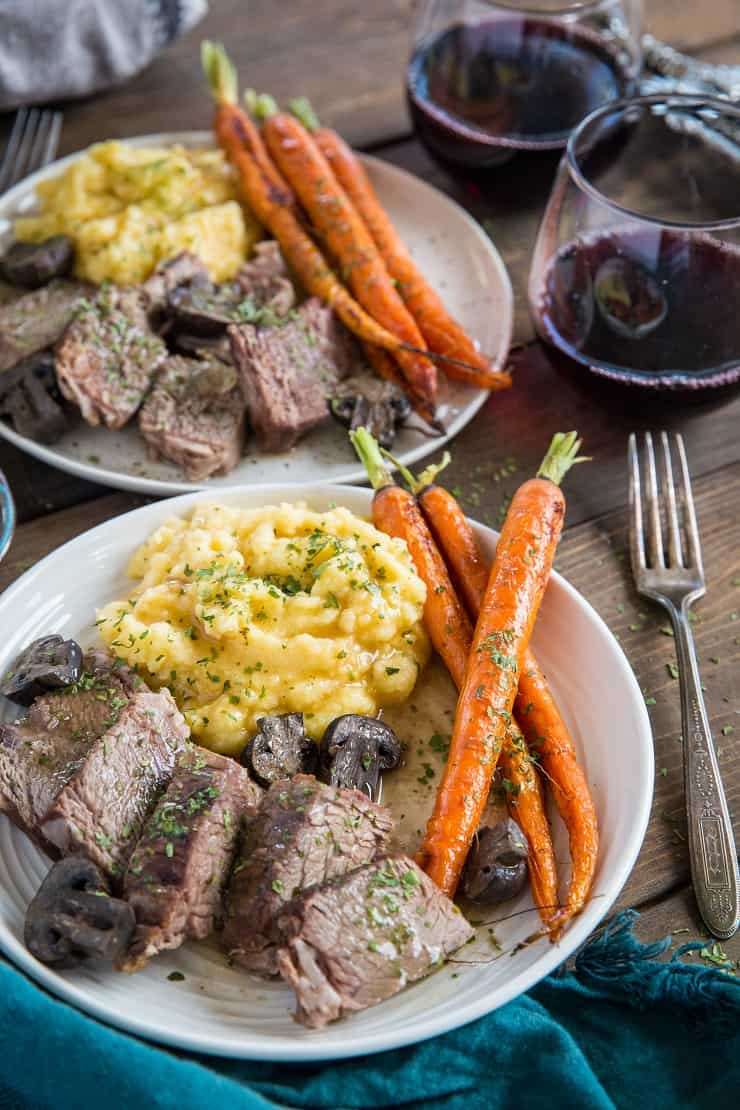
The Slow Cooker Bison Roast with Mashed Rutabaga features a 2 to 3-pound bison chuck roast slowly cooked with yellow onion, carrot chunks, mushrooms, minced garlic, thyme, and parsley in beef stock. This long, slow heat breaks down the meat fibers, producing tender, flavorful meat that can be cut into chunks for serving. The rich cooking liquid is thickened with arrowroot powder into a gravy that complements the savory roast. The mashed rutabaga, prepared separately by boiling diced rutabaga until tender, is blended with ghee, coconut milk, and dried parsley to create a creamy, slightly sweet side dish that balances the robust roast flavors.
Serving the roast with its mushroom and vegetable accompaniments alongside the creamy rutabaga mash creates a complete meal with contrasting textures: the tender meat, soft vegetables, and smooth mash. The flavors blend herbal notes with earthy mushrooms and the mild, slightly sweet rutabaga, offering a hearty and satisfying dish.
For variations, the recipe notes that onion and garlic can be omitted for a Low-FODMAP version. Use sea salt to taste in both the roast and mash. The gravy is made by boiling the cooking juices after removing the vegetables and thickening with arrowroot powder; this step enhances the overall dish by concentrating flavors.
Ingredients
Bison Roast:
- 1 bison chuck roast 2 to 3-lb; or beef roast
- 1 yellow onion diced, medium
- 1/2 pound carrot peeled and chopped into 2" chunks
- 2 cups mushrooms halved
- 3 cloves garlic minced*
- 2 cups beef stock
- 2 Tbsp thyme dried
- 1 Tbsp parsley dried
- 1 teaspoon salt to taste, sea salt
- 1 Tbsp arrowroot powder
Rutabaga:
- 2 lbs rutabaga peeled and chopped into 1-inch cubes
- 1/4 cup ghee or grass-fed butter
- 1/2 cup coconut milk full-fat, canned
- 2 Tbsp parsley dried
- 1/2 tsp salt to taste, sea salt
Instructions
Make the Bison Roast:
- Season the roast liberally with salt and pepper. Place roast in the slow cooker and spread the onions, carrots, mushrooms, and garlic around the roast. Pour in the broth and add in the dried thyme and parsley.
- Secure the lid on your slow cooker and cook on low for 6 to 8 hours, until bison is very tender. Transfer roast to a cutting board and allow it to rest while you're preparing the gravy.
- Pour the juices from the crock pot into a saucepan (you can use a slotted spoon to remove the vegetables and place them in a bowl for serving). Heat the juices to medium-high and bring to a gentle boil. Add the arrowroot flour and whisk well until gravy has thickened, about 3 to 5 minutes. Taste for flavor and add sea salt to taste.
- Cut the bison roast into chunks for serving.
Mash the Rutabaga:
- Place rutabaga in a large pot and add enough water to cover. Bring to a boil and cook until tender, about 20 to 30 minutes.
- Drain rutabaga and return it to the pot along with the remaining ingredients. Mash with an electric mixer or masher until rutabaga reaches desired level of creaminess (note: you can also mash the rutabaga in a blender for the creamiest consistency). Add in the parsley and season to taste with sea salt.
- Serve bison roast with slow cooked vegetables, a drizzle of gravy, and mashed rutabaga.
Notes
- For Low-FODMAP needs, omit the onion and garlic.
- Season the bison roast generously with salt and pepper before slow cooking.
- Use the cooking juices to make a flavorful gravy by thickening with arrowroot powder.
- Peel and cube rutabaga evenly to ensure uniform cooking for mashing.
- Adjust salt to taste in both roast and rutabaga mash.
Nutrition Information
Show DetailsNutrition Facts
Serving: 4people
Amount Per Serving
Calories 396 kcal
% Daily Value*
| Serving | 1of 5 | |
| Calories | 396kcal | 20% |
| Carbohydrates | 10g | 3% |
| Protein | 60g | 120% |
| Fat | 8g | 12% |
| Fiber | 2g | 8% |
| Sugar | 5g | 10% |
* Percent Daily Values are based on a 2,000 calorie diet.
User Reviews
Overall Rating
4.5
You'll Also Love