Soba
User Reviews
4.9
-
Prep Time
15 mins
-
Cook Time
15 mins
-
Total Time
30 mins
-
Servings
1 serving
-
Course
Main Course
-
Cuisine
Japanese
Soba
Description
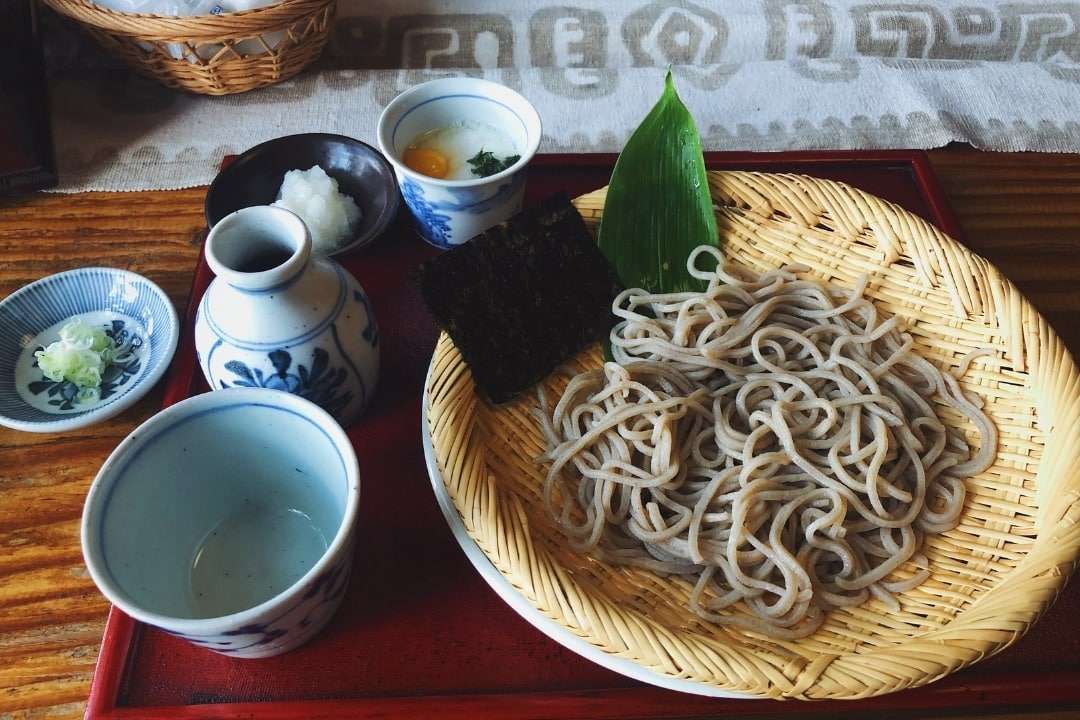
Soba noodles are cooked until tender, then rinsed under cold water to stop cooking and remove starch, resulting in a clean texture. The mentsuyu dipping soup combines sake, mirin, soy sauce, kombu, and katsuoboshi boiled briefly and strained for a clear, balanced broth that is diluted prior to serving. Thinly sliced scallions and optional grated nagaimo or daikon add freshness and contrasting textures when eaten with the noodles. Serving the noodles on a sieve allows excess water to drain, maintaining the desired texture. This dish is presented as cold soba with a flavorful dipping sauce, allowing the delicate buckwheat noodles and savory broth to shine together.
The soba can be served as a light meal or appetizer, paired with the dipping sauce that complements the nutty flavor of the noodles. The toppings of scallions and seaweed contribute bursts of freshness and subtle umami, while the optional grated root vegetables provide mild heat and creaminess, enhancing the overall palate. This is a refreshing dish suitable for warmer weather or when a thoughtfully crafted simple noodle dish is desired.
Ingredients
- 1 pack soba noodles dried
Mentusyuu (Soba dipping soup):
- 50 ml sake
- 100 ml mirin
- 100 ml soy sauce
- 1 piece kombu 4 x 4 cm (1.5 x 1.5 inches, dried kelp
- 10 g katsuoboshi
Topings:
- scallions
- seaweed
- nagaimo optional, Japanese yam
- daikon optional, Japanese horseradish
Instructions
How to make soba
- Put all the mentsuyuu ingredients into a saucepan and bring to a boil.
- Turn down the heat and cook on low for 5 minutes.
- Strain and set aside.
- Boil the soba noodles according to the packet.
- Drain and rinse under cold water.
- Slice the scallions as thinly as possible.
- Grate the daikon and nagaimo and place in separate dishes.
- For the dipping soup, dilute with 3 parts iced water and 1 part mentsuyuu.
- Serve the soba noodles on a sieve. Traditionally a bamboo rolling sieve is used but anything is okay!
Notes
User Reviews
Overall Rating
4.9
You'll Also Love