Sourdough Bread Recipe
User Reviews
5
Sourdough Bread Recipe
Description
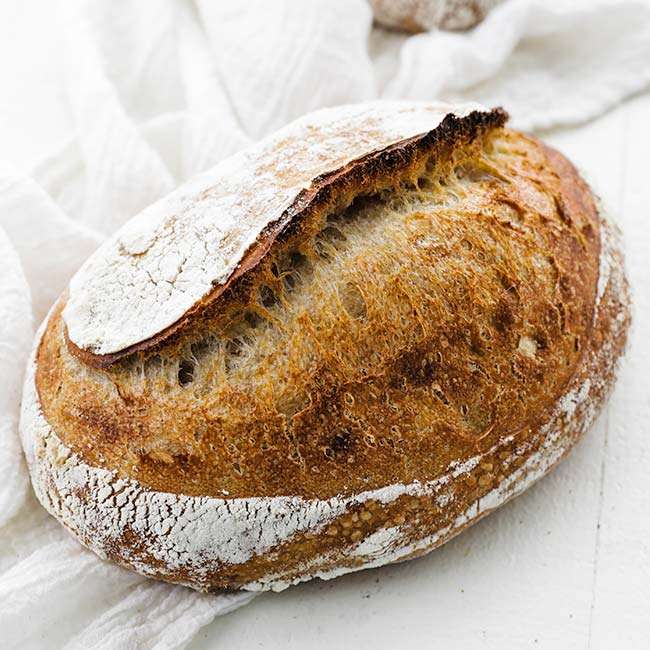
The Sourdough Bread Recipe uses a fed starter mixed with all-purpose and whole wheat flours, sea salt, and warm water. The process starts with autolyse—mixing flour and water—before incorporating the starter and salt. The dough is then rested and folded multiple times to build gluten strength. This method results in a loaf with good volume and an open crumb. The warm proving environment encourages proper fermentation and flavor development.
The flavor is mildly tangy from the natural starter, balanced by the earthiness of the whole wheat. Texture-wise, the bread should have a chewy crust and a tender, airy interior. The natural fermentation also contributes subtle complexity in aroma and taste.
This bread can be enjoyed fresh with a variety of spreads or as an accompaniment to meals. It can be wrapped in parchment and stored at room temperature for a few days without losing quality. The recipe includes notes on water temperature, proofing techniques, and flour substitutions suitable for home bakers.
Ingredients
For the Starter:
- 75 grams of active starter
- 55 grams all-purpose flour
- 20 grams whole wheat flour
- 75 grams water warm
For the Bread:
- 350 grams all-purpose flour
- 50 grams whole wheat flour
- 75 grams starter fed
- 14 grams salt sea salt
- 275 grams water warm, plus extra for dipping
Instructions
- Feed your starter and place in a warm place for 4 hours or until it has at least doubled in size and is beginning to fall. (See chef notes below)
- Once the starter begins to fall being the autolyse process by mixing together your flour and filtered water. Cover with a damp towel and place it in the oven next to your starter and autolyse for 30 minutes.
- Add your starter to the dough and mix in, which takes about 90 seconds. Cover with a damp towel and place it in the oven for 30 minutes.
- Measure out and add the salt to the dough, wet your hands with bottled water, and mix it in until combined, which takes about 90 seconds. Cover with a damp towel, and place it in the oven for 60 minutes.
- Perform a series of folds to the dough for about 90 to 120 seconds to strengthen the gluten in the dough so that it will eventually hold shape. Cover with a damp towel and place it in the oven for 60 minutes and repeat this process 3 more times.
- After the last fold to the dough, cover with a damp towel and place it in the oven for only 30 minutes this time.
- Remove the dough and place it directly on your countertop. Rub a little flour to the top using your hand and curl in the bottom of it using a bench knife to make it taught and tight on top.
- Flip the dough over and stretch out as much as you can to a rectangle shape. Fold the right side to the left side over to cover about 2/3 of the dough. Now fold the left side as much as you can over the right side. Starting from the bottom roll up the dough to the front pulling gently making it as taught and as tight as possible.
- Transfer the dough seam side up into a lightly floured banneton and pinch together the seams to help create more air pockets in the bread and to aid in the rising process.
- Cover in plastic, a towel or in a large plastic zip bag and refrigerate for 12-16 hours or up to 24 hours.
- The next morning, preheat your pan in the oven at 500° for 30 minutes.
- Next, quickly sprinkle cornmeal into the bottom of the pan. In addition, sprinkle cornmeal to the top of the dough just to make sure it doesn’t stick.
- Immediately flip the dough in the banneton over to the center of the hot pan and score the bread using a razor, sharp knife or bread knife.
- Place the lid onto the pan and bake for 20 minutes.
- Remove the lid and bake for 15 more minutes to help with brown the bread and cool on a rack to room temperature.
Notes
- Use water warmed to 30-33° C (87-93° F) to activate yeast properly.
- Autolyse by mixing flour and water before adding starter for better dough development.
- Perform gentle folds during bulk fermentation to avoid tearing the dough.
- To create a proofing environment without a proofer, place dough in oven with light on and door cracked for warmth.
- Store wrapped bread at room temperature up to 4 days or refrigerated up to 7 days.
- If substituting all-purpose flour with bread flour, increase water by 5-10% to maintain hydration.
Nutrition Information
Show DetailsNutrition Facts
Serving: 4Serving
Amount Per Serving
Calories 445 kcal
% Daily Value*
| Calories | 445kcal | 22% |
| Carbohydrates | 93g | 31% |
| Protein | 13g | 26% |
| Fat | 1g | 2% |
| Saturated Fat | 1g | 5% |
| Sodium | 1360mg | 57% |
| Potassium | 172mg | 4% |
| Fiber | 5g | 20% |
| Sugar | 1g | 2% |
| Calcium | 17mg | 2% |
| Iron | 5mg | 28% |
* Percent Daily Values are based on a 2,000 calorie diet.
User Reviews
Overall Rating
5
You'll Also Love