Sourdough Dinner Rolls
User Reviews
5
Sourdough Dinner Rolls
Description
This recipe uses a bubbly, active sourdough starter mixed with warm water, honey, melted unsalted butter, one whole egg plus an egg yolk, salt, and bread flour to form a sticky yet cohesive dough. Gradually adding flour until the dough pulls away from the sides ensures proper hydration. Kneading by stand mixer or hand until smooth and elastic develops gluten for structure.
The dough is placed in a lightly oiled bowl and covered for a long rise of 5 to 8 hours, allowing the natural yeast to ferment and develop the sourdough flavor and airy crumb. After rising, this dough can be shaped into dinner rolls and optionally brushed with an egg wash before baking to a golden finish.
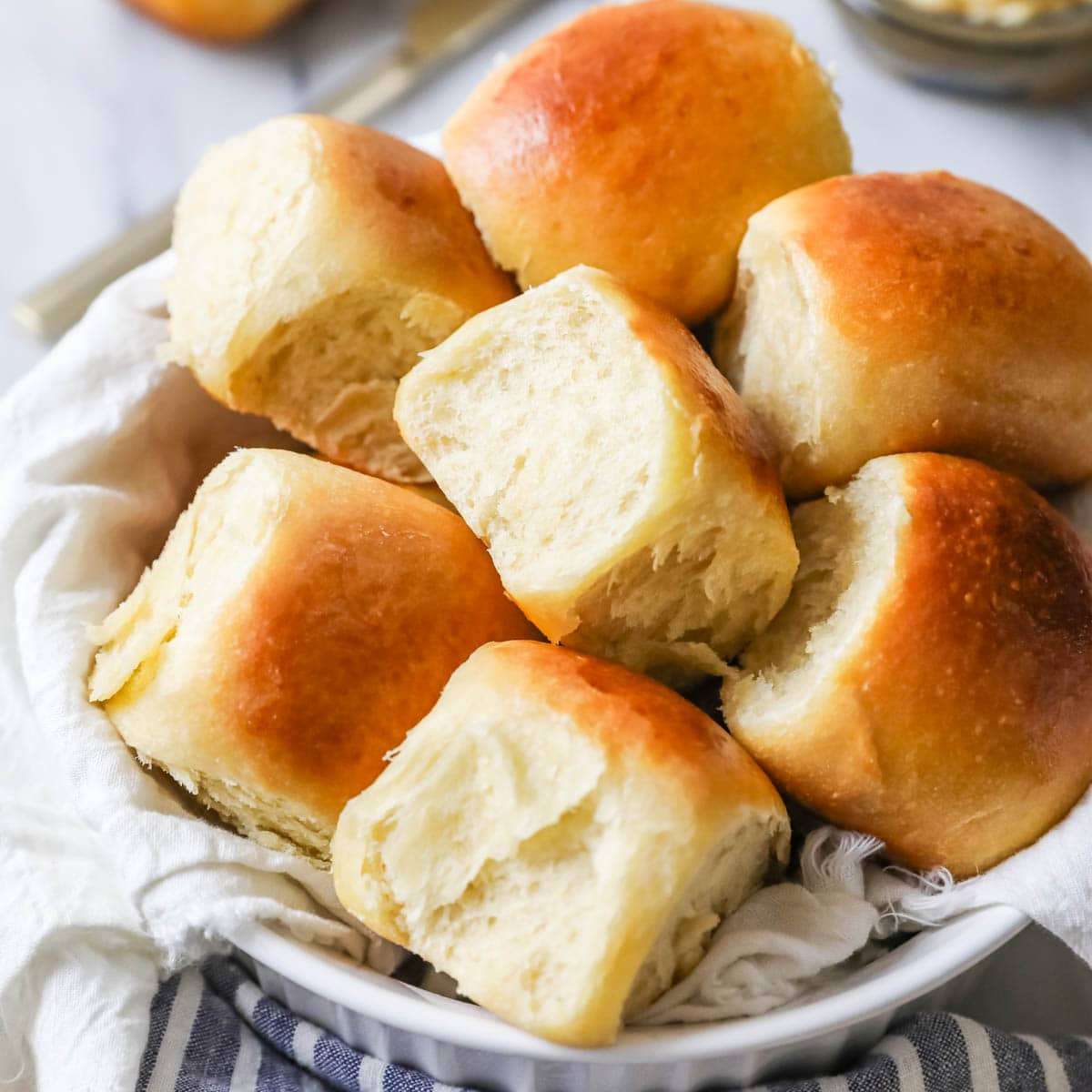
The resulting rolls have a soft crumb with a slight sour tang characteristic of sourdough, enriched by honey and butter for tenderness and mild sweetness. These rolls complement meals well and can be kept at room temperature for several days or frozen for longer storage.
Using bread flour is preferred for the best texture; using a stand mixer can simplify kneading and reduce additional flour incorporation. The dough should remain somewhat sticky without sticking excessively to fingers when gently poked.
Ingredients
- ⅔ cup active bubbly sourdough starter
- ¾ cup water about 100F/38C, warm
- 3 Tablespoons honey or sugar
- ⅓ cup butter melted, unsalted
- 1 egg plus 1 large egg yolk
- 1 ¼ teaspoons table salt
- 3 ⅔ cups bread flour divided (see note) plus additional as needed
Egg wash (optional)
- 1 egg
- 1 teaspoon water or milk
Instructions
- (See note above about rise time before beginning). Combine starter, warm water, sugar or honey, butter, egg, egg yolk, salt, and about 2 cups/250g of flour in a large mixing bowl or the bowl of a stand mixer fitted with a dough hook. Stir until well-combined.
- Gradually, while stirring, add remaining flour until the dough is clinging to itself and pulling away from the sides of the bowl. Add additional flour as needed; dough should be soft, sticky/tacky but should cling to itself and shouldn’t come off on your fingertip if gently prodded.
- If using a stand mixer (preferred/recommended), use the dough hook to knead dough until smooth and elastic (about 5-10 minutes on medium/low speed). If preparing by hand, transfer to a lightly floured surface and knead until smooth and elastic (about 10 minutes, you will likely have to add more flour as you go).
- Place dough in a lightly oiled bowl (I use olive or avocado oil), cover with plastic wrap, and allow to rise for 5-8 hours, until nearly doubled in size. Transfer to refrigerator and allow to rest/ferment overnight (up to 48 hours).
The next day
- Generously grease a 13x9 glass or ceramic baking dish with butter. Set aside.
- Remove dough from the refrigerator and turn dough out onto a lightly floured surface. Dough will be cold and dense, this is perfect for best handling.
- Divide dough into 15 (for larger rolls) or 20 (for smaller rolls) even pieces and gently roll each into a smooth ball.
- Space dough balls evenly into prepared baking dish. Cover with plastic wrap and allow to sit in a warm, draft-free space until rolls are puffed and touching. Rolls should pass the poke test, meaning if gently poked with a lightly floured finger they will spring back halfway. If the dough springs back all the way it needs more time (and if it doesn’t spring back at all, they’re unfortunately overproofed, bake them anyway). This usually takes about 1 ½-2 hours in my kitchen but will vary. When rolls are nearly finished rising, preheat oven to 375F (190C).
- Uncover rolls and, if desired, use a pastry brush to lightly brush the surface of each roll with an egg wash made by whisking together 1 egg with 1 teaspoon of water or milk.
- Transfer rolls to center rack of 375F (190C) oven and bake for 20-30 minutes (if baking 20 rolls you’ll need to start checking at 20 minutes, if baking 15 rolls they typically take 25-30 minutes). Rolls should be turning light golden on top and an instant-read thermometer inserted in the center of a roll should reach 185-190F (85-88C).
- Serve warm, though they’re delicious at room temperature and reheat well, too!
Notes
- Bread flour is recommended for the best texture, but all-purpose flour can be used if necessary.
- Using a stand mixer with a dough hook helps knead the dough without adding too much flour, resulting in better roll texture.
- The dough is intentionally sticky to retain moisture and softness in the rolls; avoid adding too much flour while kneading by hand.
- After baking, store rolls in an airtight container at room temperature for up to 3 days to maintain freshness.
- The finished rolls freeze well and can be thawed and reheated when needed.
Nutrition Information
Show DetailsNutrition Facts
Serving: 15rolls
Amount Per Serving
Calories 201 kcal
% Daily Value*
| Serving | 1roll | |
| Calories | 201kcal | 10% |
| Carbohydrates | 30g | 10% |
| Protein | 9g | 18% |
| Fat | 6g | 9% |
| Saturated Fat | 3g | 15% |
| Polyunsaturated Fat | 0.5g | 3% |
| Monounsaturated Fat | 2g | 10% |
| Trans Fat | 0.2g | 10% |
| Cholesterol | 35mg | 12% |
| Sodium | 206mg | 9% |
| Potassium | 140mg | 3% |
| Fiber | 4g | 16% |
| Sugar | 4g | 8% |
| Vitamin A | 160IU | 3% |
| Vitamin C | 0.1mg | 0% |
| Calcium | 13mg | 1% |
| Iron | 1mg | 6% |
* Percent Daily Values are based on a 2,000 calorie diet.
User Reviews
Overall Rating
5
You'll Also Love