Sourdough Pancakes Overnight
User Reviews
5
Sourdough Pancakes Overnight
Description
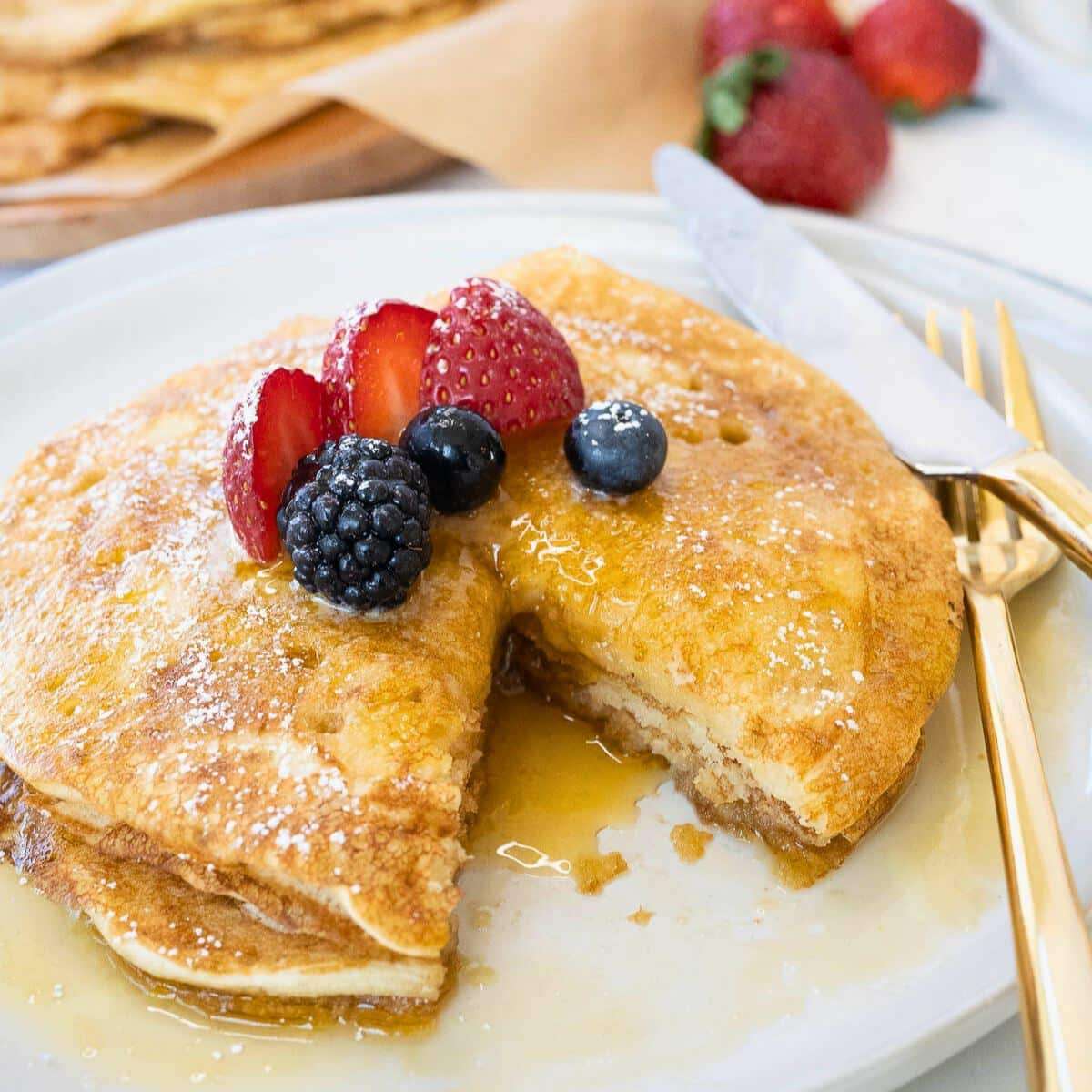
This recipe involves making an overnight sourdough sponge by mixing sourdough starter with lukewarm water and all-purpose flour, then leaving it covered at room temperature for at least 12 hours. This long fermentation develops mild sour flavors and leavens the batter naturally. In the morning, a portion of the sponge is reserved to continue your starter, while the rest is combined with neutral oil, a beaten egg, and evaporated milk, contributing richness and moisture.
Salt, baking soda, and sugar are mixed separately and then folded into the batter without overmixing. The baking soda helps create a light texture by reacting with the sourdough’s acidity. Pancakes are cooked in a buttered pan, and the batter should not be overhandled to keep them tender and fluffy. The result is golden pancakes with a subtle tang and soft crumb.
These pancakes can be served traditionally with butter and pure maple syrup or with alternative toppings like fresh berries, powdered sugar, or lemon juice. They can also pair well with savory toppings such as bacon or sausage. Storage involves refrigerating leftovers separated by wax paper and reheating by toaster, microwave, or oven. Thicker pancakes can be achieved by not adding extra milk or swirling the pan during cooking.
Frozen pancakes can be stored up to 1-2 months by freezing in a single layer before transferring to containers. Adjust the type of milk, oil, and toppings to fit preferences. Keeping the pan well-buttered prevents sticking and dryness during cooking.
Ingredients
Overnight Sponge (Night before - at least 12 hours)
- 1 cup sourdough starter use discard or active sourdough starter, bring to room temperature for best results
- 2 cups water lukewarm
- 2 ½ cups all-purpose flour I like organic, but use your regular flour, just not self-rising, unbleached
Sourdough Pancakes (morning of)
- 2 tablespoons neutral cooking oil we like Avocado oil, but use your favorite, generic cooking oil
- 1 large egg room temperature
- ¼ cup evaporated milk my grandmother used evaporated milk, but whole milk, other %, half and half, and heavy cream may all be used.
- 1 teaspoon kosher salt
- 1 teaspoon baking soda
- 2 tablespoons granulated sugar
- butter for pan
Instructions
Overnight Sponge (at least 12 hours before making pancakes)
- Stir down your starter or discard and remove 1 cup (227 g). Place the starter (1 cup), lukewarm water (2 cups) and flour (2 ½ cups) into a large mixing bowl. Mix gently, but thoroughly. Cover with plastic wrap, and leave it on the counter overnight (65-70° F) or so. Allow the sponge to sit for 12 hours overnight, it can go longer too.
- Note: If you don’t quite have 1 cup of starter or discard, feed it earlier in the day, so you have plenty.
Sourdough Pancake Batter (in the morning)
- Scoop out 1 ½ cups of starter back into storage container in the fridge for another sourdough adventure.
- To the rest of the sponge add oil (2 TBL), 1 egg (lightly beaten), and ¼ cup evaporated milk. Mix gently, but thoroughly.
- In a small bowl, add salt (1 tsp), baking soda (1 tsp) and sugar (2 TBL), stir together removing any lumps. Then sprinkle it over the batter and fold in gently. Do not overmix the batter.
- Cover with a tea towel and allow a few minutes (about 5) for the batter to rise, meanwhile. Preheat the oven to 250° F (120° C) and line a baking sheet with parchment paper and place in oven.
- Preheat a cast iron or non-stick skillet over medium-low heat until hot. Add a small pat of butter and swirl to coat the entire surface.
- Test the batter; if it’s too thick to drop from a spoon, add a little more milk, enough to make it thinner. Don't overmix the batter, a few lumps are okay!
- Add about ⅓ cup of batter or so to the hot pan and swirl pan to thin out. Cook for 1-2 minutes. When bubbles begin to surface, carefully flip and cook for another minute until done.
- Keep the pancakes warm by adding to the baking sheet in the oven, and repeat with the rest of the batter. Makes about 14 large (6-7 inch) pancakes.
Notes
- Use butter in the pan and add more if it starts to dry out during cooking to prevent sticking.
- For thicker, fluffier pancakes, avoid adding extra milk and do not swirl the pan while cooking.
- Store leftovers in an airtight container in the refrigerator separated by parchment paper for 3 to 5 days; reheat in toaster, microwave, or oven.
- Freeze cooled pancakes in a single layer before transferring to bags; freeze up to 1-2 months and thaw overnight before reheating.
- Serve traditionally with butter and pure maple syrup, or try variations with powdered sugar, lemon juice, chocolate chips, or savory toppings like bacon and sausage.
Nutrition Information
Show DetailsNutrition Facts
Serving: 46 servings (2-3 pancakes)
Amount Per Serving
Calories 310 kcal
% Daily Value*
| Serving | 1serving (2 pancakes) | |
| Calories | 310kcal | 16% |
| Carbohydrates | 53g | 18% |
| Protein | 8g | 16% |
| Fat | 7g | 11% |
| Saturated Fat | 1g | 5% |
| Polyunsaturated Fat | 2g | 12% |
| Monounsaturated Fat | 4g | 20% |
| Trans Fat | 0.02g | 1% |
| Cholesterol | 34mg | 11% |
| Sodium | 599mg | 25% |
| Potassium | 99mg | 2% |
| Fiber | 2g | 8% |
| Sugar | 5g | 10% |
| Vitamin A | 71IU | 1% |
| Vitamin C | 0.2mg | 0% |
| Calcium | 43mg | 4% |
| Iron | 3mg | 17% |
* Percent Daily Values are based on a 2,000 calorie diet.
User Reviews
Overall Rating
5
You'll Also Love