Spicy Shoyu Ramen
User Reviews
4.7
-
Prep Time
15 mins
-
Cook Time
15 mins
-
Total Time
30 mins
-
Servings
2
-
Calories
404 kcal
-
Course
Main Course
-
Cuisine
Japanese
Spicy Shoyu Ramen
Description
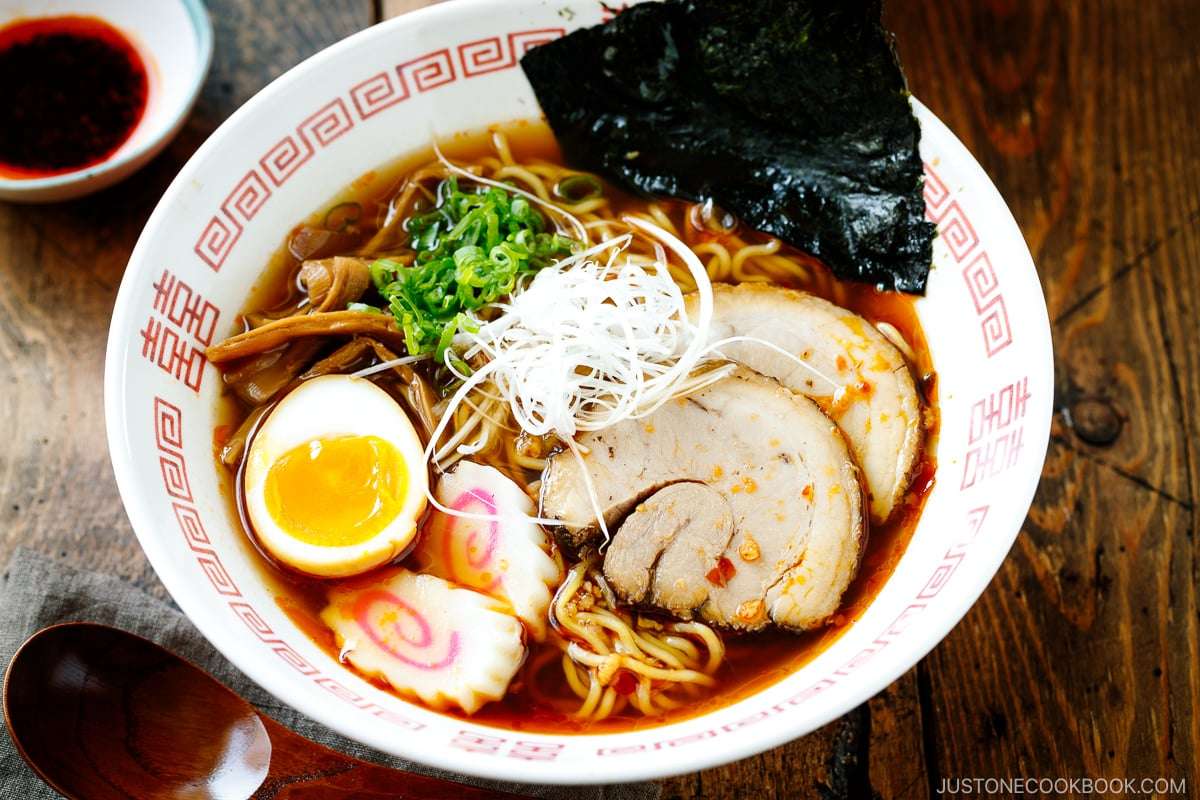
The Spicy Shoyu Ramen recipe combines key Japanese soup ingredients such as dashi and chicken stock with soy sauce and a hint of spice from doubanjiang, creating a rich and flavorful broth. Fresh grated ginger and garlic add aromatic depth, cooked gently in toasted sesame oil for enhanced fragrance. The broth is seasoned with salt and white pepper, delivering a well-rounded, lightly spicy umami base.
Accompanying the broth are fresh ramen noodles cooked al dente to provide a chewy texture that complements the soup's intensity. Toppings prepared in advance include pork belly slices (or chashu), seasoned ramen eggs, fish cakes called narutomaki, seasoned bamboo shoots, chopped and julienned green onions, and sheets of dried nori. These elements add savory, meaty, and textural contrasts throughout the dish.
The ramen is served piping hot, combining the hearty broth, tender noodles, and savory toppings to form a satisfying meal. Optional chili oil can be added for an additional layer of heat and flavor.
Ingredients
For the Soup Broth
- 1 tsp ginger (grated, with juice; from a 1-inch, 2.5-cm knob)
- 2 cloves garlic
- 1 Tbsp sesame oil toasted
- 2 tsp doubanjiang use either the spicy or non-spicy type, or use gluten-free doubanjiang; read the blog post for substitution info, spicy chili bean paste
- 1½ cups chicken stock use vegetable stock for vegan/vegetarian, or broth
- 1½ cups dashi I use 2 dashi packets to make a strong dashi; or use standard Awase Dashi, dashi powder, or Vegan Dashi, Japanese soup stock
- 2½ Tbsp soy sauce (use gluten-free soy sauce for GF)
- 1 tsp kosher salt Diamond Crystal brand
- ⅛ tsp white pepper plus more at the table, powder
For the Noodles
- 2 ervings ramen noodles 10-12 oz, 283-340 g fresh noodles; 6.3 oz, 180 g dry ramen noodles; for gluten-free, use GF ramen noodles, fresh
For the Toppings (prepare in advance)
- 4 lices pork belly buy it premade at a Japanese grocery store or make my Chashu at least a day in advance; skip for vegan/vegetarian, Japanese braised style called Chashu, homemade
- 1 egg sliced in half lengthwise; make my Ramen Eggs at least a day in advance; skip for vegan, Ramen style seasoned, called Ajitsuke Tamago
- 4 lices Narutomaki skip for vegan/vegetarian, fish cakes
- ¼ cup menma you can buy it at a Japanese grocery store or on Amazon; you can make my Quick Menma Recipe, seasoned bamboo shoots
- 1 green onion chopped, or scallion
- green onions follow my tutorial on how to prepare Shiraga Negi, julienned, called Shiraga Negi
- ½ heet nori cut in half, dried laver seaweed
- Chili oil optional; make my Homemade La-yu, Japanese style la-yu
Instructions
- Before You Start: Prepare the ramen toppings ahead of time (a day in advance for the ramen egg and homemade chashu) so they‘re ready to serve with your piping hot ramen soup.
- A typical ramen bowl can hold 1200–1400 ml of liquid. We will prepare 1½ cups (360 ml) of soup broth per bowl, which should be more than enough for a ramen bowl size. If you’re using bigger bowls, you may need to prepare extra soup to fill them up.
- Gather all the ingredients. Next, prepare a big pot of water for cooking the ramen noodles. Slowly bring it to a boil on medium heat while you prepare all the ingredients.
To Prepare the Soup Broth
- Grate the ginger (I use a ceramic grater) and reserve 1 tsp ginger, grated, with juice. Mince or press 2 cloves garlic (I use a garlic press). Tip: If you’re unsure how much ginger flavor you’d like, start with less and add more later.
- Set a small saucepan over medium-low heat. Add 1 Tbsp toasted sesame oil, the garlic, and the grated ginger. Cook until fragrant, about 1–2 minutes. Tip: Make sure not to burn the aromatics.
- Add 2 tsp doubanjiang (spicy chili bean paste) and stir for 15 seconds.
- Add 1½ cups chicken stock/broth, 1½ cups dashi (Japanese soup stock), and 2½ Tbsp soy sauce and bring it to a boil. Once boiling, reduce the heat and simmer for a few minutes.
- Taste the soup now and adjust the seasoning with 1 tsp Diamond Crystal kosher salt and ⅛ tsp white pepper powder. Don‘t be shy about adding salt because the broth will taste less salty after you add the noodles. Cover with a lid, reduce the heat to low, and keep the soup barely simmering while you quickly boil the noodles. You want the soup piping hot and ready to pour as soon as the noodles are done cooking.
To Cook the Noodles
- Before cooking, loosen up 2 servings fresh ramen noodles with your hands. Once the big pot of water is boiling, add the noodles and cook according to the package instructions. Here, I cook the noodles inside a big noodle strainer (I got it in Japan) that I’ve set inside the pot.
- While cooking, stir and separate the noodles with chopsticks. When the noodles are done cooking, drain them well in a strainer, shaking it a few times to drain the water thoroughly (otherwise it will dilute the soup broth).
To Serve
- Divide the noodles into the individual ramen bowls. Pour about 1½ cups (360 ml) of the hot soup broth into each bowl.
- Now, arrange the noodles in the bowl for an attractive presentation. First, lift the soup-soaked noodles high and straighten them. When the noodles are neatly aligned, fold the noodles from the edge of the bowl and place them over the noodles in the soup. This is an optional step, but ramen shops typically do this so the ramen looks pretty.
- Quickly and neatly arrange the prepared toppings on top of the noodles. Serve immediately and season to taste with additional white pepper powder and optional la-yu chili oil.
To Store
- You can keep the leftover soup and toppings separately in airtight containers and store in the refrigerator for up to 3 days. Cook the noodles right before serving.
Nutrition Information
Show DetailsNutrition Facts
Serving: 2Serving
Amount Per Serving
Calories 404 kcal
% Daily Value*
| Calories | 404kcal | 20% |
| Carbohydrates | 37g | 12% |
| Protein | 15g | 30% |
| Fat | 24g | 37% |
| Saturated Fat | 8g | 40% |
| Polyunsaturated Fat | 2g | 12% |
| Monounsaturated Fat | 3g | 15% |
| Trans Fat | 1g | 50% |
| Cholesterol | 141mg | 47% |
| Sodium | 1522mg | 63% |
| Potassium | 236mg | 5% |
| Fiber | 2g | 8% |
| Sugar | 5g | 10% |
| Vitamin A | 314IU | 6% |
| Vitamin C | 8mg | 9% |
| Calcium | 92mg | 9% |
| Iron | 3mg | 17% |
* Percent Daily Values are based on a 2,000 calorie diet.
User Reviews
Overall Rating
4.7
You'll Also Love