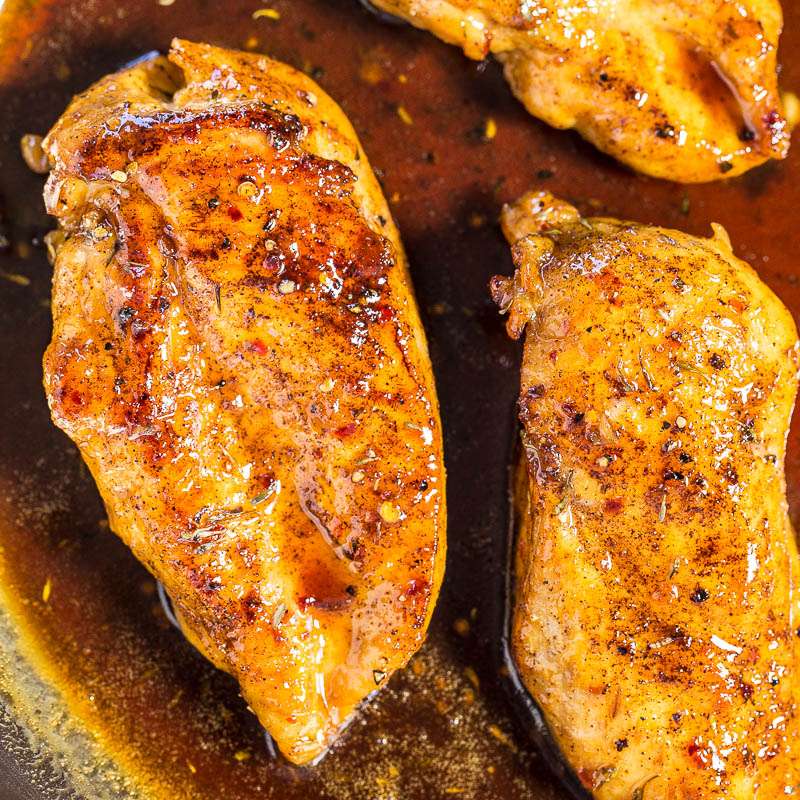
Sweet and Tangy Jerk Chicken with Caramelized Pineapple and Mango
User Reviews
4.8
-
Prep Time
3 mins
-
Cook Time
10 mins
-
Additional Time
2 mins
-
Total Time
15 mins
-
Servings
4 Serving
-
Calories
601 kcal
-
Course
Lunch
Sweet and Tangy Jerk Chicken with Caramelized Pineapple and Mango
Description
This recipe begins by preparing a sauce from honey, pineapple juice, lemon juice, apple cider vinegar, olive oil, brown sugar, and jerk seasoning that provides a balance of sweetness, acidity, and spice. Chicken breasts are first lightly coated with jerk seasoning and seared on both sides for a caramelized, flavorful crust.
The sauce is then added to the pan for a simmer, thickening as the chicken finishes cooking. This method gently infuses the chicken with the sauce’s sweet and tangy elements while locking in moisture. Frequent turning ensures even cooking and glaze development.
Separately, pineapple chunks reserved from the can and thawed mango chunks are caramelized in coconut oil with optional salt, developing a rich, sweet flavor and tender texture. These fruits complement the spicy jerk chicken with tropical sweetness and a soft contrast.
When plated, the chicken pairs effectively with the warm, caramelized fruit, creating a balanced dish that can be served as a main entrée. The rich sauce clinging to the chicken adds moisture and layers of flavor characteristic of jerk style dishes.
Ingredients
Chicken
- ½ cup honey
- ¼ cup pineapple juice from one 16-ounce can pineapple chunks, reserve the pineapple for caramelizing
- 2 tablespoons lemon juice
- 2 tablespoons apple cider vinegar
- 2 tablespoons olive oil for sauce and 1 tablespoon for cooking chicken
- 2 tablespoons light brown sugar packed
- 1 tablespoon jerk seasoning for sauce and more for sprinkling over chicken
- ½ teaspoon salt or to taste
- ½ teaspoon black pepper or to taste
- 4 chicken breast about 1 1/2 pounds, boneless skinless
Caramelized Pineapple and Mango
- ½ to 1 tablespoon coconut oil or another preferred oil
- pineapple reserved from can, about 1 cup chunks
- Mango I used frozen that I allowed to thaw, about 1 cup chunks
- ½ teaspoon salt optional and to taste
Instructions
- Chicken – To a medium bowl or large measuring cup, add the honey, pineapple juice, lemon juice, apple cider vinegar, 2 tablespoons olive oil, brown sugar, 1 tablespoon jerk seasoning, salt, pepper, and stir to combine; set aside.
- To a large skillet, add 1 tablespoon olive oil, generously sprinkle each chicken breast on both sides with jerk seasoning. Add chicken to skillet and cook chicken over medium-high heat for 3 to 4 minutes on each side so that it has a nice sear. Cooking time will vary based on thickness of chicken breasts. Chicken should be about 80 to 90% cooked through.
- Remove skillet from heat, turn heat to medium-low, and carefully add the sauce noting that it will bubble up vigorously in the first few seconds.
- Place skillet back on the heat and allow chicken to cook for about 10 minutes, or until sauce has thickened and reduced some, has darkened in color, and chicken is cooked through. Flip chicken a few times throughout. While chicken cooks, caramelize the fruit.
- Caramelized Pineapple and Mango – To a separate large skillet, add the coconut oil, pineapple, mango, optionally sprinkle with salt, and cook over medium-high heat until golden brown and caramelized, about 8 minutes, flipping every few minutes to ensure all sides are evenly cooked.
- Top chicken with caramelized fruit and serve immediately. Chicken and fruit are best warm and fresh, but leftovers will keep airtight in the fridge for up to 3 days. I store fruit and chicken separately.
Nutrition Information
Show DetailsNutrition Facts
Serving: 4Serving
Amount Per Serving
Calories 601 kcal
% Daily Value*
| Serving | 1 | |
| Calories | 601kcal | 30% |
| Carbohydrates | 65g | 22% |
| Protein | 45g | 90% |
| Fat | 19g | 29% |
| Saturated Fat | 6g | 30% |
| Polyunsaturated Fat | 11g | 65% |
| Cholesterol | 125mg | 42% |
| Sodium | 979mg | 41% |
| Fiber | 3g | 12% |
| Sugar | 60g | 120% |
* Percent Daily Values are based on a 2,000 calorie diet.
User Reviews
Overall Rating
4.8
You'll Also Love